Showing posts with label Nashville. Show all posts

Friday, April 03, 2026

Secrets of Nashville's Hospital No. 11, the 'Pest House'

The Bostick property, site of Hospital No. 11 in Nashville. (Tennessee State Library and Archives)

                                    Like this blog on Facebook | My YouTube videos

In West Nashville, traffic drones along busy Charlotte Pike, while a mile away, downtown Nashville flashes construction cranes and flexes its prosperity. Bus fumes and the smell of fast-food hamburger meat linger in the air.

In spring 1862, weeks after the United States Army occupied Nashville, the scene looked very different on the sparsely populated edge of Tennessee’s capital city. Along the pike stood the abandoned, 10-room brick house of Hardin Perkins Bostick, a wealthy attorney and slaveholder who had died of typhoid fever two years earlier. In Bostick's backyard, caregivers and patients – including soldiers, citizens, convalescents and contrabands – clustered in scores of canvas military tents.

A warning at the "Pest House."
This lonely outpost served as the U.S. Army’s Smallpox Hospital — Hospital No. 11, as the military called it. Others called it the “Pest House.” A sign on a fence warned: “Keep Out.” Nearby, the Hospital No. 11 cemetery eventually would hold more than 1,500 souls.

Both the long-gone hospital and its cemetery have become objects of my fascination — mainly for what may still lie beneath the soil: bones.

“They never got them all,” an archaeologist recently told me.

Shortly after the war — perhaps just north of the present-day Sonic on Charlotte Pike or steps from Smiley Dental Associates — crews exhumed bodies from the Hospital No. 11 cemetery and transferred them to the newly established national cemetery in Madison, Tennessee, and elsewhere.

The forgotten Hospital No. 11 cemetery likely once held Private Valentine White of the 84th Indiana. Stricken with smallpox, he leaped to his death from a Nashville "pest house" in late spring 1863. “Delirious,” an Indiana newspaper wrote of the soldier who rests today in Nashville National Cemetery. [1] 

At Hospital No. 11 on April 20, 1864, smallpox killed 141st New York Corporal Dwight Murphy, who also rests in the national cemetery. "He wished me when dying to write and tele you," an officer in the regiment wrote to Murphy's mother, "but was not able to speak so as to leave any message." [2]

Despite a vaccination, Private Hugh Scott joined White among those afflicted in the 84th Indiana. In late winter 1865, smallpox claimed the 32-year-old, blue-eyed, brown-haired farmer. Scott left behind a wife named Elizabeth, six children — and a pocketknife valued at 71 cents. [3] His remains eventually found their way back to Indiana.

Hospital No. 11 tents in a field near the Bostick house. (Tennessee State Library and Archives)

Smallpox didn’t rival typhoid, dysentery and malaria as a mass killer during the Civil War. A crude (by modern standards) vaccine existed, but many never received it. The disease – “heaven’s particular scourge,” a Richmond newspaper called it [4] – brought terrifying symptoms: fever, headache, body aches and a rash of pus-filled bumps and scabs that often left permanent scars. Soldiers, many unaccustomed to close-quarters military life, often contracted the highly communicable disease. 

A Nashville newspaper sounded the alarm in early 1863. "We regret to notice this disease is now in our city," the Daily Union reported. "We would advise our citizens to use the necessary precautions to prevent its spread. Be vaccinated at once."  [5] A year later, it was spreading in Nashville with a "fearful rapidity" – and without discriminating against rich or poor, Black or white, young or old. [6]

“It is distressing to hear that slaves are dying of smallpox,” the Daily Union wrote, “but it is certainly not more distressing than to see our gallant soldiers led to ravages of disease.” [7]

Smallpox patients often faced strict quarantine. Treatments ranged from herbal remedies to chemical concoctions. In 1864, an Illinois newspaper touted a less-scientific cure: cream of tartar and rhubarb mixed with cold water – “a remedy which cured three thousand cases in England.” [8]

“In cases characterized by delirium, great benefits have been obtained by applying a bottle of hot water to the feet,” added the paper. But this cure apparently never caught on — not with the U.S. military, and not with George W. France, the doctor in his early 30s who ran Hospital No. 11.

The Nashville Daily Union
frequently published a list
of military hospitals.
France’s hospital carried a fearsome reputation. Townspeople called it the “Plague House” and assumed no one left alive, yet inside the canvas tents, care and vigilance shaped every day. Newly in charge in April 1864, France patrolled the tents while others dispensed care. He ran a tight operation. Patients noticed. 

“I expected to be crowded into a tent with a motley gathering of all classes," wrote 22nd Michigan quartermaster Thomas Boughton, a smallpox patient at Hospital No. 11, in a letter in a Nashville newspaper. "I of course knew that the Doctors would prescribe for me. But I imagined a parched tongue with no one to administer my wants. I imagined myself hungry with no one near to answer my call. [9]

“My mind,” he added, “conjured up every idea that could tend to make me miserable.”

But France impressed Boughton, who spent eight days alone in a tent, delirious. An “ever-kind” nurse – a soldier in the 102nd Ohio – cared for him for about a week. 

“I was treated well and every arrangement was made for my comfort by Dr. France, who in my opinion deserves some mark of approbation for his untiring efforts,” he wrote.

Another newspaper correspondent also challenged the hospital’s negative reputation. “Physicians, stewards, nurses, all, more or less, are included in the category of practicing brutality, ordering coffins hourly, that they may the more readily get rid of the infernal disease,” wrote the unknown correspondent, likely a patient. [10] 

But the hospital was nothing like that, the letter writer insisted, adding France “combines all the essentials of a refined and feeling gentleman, courteous and affable to the lowest, rendering all the aid and assistance to the inmates … He never relinquishes his post to engage in the frivolities of the day or the gaieties of the night, but, like a faithful sentinel, his tramp can be heard at morn, noon and night, alleviating the sufferings of the sufferer.” 

Now back to that cemetery … and those old bones.

I make a slow pass around the neighborhood — first in my SUV, then on foot. Within sight of the pike stands an African American Baptist church. I quiz a parishioner in a hurry about “Jefferson Street” Joe Gilliam, the former Pittsburgh Steelers quarterback who made a name for himself here decades ago. But I don’t have the heart to ask him about the Pest House.

And so I’m left to wonder: Who was Valentine White, delirious and disease-ridden, who killed himself at a Nashville pest house? What would Dr. France think of this place today, virtually in the shadow of modern hospitals?

And, finally, is the archaeologist right? Do remains of soldiers, contrabands and other forgotten souls still rest somewhere in this unremarkable Charlotte Pike neighborhood — and what other secrets endure from Hospital No. 11, the Pest House?


SOURCES

[1] The Indiana State Sentinel, June 1, 1863
[2] Dwight Murphy "widow's" pension, fold3.com via National Archives (WC50543)
[3] Hugh Scott pension file document, courtesy descendant Sean Smart
[4] The Athens (Tenn.) Post, Dec. 13, 1862
[5] Nashville Daily Union, Feb. 26, 1863
[6] The Indianapolis Sentinel, Feb. 19, 1864
[7] Nashville Daily Union, March 19, 1863
[8] Nashville [Illinois] Journal, March 25, 1863
[9] Nashville Daily Union, May 11, 1864
[10] Nashville Daily Union, April 12, 1864

Thursday, March 12, 2026

A gruesome execution on Granny White Pike in Nashville


              Like this blog on Facebook | My YouTube videos | Hat tip: Marty Bertera 

Granny White Pike bore witness to its share of Civil War activity beyond the Battle of Nashville. Soldiers skirmished along its stretches, pitched tents beside it and stood at attention nearby for musters and reviews. But on May 15, 1863, the road became the stage for a grisly spectacle: a public execution.

That day, Private Julius Milika of Company E, 10th Michigan Infantry, faced a 12-man firing squad for desertion — “one of the gravest military crimes,” the Nashville Daily Union warned. The punishment was swift.

The Daily Missouri Democrat of St. Louis
 (May 16, 1863) was among the newspapers
that published accounts of the execution.


Around noon, about a mile and a half from Nashville, soldiers and townspeople lined the pike in tense silence. In their midst in a field astride the pike, Milika arrived in an ambulance, seated atop his own coffin. Later, kneeling in prayer, he appeared unnervingly calm.

"All the troops at this post were called out," an 18th Michigan soldier wrote. "The Battallions in position, formed three sides of a square, with the open side near a piece of woods. There was a small tree near the center of the square, under which the grave of the unfortunate man was dug."

The ugly event seared itself into the mind of William Painter of the 22nd Michigan. “Awful,” he wrote in a letter to his wife, adding: “The worst thing I ever witnessed in my life.”

Painter described how the Prussian-born Milika, blindfolded, prayed with four ministers, who then shook hands with the condemned man. Milika stood, saluted the firing squad and told his executioners that he was ready to die. Six of them had loads in their guns, six had nothing but powder.

“Take good aim, men; all is over now,” Milika said in German, his voice steady, according to the Daily Union

Then came the command — and the volley.

“One shot hit him in the mouth, two in the neck, one in the breast and one in the belly,” Painter wrote. “I did not learn where the sixth hit, but all six struck him, as the [executioners] stood only ten paces away.” Within thirty minutes, Milika had been placed in his coffin and buried. 

"[I]t is hard to think of the horrors of such a death, yet all acknowledge the justice of the law," the 18th Michigan witness wrote, "and I am sure that no man that witnessed the execution will ever forget the lesson."

Milika’s crimes were serious. About 30 years old, he had deserted his regiment, joined another for bounty money and deserted again. Arrested in Louisville, he was returned to Nashville to face a court-martial.

“Until he joined the army his habits were praiseworthy; but in the service, he neglected his religious duties, contracted intemperate habits, and grew fond of bad company,” the Nashville paper reported.

Rev. Herman Egger, who was present that day, later reflected that Milika accepted his fate as the will of God and seemed to hope his death might serve as a warning to other soldiers. The scene left such an impression on Egger that he resolved to make it the subject of his next Sunday sermon, posing a sobering question to his congregation:

“What brought Julius Milika to his untimely end?”

POSTSCRIPT: Despite his execution for desertion, Milika may rest today in Nashville National Cemetery in Madison. According to the government’s 1869 Roll of Honor, a “Julius Malika” of the 10th Michigan Infantry is listed among the dead buried on its vast grounds. If the entry refers to the same man, the condemned deserter now lies among thousands of Union soldiers who died in service. I have yet to locate his grave.


SOURCES 

Wednesday, January 07, 2026

Nashville battle story: A soldiers' graveyard, war-torn mansion

Undated Bradford mansion image by an unknown photographer (Nashville Public Library Digital Collection)

                                   Like this blog on Facebook | My YouTube videos

In the seven years we’ve lived in Nashville, the landmarks along busy two-lane Granny White Pike have become as familiar as an old sneaker. There’s the dry-stack wall where Union soldiers captured mud-spattered Confederate Gen. Henry Jackson. Across the pike in the near distance looms Shy’s Hill, where its namesake, Rebel Col. Bill Shy, was mortally wounded. Nearby stands a "witness" tree that locals say lost its crown to Union artillery fire. What’s missing from the picture is just as intriguing. 

7th Minnesota Pvt. Fred Fessenden
was killed at the Battle of Nashville.
(Minnesota Historical Society)
According to the diary of 7th Minnesota chaplain Elijah Evan Edwards, seven Union soldiers were buried on the battlefield in “a single wide grave,” perhaps on the grounds of the Bradford mansion that once stood between the opposing lines just off Granny White Pike. Used as a Union Army military hospital, the mansion is long gone, replaced by modern development. Among the dead buried by the chaplain was the 7th Minnesota’s Fred H. Fessenden, a 27-year-old private shot through the temple during fighting near Shy’s Hill.

“He could always be depended upon,” a 7th Minnesota comrade and friend named Edward wrote about Fessenden in this poignant letter. “He was recently offered a promotion, but declined to accept it, preferring to serve as a private the rest of his time. But now he is promoted to higher and more noble employment than earth can give, and although I shall miss him very much, I feel that what is my loss is his infinite gain.”

In his diary, Edwards described the return of the mansion’s owner, "Mrs. Bradford," who surveyed the damage to her home and accepted her losses with restraint, donating remaining provisions for the wounded. While she expressed frustration over earlier looting, Edwards noted that much of the plundering had occurred earlier and was carried out by irresponsible soldiers. Items stolen included family portraits, religious objects and household goods, some of which were later recovered. 

After the hospital closed, Edwards wrote, "Mrs. Bradford asked the surgeon in charge to have the floors cleaned of bloodstains, all rubbish removed, and the building put in good order, fumigated and swept."

But back to those burials. 

Edwards sketched Nashville battle scenes and other sites in his diary, including perhaps the very graveyard for the 7th Minnesota dead. Shortly after the war, Fessenden's remains were removed to the Nashville National Cemetery. His 7th Minnesota comrades buried on the property — Napoleon ChamberlainGeorge Washington SimmonsMilton BuronsSebastian Baulig and Archibald Savidge — also have marked graves in the national cemetery. Someday soon, I hope to pay my respects to them there. 

Today, the Bradford mansion is gone, its grounds swallowed by manicured lawns and upscale homes. Nothing on the surface hints at the graves once dug there. But through his diary (transcription below), Chaplain Edwards keeps Fred Fessenden and the memory of his 7th Minnesota comrades alive.

Below are excerpts from Chaplain Edwards’ diary (hat tip: Huntsville Historical Review), written on and near the Bradford property south of Nashville in December 1864. His words offer a firsthand glimpse of the soldiers’ original resting place, a makeshift battlefield hospital and the human cost in the aftermath of the Battle of Nashville (Dec. 15-16, 1864).

Chaplain Elijah Edwards' sketch of the Bradford mansion property. Graves, perhaps for those
 of the 7th Minnesota, appear in the middle background. 

This afternoon I buried the dead of the 7th [Minnesota] Regiment, side by side in a single wide grave in the field where they fell. There were seven Minnesotians and an unknown soldier found dead on the same field.* 

The lady owner of the Bradford mansion came, accompanied by two rather beautiful young ladies, presumably her daughters. She looked with surprise at the holes made in her fine mansion by shot and shell, and congratulated herself that she was not at home during the battle. She looked ruefully at the ruin wrought, but in the main took her losses philosophically.

She donated what delicacies might remain in the house to the use of the wounded. Her daughters were less discreet and forbearing in their manner and made some rather insulting remarks. 

Chaplain Elijah Evan Edwards,
7th Minnesota (Battle of 
Nashville Trust
)
Our burly English first musician resented this in language more forceful than elegant. There was indeed some cause for the young ladies’ complaints. But for the wholesale plundering and looting that occurred on the first day of the battle, the present occupants were not to blame. I witnessed the looting and knew it to have been done by unprincipled and irresponsible parties. Some of the things stolen were the mother’s picture, an alabaster statue of Christ and the Virgin Mother, and an album of family pictures. A piously inclined pilferer stole the old family Bible. 

One of the robbers crammed a curiously enameled clock case into his satchel. The mansion is badly damaged by the cannonading but is still livable. Mrs. Bradford expressed to the surgeons very decided views as to damages, but it will be difficult to decide as to which army is responsible, the building occupying a position between the lines and being in fact damaged most by [John Bell] Hood’s artillery practice.

The Bradfords are very decided rebels in sentiment, and the husband is, I understand, a fugitive in Texas and had risen to the rank of General in the Southern service.

A curious diary was found in the house, purporting to be that of a Mr. Cantrell. Its last date was December 6, 1864, the time probably when the mansion had to be vacated. It is presumed that this diary, with other goods belonging to the Bradfords, was brought to the mansion for safekeeping. The diary was forwarded to headquarters for examination but contained no information worthy of note. The first date of the diary is 1835, and the writer was then a young man, affianced to an unnamed cousin of his, whom he spoke of as May. That part of the diary ends abruptly, but the presumption is that May and the Mrs. Cantrell mentioned in the entry of July 6 are one and the same. The entry reads: “Mrs. C. was delivered of a child this morning. Removed her for safekeeping to Mrs. Bradford’s.” 

The most audacious utterances in the modern part of the diary were the following melanges of the patriotic and commonplace: “The spirit of the South is unconquerable. Worked all day in the onion beds.” “The future looks dark and portentous. Had to whip Willie and Buddie.” “The Yanks have stolen all my sweet potatoes.” The last entry is significant: “In order to save my property, I have taken the oath of allegiance.” 

I hunted up the 23rd Corps this morning and found my brother Wes in robust health but dirty as two days’ fighting and wallowing in the mud could make him. I returned over our battle line and noted the traces of carnage in the rebel trenches. The trees on the summit of the high hill on our right were almost stripped of bark and branches by our missiles. The trenches were filled with dead that seemed already a portion of the earth in which they were partially imbedded. 

Halfway down, or a third of the way down, I came upon a heap of our dead laid out for burial. There were twenty of them, the fallen dead of the 10th Minnesota of McMillan’s Brigade (1st), which took part in the famous charge up this hill on the salient part of Hood’s lines. In one of the group I recognized the face of an old St. Paul acquaintance, Geo. L. Lumsden, a man with a singular and not unromantic history. 

Bradford Mansion, December 18

John Houston of 
the 5th Minnesota.
Captain John Houston of the 5th Minnesota, whom I found badly wounded on the field at the close of the first day’s battle, sent for me to call and see him at the shortest notice. I started immediately and soon reached him in the City Hospital. His wound had been a serious one involving, as the hospital surgeons thought, the necessity of amputation of his right arm close to the shoulder, the ball of the humerus being shattered by a Minnie bullet. 

Captain Houston refused to submit to an amputation, believing that with skillful treatment his arm could be saved. He wished me to go at once and interview his friend Dr. Vincent P. Kennedy, former surgeon of the 5th and now Brigade surgeon, and ask him to call at once. His object was to secure a transfer to the department in the care of Dr. Kennedy, believing that his old friend was able by his skill to save both his arm and his life. The surgeons have been severely criticized for their too-great readiness to perform amputations when with proper care the limb might be saved. Their only answer is that they have neither the time nor appliances for such care, and that the surest way to save life is to amputate. Surgeon Kennedy immediately responded to the call of his friend, but as to the success of the operation, if performed, I have not heard. 

Field Hospital, Bradford Mansion December 19, 1864 

The number in hospital is being very materially reduced each day by discharges and transfers to the city hospitals, and yet there is still quite an army of surgeons, chaplains, assistants, and hangers-on left. Our first camp in the suburbs beyond the Charlotte Pike has been entirely broken up. Nothing remains of the tent under the mistletoe but the debris of a chimney in the campsite style of architecture, shapeless in its ruins. We are beginning to grow weary of hospital life and to envy the part of the army now in its hurried chase after Hood. There are rumors that the Confederate force is utterly broken up and ruined, that they are not retreating in a body as beaten armies sometimes retreat, but have scattered and melted away until there is scarcely a corporal’s guard left anywhere. There is no longer a Hood’s army and never will be again.

    GOOGLE STREET VIEW: Bradford mansion stood near present-day Lipscomb Drive.

Field Hospital, December 20, 1864 

We are impatiently waiting for orders to transfer the patients to the city, close up the hospital, and proceed over the country following in the footsteps of the conquerors of the fugacious Hood until we overtake them. It does not appear reasonable that the 16th Corps should return to Nashville, where there is no longer need of a militant body bearing the peculiar stamp of the force known and respected as “Smith’s Guerrillas.” That we may be ordered back to Memphis is spoken of as a probability, though a remote one. It was the mission of A. J. Smith to threaten Tennessee and Mississippi, engage the attention of {Nathan Bedford} Forrest, and prevent his going eastward to join forces with Joseph Johnston. Forrest thought his mission was to intercept Smith and prevent his joining [William] Sherman. Now that these emergencies no longer exist, there is no motive for Smith to waylay Forrest or for Forrest to interfere with Smith. For the present, both are played out.

Field Hospital, December 21, 1864 — Last Day 

The last discharges and transfers have been made, and the Bradford mansion ceases this morning to be a hospital. It is again a private dwelling, though not yet in possession of its owners. Mrs. Bradford asked the surgeon in charge to have the floors cleaned of bloodstains, all rubbish removed, and the building put in good order, fumigated and swept. Some of her stolen household goods that had been found hidden about the premises were restored, though not all. Her mother’s picture and the family Bible had been returned. It seemed a hard and cruel thing that she should have been plundered of things precious to her and worthless to anyone else, but such are the caprices of warfare in an enemy’s land. Upon the whole she seemed a kindly woman and cheerfully surrendered all provisions and dainties in the house for the use of the wounded, and it was left unto her desolate.

December 22, 1864 

Yesterday the mud in Nashville was unfathomable, or at least of uncertain and dangerous depth. Today the mercury is below the freezing point, and a thin stratum of ice and frozen mud has formed on the surface of the slough. The appearance of Nashville is not inviting. The eye rests upon heaps of rubbish, with dead animals promiscuously scattered about. 

Nashville, December 23–24, 1864

Still detained by red tape and the necessity of procuring an outfit to provision us until we overtake our regiment. This is positively our last day in Nashville, as the red tape has at last been untied and we start tomorrow on our winding way in search of the 7th Minnesota Volunteer Infantry.

Franklin, Tennessee, December 25, 1864 

This day should be Christmas, but there is no sign of it here in this war-wasted land. No bells ring, no joyous gatherings of young and old. The country is desolate and looks as if it might never again have happiness.

* Names of the killed in battle, buried on the field near the Bradford mansion, Co. B: Corporal Napoleon C. Chamberlain Co. C: George W. Simons Co. E: Milton Burons Co. G: Sebastian Baulig Co. H: Fred H. Fessenden Co. K: Archibald Savidge, David Coolidge. Besides the above there are six mortally wounded and possibly 20 who are disqualified for further service.


SOURCE

Edwards, Elijah E. (1973) "Diary of Chaplain Elijah E. Edwards (Part II)," Huntsville Historical Review: Vol. 3: No. 2, Article 3

Monday, June 16, 2025

A flight over Fort Negley, Nashville's 'masterpiece'

 
A reporter in 1862 described the forts defending Union-occupied Nashville as the "most complete of the kind in the country." Fort Negley, built on St. Cloud Hill with mostly African-American labor, was especially impressive. "A masterpiece," the Philadelphia Press correspondent called it. The fort was constructed under supervision of Captain James St. Clair Morton, a 33-year-old Philadelphian and West Point graduate.

Wednesday, June 09, 2021

Window (sills) into past: Soldiers left mark at Nashville hotel

James Ward of the 14th Ohio carved his name into this Maxwell House Hotel sill.
Several Union soldiers with the last name "Crider" and first initial 'J" served in the Western Theater.

Like this blog on Facebook
 | 
Follow me on Twitter

Present-day Church Street in Nashville wasn't exactly a bastion of tidiness during the Union Army's occupation. Next to the First Presbyterian Church (now Downtown Presbyterian Church) the Federals constructed a two-story outhouse that was, ah, pretty crappy. Twenty yards or so across the street stood the ugly shell of the unfinished Maxwell House Hotel, initially used by Confederates as a barracks and then by the U.S. Army for the same purpose beginning in early winter 1862.

The Maxwell House Hotel near the end of the war.
(Tennessee State Library and Archives)
Unsurprisingly, the hotel didn't receive 5-star treatment from its occupiers, who probably would have stolen all the towels, swiped those little bags of goodies given to honors club members, and perhaps made off with the exercise bikes in the gym if the place were officially open for business.

“In many places the tiling of the rooms was cracked and broken where fires had been built on the floor for warming purposes, and having been used for so long as a barracks, the building was alive with vermin,” former 1st Wisconsin Cavalry quartermaster sergeant James Waterman wrote decades after the war. “The whole thing was more like a prison than a barracks for civilized beings, and was a disgrace to the service.”

Soldiers left their marks in other ways: by etching their names on the limestone window sills. Four examples recently acquired from a private donor by the Battle of Nashville Trust include the etchings of names and units of Ohio and Illinois soldiers (see photos). Names of others -- presumably soldiers -- also appear etched into the slabs of stone, which the Trust plans to donate to a local business, organization, or historic site. 

These four sills were salvaged from the Maxwell House Hotel after a fire destroyed 
the building on Christmas Day 1961.
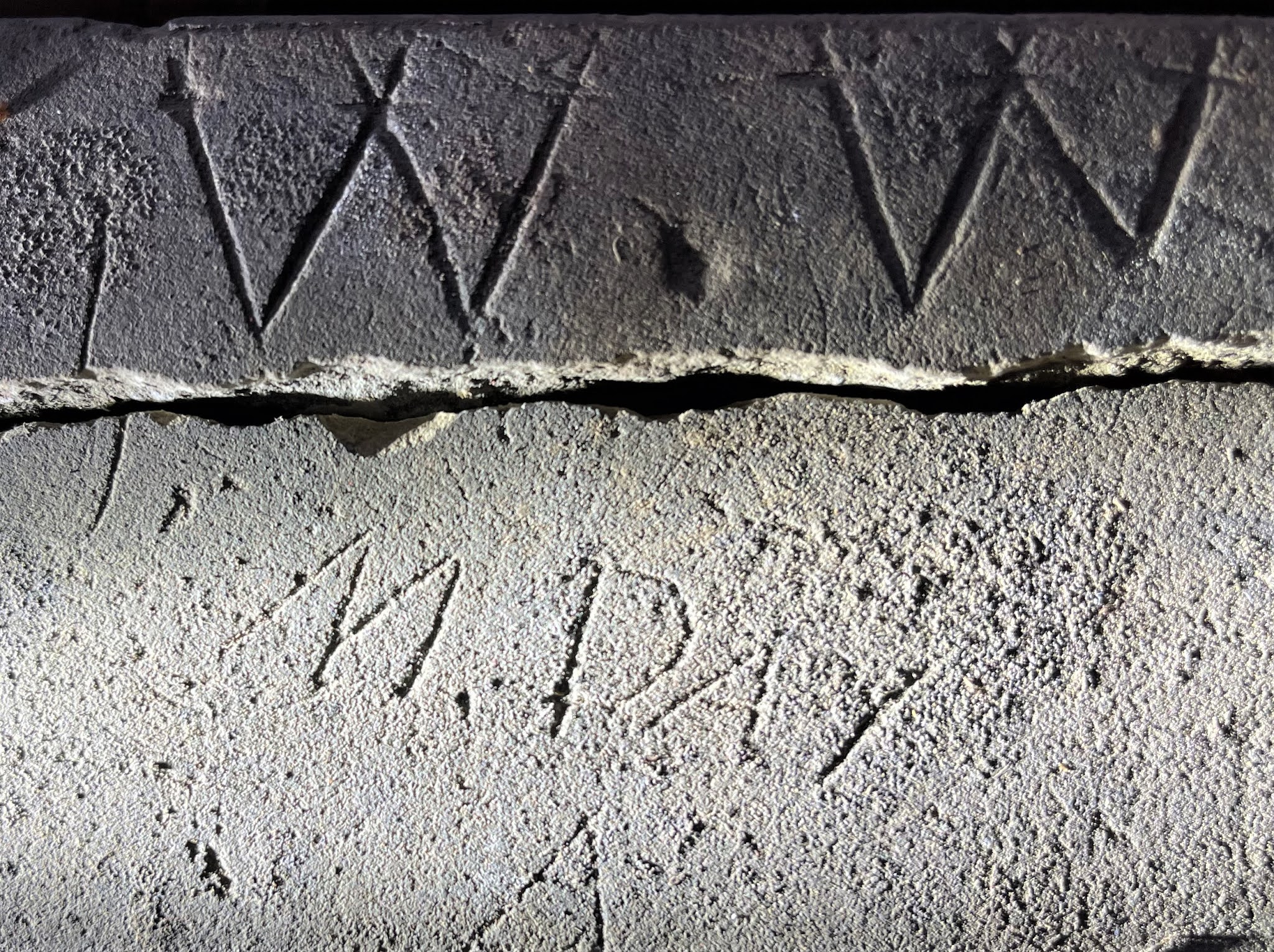
Polk D. Southard, a teen, served with the 41st and 53rd Illinois. He apparently struggled
with the "4" in "41." He died in 1920 and was buried in New Mexico.
The chances of identifying "W.W." are remote, but perhaps we'll ID "M. Day."

B.R. Hawk -- perhaps Benjamin Hawk of the 14th Illinois -- etched his name in this sill.
G.B. Bates and H.C.B, left their mark, too. Confederate and U.S. Army soldiers
occupied the hotel, used as a barracks, depot, and prison during the war. 

The Maxwell House Hotel had a twisted history. In the fall of 1863, the grimy barracks housed hundreds of Confederate POWs, many from the Sept. 19-20, 1863, Battle at Chickamauga. On the morning of Sept. 29, disaster struck as POWs were being herded near a fifth-floor stairwell for breakfast. Barracks commander John Lakin, a captain in the 89th Ohio, may have warned the Confederates about the rickety flooring, but none apparently listened if he did.

The lone reminder in downtown Nashville 
of the old Maxwell House Hotel.
A temporary wood floor suddenly gave way, sending prisoners plummeting to the second floor. There were conflicting accounts of the number of dead – one indicated as many as 45 were killed; another said 25, while others said less. “Some were between the floors and were mashed almost to jelly,” a 10th Texas Cavalry veteran recalled. Dozens were injured. (Read more about that tragedy in my Rambling column for Civil War Times magazine.)

From its official opening in 1869 to the early 1900s, the Maxwell House Hotel was the go-to site for the most important people in society. Presidents Rutherford Hayes and William McKinley, both Civil War veterans, were guests, as was former slave trader and Confederate cavalry commander Nathan Bedford Forrest, who took the oath to the Ku Klux Klan in a ceremony in Room No. 10.

Once one of the grandest hotels in the South, the Maxwell House was destroyed by fire on Christmas Day 1961. The lone reminder of the hotel is a historical marker mounted on the outside of a modern office building that occupies the site. (The sills may have been salvaged from the city dump after the fire, according to Greg Wade's story in North South Trader's Civil War magazine.)

As far as the fate of that huge outhouse, well, thankfully it was closed in January 1864.


-- Have something to add (or correct) in this post? Email me here.


SOURCES

-- American Civil War Research Database
-- Confederate Veteran, 1902, Vol. 10.
-- The National Tribune, May 3, 1900.

Thursday, December 17, 2020

From Antietam to Wartrace: My favorite photos of 2020

BRENTWOOD, TENN.: A wilted rose left on a small, weather-worn gravestone
 in a small slave cemetery in a road median.
(READ MORE | CLICK ON ALL IMAGES TO ENLARGE.)


Like this blog on Facebook | Follow me on Twitter

What a crazy year ...

In Tennessee alone, I met a woman named "Blossom" at the tavern where Patrick Cleburne might have hung out in Wartrace, patted a dog named "River" at 20th Tennessee Colonel Bill Shy's grave in Franklin, and peered into a church in Denmark where Confederate soldiers hid under hoop skirts.

A poignant note left at a slave cemetery.
But my most memorable visit was to a slave cemetery in the median of a busy road in Brentwood, Tenn. On a memorial there, a visitor left this note: 

"Thank you. I so very hope someone thanked you during your life here. You could not have imagined so many wonderful things we have today because of your labors, and how much farther we have to grow."

There were road trips to Antietam, Chickamauga, Corinth, Miss.; Crampton's and Fox's gaps in Maryland, Gettysburg, Perryville, Ky.; Port Republic and Cross Keys in the Shenandoah Valley of Virginia, and for the first time, Brice's Cross Roads (Miss.), Mill Springs (Ky.) and Britton's Lane, Tenn. And I visited the grave in Glade Spring, Va., of the general with the fabulous nickname, "Grumble" Jones. Closer to home, I traveled to Franklin, Shiloh, Stones River, and Lookout Mountain. And, of course, many Nashville battlefield sites were only a bike ride away.
 
Besides my University of Alabama cap and a smile, I always traveled with my iPhone, eager to document the journeys. Here are some of my favorite photos from 2020. Hope you enjoyed riding "shotgun."

Remember: Life, enjoy the journey.

Always...

ANTIETAM, MD.: A misty early morning at Bloody Lane.
FRANKLIN, TENN.: A dog named "River" at grave of 20th Tennessee Colonel Bill Shy.
PERRYVILLE, KY.: The lone witness tree remaining on the battlefield.
GETTYSBURG: 27th Connecticut monument in The Wheatfield.
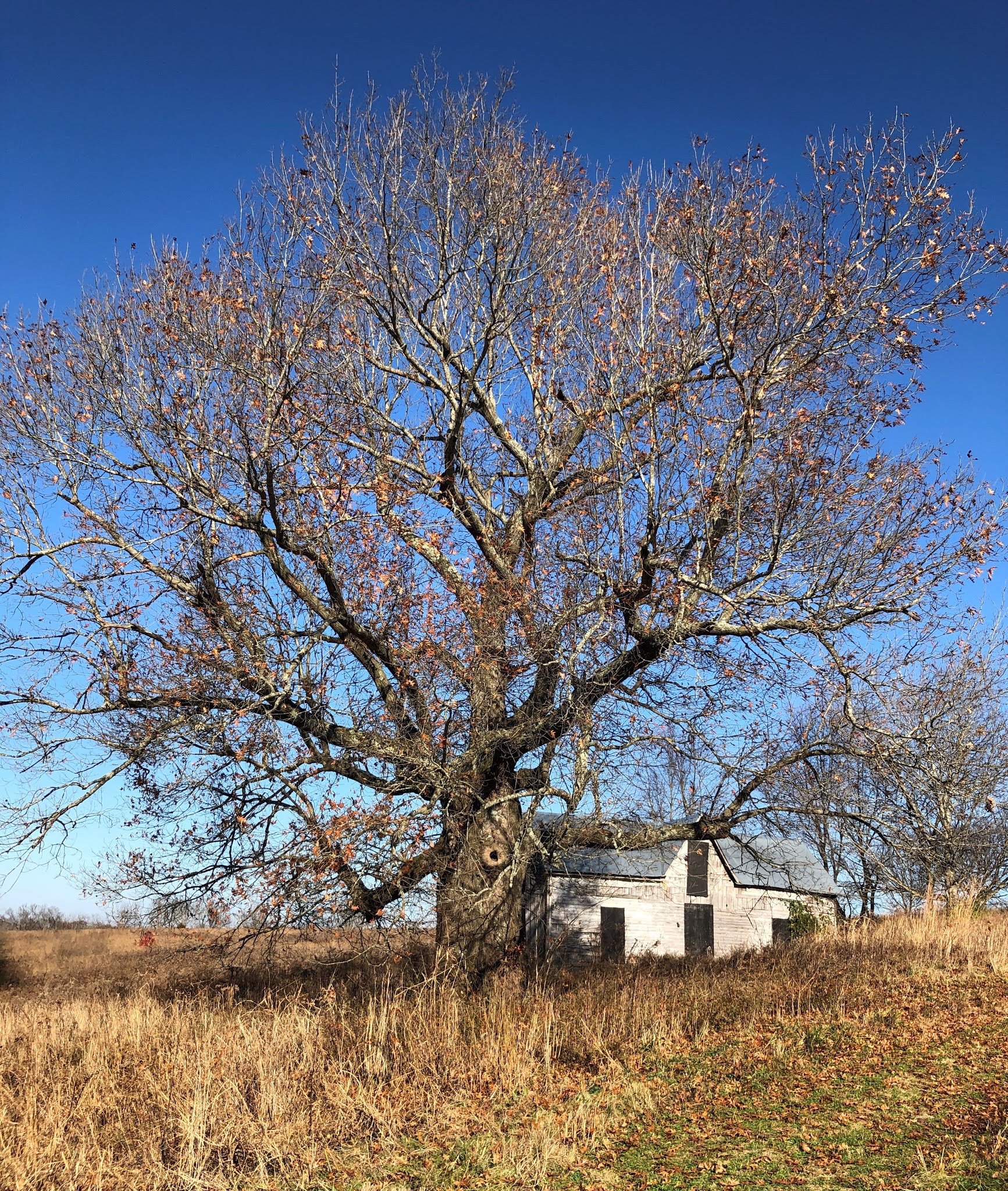
BRENTWOOD, TENN.: Abandoned antebellum farmhouse of slaveholding family.
(READ/SEE MORE.)
PERRYVILLE, Ky.: View advancing Confederates had on Henry Bottom's farm.
(READ/SEE MORE.)
ANTIETAM: An epic carved eagle atop New York monument.
ANTIETAM, MD.: Reenactors in the Bloody Cornfield.
SHILOH, TENN.: Battlefield marker denoting burial location for 28th Illinois fallen 
atop ancient Indian mound. The dead were later moved to Shiloh National Cemetery.
BRENTWOOD, TENN: A mural depicting in a tony subdivision depicting the capture
of Confederate Colonel Edmund Rucker on Dec. 16, 1864. 
CHICKAMAUGA, GA.: Michigan monument.
MILL SPRING, KY.: Coins left at Confederate mass grave. (READ MORE.)
NASHVILLE, TENN.: A massive battlefield witness tree, toppled in a storm, and my
 brother-in-law/bike riding pal, Nels Jensen. (SEE/READ MORE.)
BRENTWOOD, TENN.: Locked door of slave cabin. (READ/SEE MORE.)
FRANKLIN, TENN.: Confederate monument in the town square. 
CHICKAMAUGA, Ga.: Bullets in bas-relief on an Ohio monument.
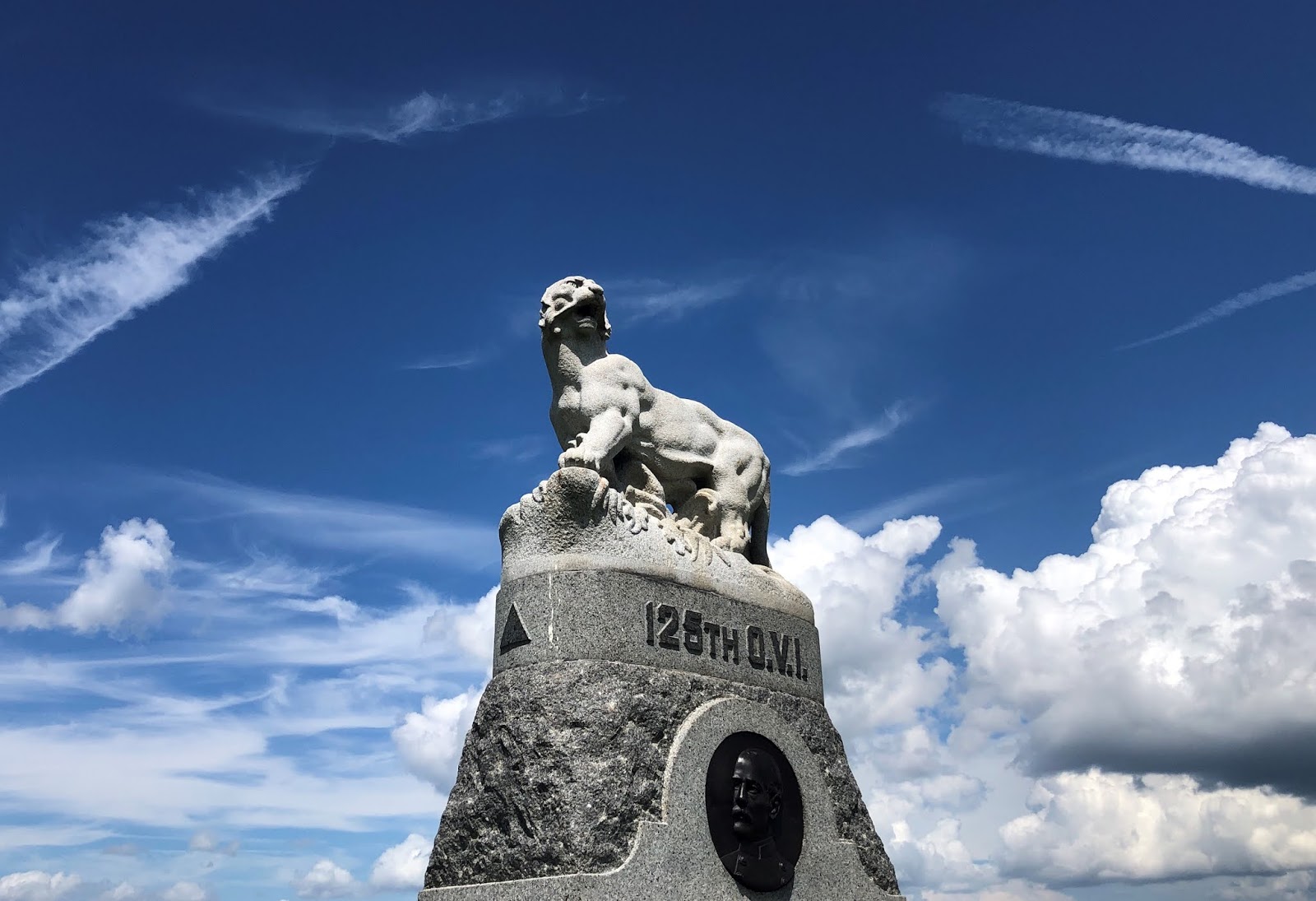
CHICKAMAUGA, GA.: 125th Ohio monument on Snodgrass Hill. 
GETTYSBURG: Union General Philip Kearney, killed at Chantilly (Va.) on Sept. 1, 1862,
 depicted in bronze on a New Jersey monument.
MURFEEESBORO, TENN.: Shadow play with relic hunter Stan Hutson
at Lunette Negley at Fortress Rosecrans site. (READ MORE.)
BURKITTSVILLE, MD.: Union General William Franklin's headquarters. (SEE MORE.)
NASHVILLE: Shy's Hill, taken by the Federals on Dec. 16, 1864.
BRICE'S CROSS ROADS (Miss.): A grave in a cemetery overrun during the battle.
(READ MORE.)


-- My favorite photos of 2017, 2018 and 2019.
-- Have something to add (or correct) in this post? Email me here.

Tuesday, September 29, 2020

Potty talk: Hey, who leaked this messy Nashville story?

The two-story outhouse here during the war was not ideal.

Like this blog on Facebook | Follow me on Twitter

Sometimes history is, ah, a little weird. It's often quite messy, too. During the U.S. Army’s occupation of Nashville, the First Presbyterian Church (now Downtown Presbyterian Church) was used as a military hospital. Next to the church, the Federals built a two-story outhouse. It was suboptimal. 

During the Civil War, the U.S. Army
used Downtown Presbyterian Church
 as a military hospital.
According to James A. Hoobler’s Cities Under The Gun, Images of Occupied Nashville and Chattanooga
 “The two-story outhouse built by the Federal army was an attempt to solve the sanitary problem presented by a twenty-six-hole latrine in the side yard of the church. Although the latrine was closed in January of 1864, the solution was even worse. The two-story outhouse had four holes upstairs and four holes downstairs. The elbows in the drains were made of leather — and leaked. It did contain a stove for warmth, however.” 
Not sure who leaked this story. 👊 In any case, I chuckle every time I walk past this spot.

In a more serious vein, here's a post on my blog about a visit to the church by Union veterans in September 1895 and another on a gift given to an assistant surgeon who worked there in  Hospital No. 8 in 1865.

-- Have something to add, correct? E-mail me at jbankstx@comcast.net

Friday, July 24, 2020

A visit to Nashville's Fort Negley on St. Cloud Hill


Like this blog on Facebook | Follow me on Twitter

The most impressive of the Federal forts in Nashville, Fort Negley was built largely with the labor of conscripted and enslaved African Americans. Here are enlargements of an 1864 George Barnard image of the interior of the fort. Cool stuff. Explore the original photograph on the Library of Congress web site.

George Barnard | Library of Congress


-- Have something to add, correct? E-mail me at jbankstx@comcast.net

Friday, July 17, 2020

'Memories as sacred as heaven': Vets' visit to Nashville church

Main entrance to the Downtown Presbyterian Church in Nashville. (CLICK ON IMAGES TO ENLARGE.)
 Like this blog on Facebook | Follow me on Twitter

In mid-September 1895, nearly 150,000 Union veterans attended a Grand Army of the Republic encampment in Louisville -- the first such reunion held in the South. Afterward, hundreds of the old soldiers took a train south to Nashville, where they toured their wartime haunts.

At Fort Negley on St. Cloud Hill, many examined what remained of earthworks at the massive Federal fortification. Scores visited the fields and woodlots surrounding city, where the Battle of Nashville was fought Dec. 15-16, 1864, and the elegant, five-story Maxwell House Hotel, perhaps the grandest hotel in the South. During the war, the unfinished, vermin-infested building was used by the U.S. Army as a barracks, a depot and a prison for Confederate soldiers. "Zollicoffer's Barracks," the Yankees called it, after Confederate General Felix Zollicoffer, the Nashville citizen who was killed at the Battle of Mill Springs in January 1862.

Downtown Presbyterian Church at the corner 
of Fifth Avenue and Church Street.
"Everywhere the old soldiers were received by the utmost cordiality," the Tennessean reported, "and any assistance or information to be given them was cheerfully given."

Before they returned home, a large group of veterans attended Sunday service at the First Presbyterian Church, 25 yards or so from the Maxwell House Hotel. The Egyptian Revival-style building and Masonic Hall directly across the street were designated Hospital No. 8 during the war. The church, once the tallest building in the city, still stands at the corner of 5th Avenue and Church Street, overshadowed by three skyscrapers.

Near the end of his sermon, Pastor James Vance noticed a large number of Union veterans among the worshippers. They included men who were patients in Hospital No. 8; the officer who was in charge of the hospital during the war, and Robert C. Coyner, a 38th Indiana veteran who played the church organ three decades earlier to soothe the suffering of its soldier-patients.

In what must have been an emotional scene, Vance talked about the veterans and national reconciliation 30 years after the end of the Civil War:

"The auditorium that is this morning occupied by us as a place of worship was then filled with cots, and here the gentle ministries of devoted nurses cared for the sick and dying. From this room the martial spirits of brave soldiers went up to meet their God, and as the angels hovered just above, bringing with them the music of the heavenly world and waiting to receive the departing spirits of heroes, the old organ which still leads our service of holy song wafted out the melody of dear old hymns, until just there in the air above us the music of earth and heaven met and mingled and made immortal melody.
Pastor James Vance

"In the congregation this morning the faces of many of these old soldiers reappear. They have come to visit the place where years ago they lay with bodies wasted by disease and crippled by service. The tones of the old organ carry them back across the chasm of the years and awaken memories as sacred as heaven.

"For myself, the pastor of the church and for this great congregation to which I have the honor of ministering, I desire to extend to these veterans the warmest of warm Southern welcomes -- a welcome that comes with none heartier cordiality and brotherly regard than from the old Confederate soidiers present. What a long distance we have traveled from those years of strife and bloodshed! The animosities of sectionalism are passing and today we stand under our common flag and thank God for our common country, The wounds of battle have healed. God has led the nation by the hand, and if there is anything certain now, it is that we can safely leave the destiny of our country in the keeping of him who thus far has been her God."

Vance then encouraged all the worshippers to sing My Country Tis of Thee, which, according to the local newspaper, "was sung with a will by all present."

After the service, nearly every Union veteran shook the 32-year-old pastor's hand and thanked him for his words.

Circa-1860s image of Nashville's Downtown Presbyterian Church, used as a Union hospital during the war.
(CLICK ON IMAGES TO ENLARGE.)
                        GOOGLE STREET VIEW: Fifth Avenue and Church Street.


-- Have something to add, correct? E-mail me at jbankstx@comcast.net


SOURCE: 


-- The Tennessean, Sept. 16, 1895