Showing posts with label John Bell Hood. Show all posts

Sunday, March 22, 2026

Then & Now in Columbia, Tennessee: Where the armies slept


Beechlawn Then & Now: The mansion stands on Pulaski Pike, south of Columbia, Tennessee.
The sketch was drawn by 7th Minnesota Chaplain Elijah Edwards, who stayed at Beechlawn.

                                   Like this blog on Facebook | My YouTube videos

Just before dark in December 1864, in the aftermath of the Battle of Nashville, Union soldiers rode up to a house on Pulaski Pike (present-day U.S. Route 31) south of Columbia and asked for shelter.

Among them was Elijah Evan Edwards, the 33-year-old chaplain in the 7th Minnesota Infantry. He recorded the experience in his diary and even sketched the house they made a temporary home: Beechlawn.

Chaplain Elijah Edwards
(Battle of Nashville
Trust)
Inside was the wife of a Confederate officer — her husband, Major Amos Wiley Warfield, apparently was off somewhere with John Bell Hood’s ragtag Army of Tennessee, retreating toward Alabama. She let them in.

"We accepted her hospitality as cheerfully as it was offered, posted a guard on the outside, and took our station within, where, for the first time in our campaigning, we were treated to the complete luxuries of civilized entertainment," Edwards wrote. 

Beechlawn had already served as headquarters for Hood during his advance on Nashville. Soon, Union General Andrew J. Smith would sleep here too.

Inside the circa 1853 home, a wounded Confederate told Edwards that Hood was a “butcher,” driving his men into slaughter at the Battle of Franklin. He had one leg left.

“[H]e could neither fight nor run away,” Edwards wrote. His war was over.

Here is the excerpt of Edwards' diary, as posted by the Huntsville [Ala.] Historical Review (April 1, 1973, Volume 3, No. 2).


Toward evening we reached Columbia and crossed the Duck River on a pontoon bridge. This is (at the present) a deep and rapid stream with high banks, and we had some difficulty in crossing. Columbia is an old town with a rather dilapidated appearance. There were many ornamental trees shading the streets, the most conspicuous being the holly and mimosa.

John Bell Hood made Beechlawn
his headquarters in the lead-up
to the Battle of Nashville.
As it was getting near evening, we began to look out for a camping place. All the dwellings in the town seemed to be inhabited, and we proceeded some distance into the country, hoping to find a deserted mansion like the one in which we had dined. But finding none, we drew up in front of a palatial brick home, the windows of which were already lighted, and applied for shelter. 

The tenant proved to be the wife of a Confederate Major Warfield, supposed to be somewhere in Hood’s scattered army. She received us most graciously, not only giving permission for us to remain, but cordially inviting us, assuring us that our presence would be a protection from the stragglers and robbers that were prowling in bands over the country.

We accepted her hospitality as cheerfully as it was offered, posted a guard on the outside, and took our station within, where, for the first time in our campaigning, we were treated to the complete luxuries of civilized entertainment. However, owing to the hard conditions of the war, the larder of our hostess was incomplete, we contributed liberally of our own, and spent a delightful evening in conversation.

U.S. Gen. Andrew J. Smith
slept in the Warfield mansion.
Facing page 41 is a hasty sketch of the Warfield Mansion. It has been well preserved from the fate that has been measured out to so many Southern homes, probably from the fact that, from its commodiousness, it has been generally selected as a headquarters for both armies. Thus, Hood, in his advance on Nashville, and retreat as well, made it his headquarters, and on the 24th Gen. A. J. Smith pillowed his weary head in the best bedroom.

Lastly came our squad of surgeons and chaplains. The building was thus protected from pillagers and from the torch. It has been used also in a small way as a hospital.

We found here a badly wounded Confederate soldier. He was quite friendly and communicative, and criticized his late commander Hood most unsparingly, pronouncing him a butcher for driving his men into the shambles at Franklin, where they were slaughtered like so many dumb animals. He believed for himself that the time for fighting was over. It certainly was for him, he musingly remarked, since he had but one leg left and could neither fight nor run away. He was a lieutenant.

There was a sick and badly disabled Confederate soldier in one of the outer buildings, that had been used as negro quarters (sic), whose feet were badly frozen. He told me that many of Hood’s soldiers were absolutely barefooted—and that, too, at a time when the temperature, a very unusual thing in the South, marked as low as 10 above zero. (I do not recall any such frosty weather as that, but can testify that while we were at Nashville it was frequently several degrees below freezing.) We left the Warfield home quite early this morning, with friendly adieus to the lady hostess and kind words to the wounded soldiers.

Tuesday, December 24, 2024

Tales from the road: Sights, smells on Hood's retreat route

My journey started in Lynnville, Tennessee, the town that suffered a "partial burning" by
the Union Army, according to this historical sign.

                                     Like this blog on Facebook | My YouTube videos

After mentally checking out of the 21st century, I park in quaint Lynnville, Tennessee (population 313) for stops at the fancy leather goods place for sniffs of the wallets and at Soda Pop Junction (home of “Big Johnny” burgers) for a delicious fried apple pie.

Great fried pies are sold here in Lynnville.
I’m flying solo on this frigid Saturday morning for visits to obscure and largely forgotten battlefields on John Bell Hood’s retreat route in the aftermath of his Army of Tennessee’s crushing defeat at Nashville on Dec. 15-16, 1864. Were if not for, like, 5,000 football games scheduled, sports fanatic Mrs. B might be with me. But as she mutters this morning at 3:23, “I don’t do well in the cold.”

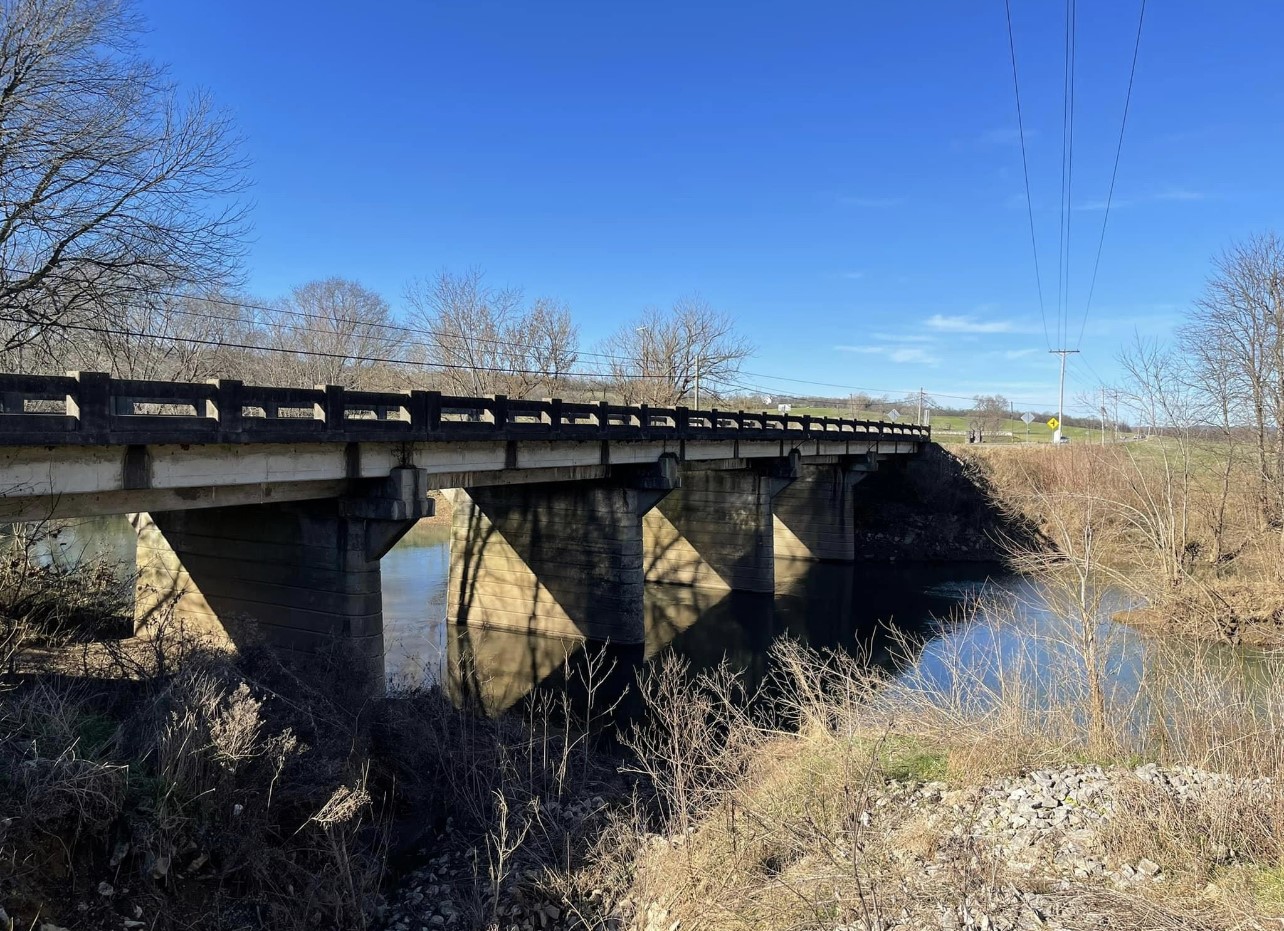
My first stop after departing Lynnville — which suffered a “partial burning” by the United States Army during the war, per a historical marker in town — is the Richland Creek battlefield. Here, on Christmas Eve 1864, the outnumbered and ragtag rearguard of Hood’s army fought against United States cavalry. As I have a half-dozen times, I park near the modern bridge over Richland Creek and try to imagine the fighting.

Somewhere out here, perhaps on Milky Way Farm across the Pulaski Pike, Nathan Bedford Forrest — Rebel cavalry genius, “The Wizard Of The Saddle” and postwar Klansman — directed troops. And somewhere out here, an obsessed Union cavalryman named Harrison Collins captured the object of his longtime desire — a Rebel flag — by stooping down and picking it up. For his bravery, he earned a Medal of Honor.

Unheralded Richland Creek battlefield.
Naturally, I need to know much more about the battlefield, so I drive on a side road and across the railroad track for a stop at a gift shop. I figure someone inside might direct me to a local who can give me a tour of the unmarked hallowed ground.

“Your shop sure smells good,” I tell the three delightful women behind the counter. No battlefield tour results, but I enjoy a brief staredown with a strange-looking cat who smiles at me from covers of a half-dozen Dr. Seuss books on the gift shop shelves.

On my return to the pike, I flag down a local in a pickup truck, but the conversation goes like one you might have underwater with a friend. All the time I am thinking to myself: “DON’T YOU KNOW HARRISON COLLINS OF THE FIRST TENNESSEE CAVALRY (U.S.) EARNED A MEDAL OF HONOR OUT HERE FOR CAPTURING A FLAG!” 

“I shot at it every time I got a chance, sometimes under embarrassing circumstances,” Collins said of the flag. “It got to be so provoking that I made up my mind if we ever got a chance, I’d pay those rebels for flaunting that there flag in our faces.”

Sigh. My life as a Civil War obsessive.

After that respectful convo with the man in the pickup, I travel south past Pulaski, where ex-Rebel soldiers founded the evil Klan on Christmas Eve 1865, and toward the Alabama border (gulp) for a visit to the Anthony’s Hill battlefield, where “The Wizard” fought off U.S. cavalry on Christmas Day 1864.

Before the battlefield stop, I visit a place my dad (“Big Johnny”) and momma (“Sweet Peggy”) — RIP to both ❤️❤️ — would have loved: a combo antiques store/AJ’s One Stop Deer Processing. An antler cap cut here will set you back 10 bucks, extra sausage is a cool 30 large.

Mom and Dad would have appreciated this place.

Inside I enjoy the smell of deer carcasses — pssst! it’s not like those wallets in Lynnville — and admire a multitude of deer heads hanging from the wall and a 1964 Sport magazine in a bin with fireballing lefty Sandy Koufax, a hero of mine, on the cover.

Confederate dead from 
Battle of Anthony's Hill.
Near core Anthony’s Hill battlefield, owned by a descendant of enslaved people, I briefly stop at a small cemetery. Leaves and twigs crackle and groan beneath my feet. A hundred yards or so from the trace of a wartime road on this unheralded battleground rest a few dozen Confederate soldiers, some killed on Christmas Day 1864. My God.

In a flash, I’m zipping south on the pike, destination Sugar Creek — the final battle of the Nashville Campaign. I hope to put my drone in the air for a view of the battlefield, where only a few dozen fell on Dec. 26, 1864. But remember: Somewhere a momma and poppa mourned their deaths just the same.

Unfortunately, I don’t find a launch point, but I do find a general store (closed), where according to a source, Sugar Creek battlefield relics are somewhere inside. Nearby, behind a barbed wire fence, a brown and white horse walks my way.

“What does he know about the Battle of Sugar Creek?” I wonder. But alas, I must go. Sadly, a return to the 21st century awaits.

Saturday, March 18, 2023

Where is General John Bell Hood's amputated right leg?

Get me the re-write desk!

Like this blog on Facebook | Follow me on Twitter | My YouTube videos

Those who do Civil War ponder all sorts of nitty-gritty issues.

John Bell Hood
What kind of ammo did John Buford’s boys use at Gettysburg? When did such-and-such regiment right oblique at 2:15 p.m. at such-and-such battle? How did they make hard tack? Do they serve hamburger at General Pickett’s Buffet?

At Tunnel Hill, Ga., recently, I mulled the whereabouts of John Bell Hood’s leg.

At Gettysburg on July 2, 1863, the Confederate general lost the use of his left arm to U.S. Army artillery. On Sept. 20, 1863, at the Battle of Chickamauga (Ga.), he suffered a wound in his right leg, near the hip.

A surgeon amputated the leg, which may have made its way with Hood—a tough man—to a house in the area. The general also spent time in Rev. Clisby Austin’s house at Tunnel Hill, Ga. In spring 1864, Austin’s house served as an HQ for William Sherman.

Somewhere nearby, Hood’s leg is said to be buried, but that’s open to debate. At the edge of a stretch of woods, a marker stands for the lost limb. It makes copy editors throughout the world frown.

Historical marker at Chickamauga (Ga.) points the way.
The general area where John Bell Hood took a bullet in the right leg at Chickamauga.

 Have something to add (or correct) in this post? E-mail me here.

Saturday, December 10, 2022

How obsessed dude earned MOH in obscure Tennessee battle

Modern bridge at Richland Creek on John Bell Hood's December 1864 retreat route.

Like this blog on Facebook | My YouTube videos

Unlike other battlefields on the Army of Tennessee's retreat route near Franklin, Tenn., little has changed on hallowed ground south of Columbia. No historical plaque, however, marks the Richland Creek battlefield, all privately owned. This wasn’t an epic battle afterall — at least by Civil War standards. 

On Dec. 24, 1864, roughly 6,000 United States soldiers fought 3,000 ragged Rebels. But it was a brutal, and often hand-to-hand, fight near the Pulaski Pike. Eager to bag Hood’s army, the U.S. cavalry pressed hard. 

Richland Creek battle map from
 Mark Zimmerman's excellent 
Mud, Blood & Cold Steel: The Retreat
from Nashville December 1864
“Those fellas,” Rebel cavalry commander Nathan Bedford Forrest said of the U.S. soldiers, “are wrathy today.” 

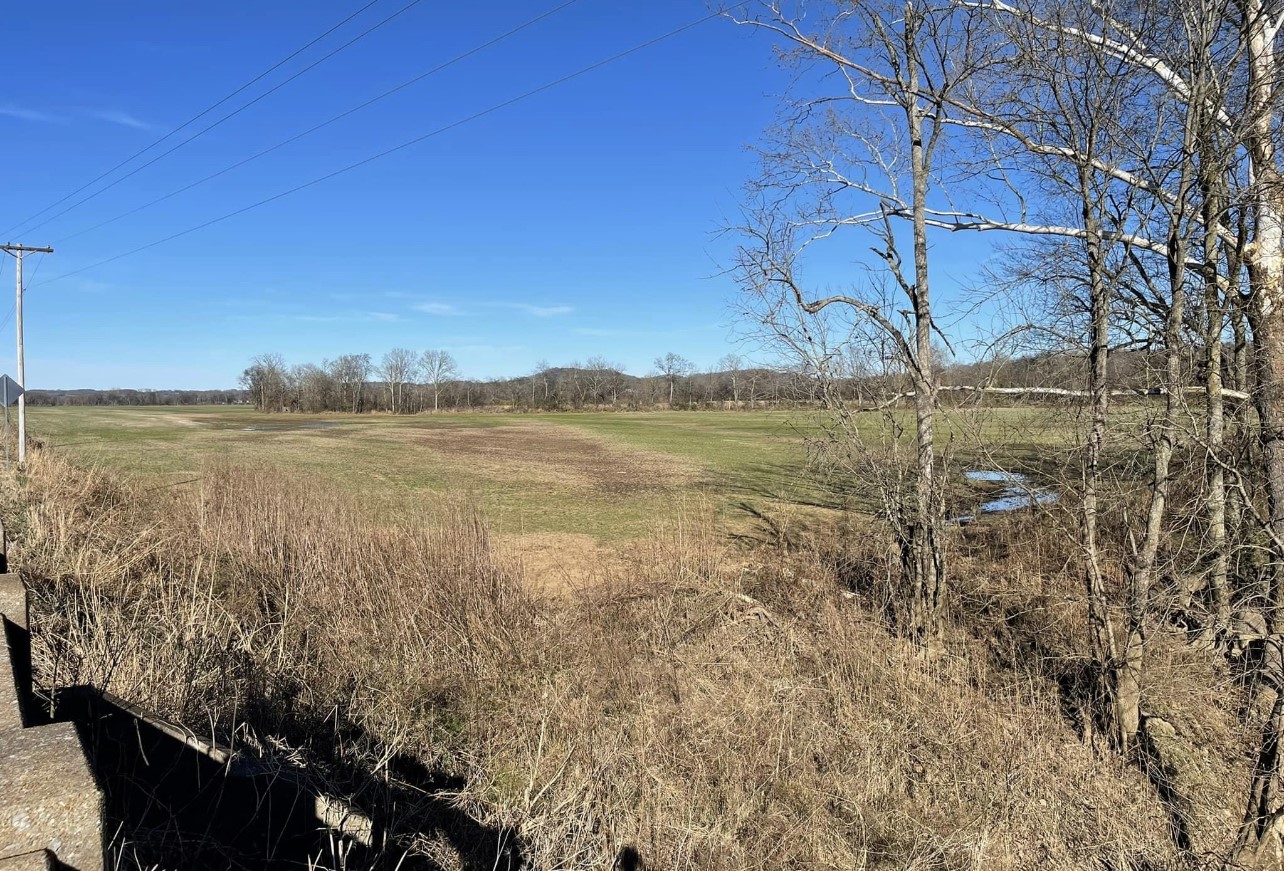
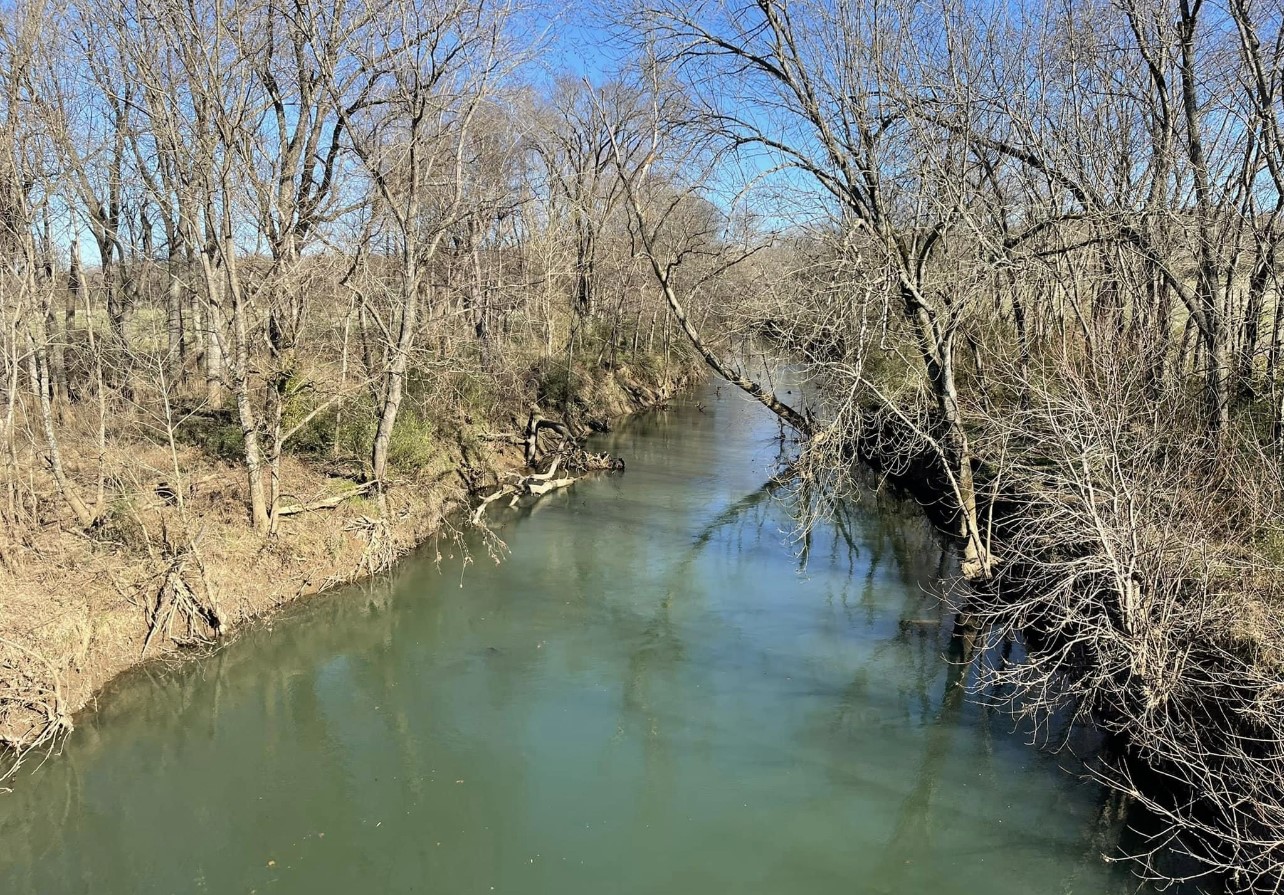
On a ridge near Richland Creek, not far from where I park, Confederates placed two cannons — they called ‘em “Bull Pups” — to stem the blue tide. Behind my battlefield tramping pal Jack and me stretches flat, open ground that meets another ridge about a half mile distant. The creek is roughly 15 yards wide.

Underneath the modern bridge, we find no evidence of its wartime cousin or any other evidence of 1864 nearby. On a walk across it, Jack reads aloud an account of the battle from a book while I look over his shoulder. Passersby speeding on modern Route 31 must wonder: "Why are those old dudes reading a book on a bridge in 27-degree weather?" 

At Richland Creek, an artillery shell burst cost Gen. Tyree Bell, one of Forrest’s top lieutenants, his right eye. He refused to relinquish his command until “The Wizard” ordered him to retire. Bell was one tough SOB. At Shiloh more than two years earlier, he had suffered three broken ribs and three horses killed under him.

The fight produced its share of hard-luck casualties — and unlikely heroes. Somewhere out here Harrison Collins of the 1st Tennessee Cavalry (U.S.) earned a Medal of Honor by capturing a flag, the object of his strange obsession for weeks. 

Left: Nathan Bedford Forrest called
the pursuing U.S. cavalry "wrathy."
Confederate Gen. Tyree Bell
lost his right eye at Richland Creek.
As the Union Army fell back toward Nashville in the aftermath of the Battle of Franklin, the 28-year-old corporal had spotted the enemy flag everywhere, like that helicopter in a scene with Ray Liotta’s Mafia character in Goodfellas.

“I shot at it every time I got a chance, sometimes under embarrassing circumstances,” Collins said. “It got to be so provoking that I made up my mind if we ever got a chance, I’d pay those rebels for flaunting that there flag in our faces.”

Near Richland Creek, where the Rebels made a stand, Collins spotted the flag again and saw an opportunity for glory. No matter the circumstances, capturing an enemy’s flag merited acclaim, sometimes even a Medal of Honor. 

As the Union cavalry charged, a Rebel officer ordered his men to dismount and fight on foot.

“Our party halted here, but I forgot everything but the prize, and riding through the dismounted enemy, overtook the color-bearer and demanded the flag,” Collins said. “He threw it on the ground. I dismounted and picked it up.”


Read more stories like this in my book, A Civil War Road Trip Of A Lifetime.
After a one- or two-hour fight, the U.S. Army forced Hood’s rearguard to flee toward Pulaski.

“The fire was the heaviest ever encountered,” recalled a Rebel soldier.

Now I’m usually skeptical of those “hail of fire,” “storm of lead,” “greatest cannonade of all time” recollections of Civil War soldiers from even the smallest fights. But if you were frozen, exhausted, frazzled, hungry, scared, and shoeless — like these retreating Rebels — you might think the same thing.

In the aftermath of the battle, soldiers found battered trees, plowed-up earth and a few dead and wounded across a frozen landscape. 

Now we see water-sodden fields, a few cows and speeding cars on ground where Harrison Collins became an instant hero.

Looking northeast on the battlefield. Union cavalry advanced toward camera.

Looking east from the Modern bridge over Richland Creek

 Have something to add (or correct) in this post? E-mail me here.

SOURCES

Saturday, January 22, 2022

A nerd's-eye view of obscure Richland Creek (Tenn.) battlefield


On Dec. 24, 1864 at Richland Creek, roughly eight miles north of Pulaski, Tenn., U.S. Army cavalry fought the rearguard of John Bell Hood's Army of Tennessee in the aftermath of the Battle of Nashville. Forces: 6,000 U.S. cavalry and 12 guns; 3,000 Confederate with eight guns. Visitors to battlefield besides my hypnotist pal Jack and I: 0. We were in good spirits because of stops earlier in the morning in nearby Lynnville at Soda Pop Junction for Big Johnny's burgers and then apple and cherry pies at the Lynnville Fried Pie Company. 😆

Thursday, April 08, 2021

Battle at Hollow Tree Gap: But did the car alarms go off?

                    EXPLORE THE PANORAMA of Hollow Tree Gap (Tenn.) battlefield site.

Like this blog on Facebook
 | Follow me on Twitter

On Dec. 17, 1864, the retreating Army of Tennessee — battered the day before at Nashville — dashed past these apartments, scattered managers in the leasing office, knocked two kids off their scooters, and wrecked several parked cars during a stand against Yankee cavalrymen, who had earlier quenched their thirst with 10 12-packs of Bud purchased across the road at a convenience store. Federal losses: 22 killed and wounded and more than 60 captured. Confederate losses: Roughly 250 captured and unknown number killed and wounded.

Thankfully, the Civil War Trails sign was not damaged in this hour-long brawl. 

John Bell Hood’s boys continued their retreat southward after this fight, also known as the Battle of Holly Tree Gap or The Duel at the Apartments. 

Let’s keep history alive. (Sort of. ) 😏


-- Have something to add (or correct) in this post? Email me here.


Tuesday, September 08, 2020

In search of 'Old Brains': A Shiloh-to-Corinth (Miss.) round trip

Your dazed blogger at Shiloh following an awful bug attack.
Like this blog on Facebook | Follow me on Twitter

At the spring of 1862 Siege of Corinth (Miss.), his only field command of the war, Henry Halleck wasn't known for bold initiatives or lightning strikes. Plodding and overcautious, the 47-year-old Union commander took more than a month to conquer the strategic northern Mississippi town that eventually was abandoned by a vastly outnumbered enemy.

Mr. Bold, Henry Halleck, also known
as "Old Brains. (Library of Congress)
"Old Brains" had more than 100,000 troops! No wonder Abe Lincoln finally put this guy behind a desk for good.

"We have let them slip through our fingers," a Union soldier wrote about the Confederates' escape.

Bleh. Let's not be like "Old Brains."

On our Civil War journeys, let's emulate J.E.B. Stuart: Be bold, deliver a few great results, occasionally ride aimlessly through the countryside, and when appropriate, party like it's September 1862. (But when riding a bicycle, do not stick a plume feather in your helmet.)

Summoning my inner Stuart, I drove from Shiloh, Tenn., to Corinth, Miss., and back on Monday, following the serpentine road “Old Brains” himself may have taken. (And then I returned to Nashville. It's not called "Labor Day" for nothing.) It was stunning I made the roughly 40-mile Shiloh-to-Corinth round trip at all because a massive insect violently struck my helmet earlier, nearly knocking me from my road bike at Shiloh.

But I was uber-determined to visit the “Crossroads of the Confederacy," where Halleck set up shop after Pierre Gustave Toutant Beauregard abandoned it for good on May 30, 1862. Join me for the ride.


En route to Corinth, near the Shiloh battlefield, I found this. Damn, I'm a sucker for every historical marker -- especially ones nearly obscured by weeds ...


... And unsurprisingly, I also discovered a Civil War Trails marker near the site of Albert Sidney Johnston's last bivouac. (They. Are. Everywhere.) The next day, April 6, 1862, ASJ was mortally wounded at Shiloh. Shot behind the right knee, the 59-year-old commander bled to death in a ravine -- even though he had a tourniquet in his pocket. (Quick plug: Read my Civil War Times column about Shiloh battlefield markers -- including the one at Johnston's death site.) ...


Keeping an eye out for angry dogs, I slowly walked down the lane to the bivouac site. Hey, did Johnston's staff forget something? ...


Arrival!

Albert Sidney Johnston
Here's the story, according to info in the wayside exhibit: "This site was not marked by the Shiloh Battlefield Commission when Shiloh National Military Park was being developed. Only a small sign was placed on Highway 22 pointing to its location. Fortunately, there were local citizens who knew the location of this site.

"In 1862, James Wood (1831-1923) lived on the site of his Cotton Gin which was just north of the present restaurant at the intersection of Highway 22 and 142. Having learned that a battle was coming, he gathered his family and a few possessions, and late in the afternoon of April 5, 1862, headed southwest along the Corinth-Pittsburg Landing Road. This old road is still partially visible in the woods just north of this site.

"At this location, now marked, he found General Albert Sidney Johnston camped under a large Post Oak tree."

Over the years, Woods' relatives frequently pointed out the site to visitors. ...


... and sprinkled along Route 22, near the national military park, you'll find these fabulous, old cast-iron Shiloh historical tablets. The veterans themselves determined where most of these were placed. This one happens to be smack-dab in someone's front yard. ...


... and this one, which desperately needs TLC, denotes the position of a brigade of Johnston's Army of the Mississippi. Off to our main destination ...


"Corinth, Mississippi, to be Waterloo of the war," the New York Herald predicted in early April 1862," before the result of the Battle of Shiloh.

Well, Beauregard's boys held out much longer than expected -- thanks to Halleck's case of the slows  and some ingenious subterfuge that included Quaker guns in earthworks.

A few miles north of downtown Corinth, the National Park Service maintains a small site where you can view Confederate earthworks in the woods. Trust me. They are out there. Somewhere. ...


... and deep in those same woods, I also found this. Hmmm... not encouraging.


Finally, the Crossroads of the Confederacy! 

On my last visit to Corinth, I ignored this famous junction, visiting instead an indoor Civil War axe throwing venue on North Fillmore. ("Whether you want to channel your inner lumber jack or just try out a fun and competitive hobby," according to this tout, "axe throwing is a fun and unique sport that’s taking North America by storm.") Hmmm ... that wouldn't cut it for me this time.

Corinth was at the junction of two vital railroad lines, the Mobile & Ohio and Memphis & Charleston, hence the U.S. Army’s huge interest in occupation. Strange as it may seem, this humble town helped keep the Confederate Army fueled for fighting in the Western theater and beyond. "More important than Richmond," some big-wigs in the Federal command called Corinth.

There's a museum at the depot, but it was closed because of the holiday. Bummer.


... but there's still plenty to see near the railroad junction. Here's the site on Fillmore Street of long-gone Rose Cottage, where Johnston made his HQ and after Shiloh his body lay in state.


... and here's the beautiful, privately owned house down the street that Confederate general Leonidas Polk used as headquarters.


... and on Polk Street Street stands the old W.L. Duncan House, used by Beauregard as a headquarters and later by Union General William Rosecrans during the Battle of Corinth in early October 1862. (It's now a private dwelling.) Confederate Private Thomas Duncan wrote his war-time recollections here in his boyhood home, which once stood on Jackson Street. 


...and on Jackson Street, we find the outstanding Verandah-Curlee House, the exclamation point of my visit. OMG! OMG! Owned by the city and open for tours, it was used by Confederate generals John Bell Hood and Braxton Bragg as a headquarters and by "Old Brains" himself in 1862. Ah, I could feel my IQ rising as I soaked in this scene. The site of Ulysses Grant's HQ, now occupied by Corinth police headquarters, is directly across the street.

OK, we're done with ya, Corinth. Until next time ...


... and whoa! On the return trip to Shiloh, I was jolted by this unusual sight outside Larry DeBerry's Shiloh museum/shop.

OK, time's up. Thanks for riding along.

Let's keep history alive.

-- Have something to add, correct? E-mail me at jbankstx@comcast.net

Saturday, August 25, 2018

Spring Hill (Tenn.) video: While Rebels slept, Yankees escaped


Like this blog on Facebook

On the night of Nov. 29, 1864, the bulk of John Schofield’s Army of the Cumberland slipped past the Confederates’ Army of Tennessee camped in these fields in Spring Hill, Tenn. Follow along with me for a walk at the old Rippavilla Plantation.

Sunday, August 05, 2018

BBQ & bloodstains: Tales from Civil War road trip in Tennessee

At a Civil War relics show in Dover, Tenn., a presentation cup for Winfield Scott Hancock.
 It's yours for $50,000. (CLICK ON IMAGES TO ENLARGE.)
Like this blog on Facebook | Follow me on Twitter

It's 9 a.m. on Saturday in Nashville, Skinny State of Tenn., and boredom quickly has set in. What should I do? Well, there is never a bad time for a Civil War road trip. I know of a relic show in Dover, site of Fort Donelson, where a guy named Grant made a name for himself. I am a massive sucker for relics. Our 20-year-old daughter could use an artillery shell. My wife loves when I spend money on photos of people who have been dead for 150 years. Hey, that's how the Banks family rolls. Let's go!

11:45 a.m.: After a 90-minute drive from Nashville, I arrive at the relic show. And I feel so ... young ... and "Northern." (I'm originally from Pa.) It's time to show intense interest in the stack of Nathan Bedford Forrest books at a front table. Dealers discuss purchases for thousands of dollars. Jealous. I glance at my wallet. Yup, no cash. Thankfully, show admission was free. On a long table, next to the display case with Adolf Hitler and Hermann Goering cufflinks (true!), rests a large, silver presentation cup. Once belonged to Winfield Scott Hancock. Asking price: $50K. Perhaps worthy of a phone call to ...? Ah, no. No! Thirty minutes after arrival, I'm done. Attention span of gnat.

Barge with military equipment glides down river past Confederate battery position at Fort Donelson.
12:15 p.m.: Because I am the nook-and-crannies, backroads-loving type, I take a roundabout way to Fort Donelson. Near the fort, off National Park Service property, I find the site of U.S. Grant's HQ. Of course, I get out of the car and look. Dang, I'd love to sweep a metal detector over this yard. Wouldn't it be great if I found, say, a couple circa-1862 nails? Text to self: Wife. Would. Not. Appreciate.

Who wouldn't stop to take a photo of site
 of U.S. Grant's headquarters?
I take a photo of the large, metal Grant HQ sign. (Who wouldn't?) Finally, I make it to the parking lot near the Confederate batteries at Fort Donelson on the Cumberland. Uh-oh, there's is a large group of bikers here. Look menacing, so I park a good distance away. Must bulk up. I take a detour around bikers, scampering down a hill to the Upper River Battery. Suckered by sign into taking photo of long-gone powder magazine. (Picture massive mounds of dirt.) A huge barge jammed with military vehicles glides into view on the river. Photo op! After scrambling for the perfect angle, I shoot a few images from behind one of the large cannons. Gotta go, but where? Well, I always wanted to see inside Rippavilla Plantation mansion in Spring Hill.

Chicken, pork, ribs and brisket and a little history: What a great combo!
1:30 p.m.: Curses to you, Google Maps! The app takes me on every blasted one-lane, winding country road in the state. Hey, why’s that car tailgating me here in Tennessee? I think dark thoughts. And then ... a Civil War Trails sign! You know you're a history geek when you always stop at one of those wayside markers. I park. I feel guilty when I don't read all the text. Every. Damn. Time. Curses to you, too, Drew Gruber! Back to the sign: Forrest’s cavalry and Confederate guerillas put a scare into the Yankees in this area in '62-63. Thankfully, here in off-the-beaten path Yellow Creek Valley I'm also in a parking lot for place called Family BBQ. I'm hungry, and I love barbecue. After all, I'm 18.8 percent Texan, according to my AncestryDNA test. Locals eye me warily as I tiptoe through the front door into a barren, gray room. It feels like a scene out of Marathon Man. Is it safe? A man sporting a ponytail is chopping at the carcass of something. Perhaps it's a hog. Hey, I grew up in the suburbs. I ask if he accepts a credit card. All cash, all the time, he says in a friendly, I have zero-intention-of-slicing-you-with this-meat cleaver type of way. But there's a place down the road several miles that will take my credit card and ... WWFD. (What Would Forrest Do?) Too complicated. Math’s not my thing. I'm back on the road...

Rippavilla Plantation mansion: Lots of beauty and history. But no bloodstains.
3 p.m.: Spring Hill, Tenn., and Rippavilla. At last! In the bookstore, once used as a garage, a late-60s-ish man named Spence sits in a chair. He's wearing a fine pair of cowboy boots. They look uncomfortable, but he insists they aren't. Heck, my feet would hurt in bathroom slippers. Achy wheels today. I blame the bikers. A native of Franklin, Tenn. Spence hates the way the Civil War-rich area has grown. Used to grow crops in this area, he says, now they grow rooftops. I sympathize. Bulldozers are pitiless in these parts.

The impressive, original columns at Rippavilla.
I buy a book, purchase a house tour ticket. 33 bucks. This better be good. I want to see three things: bloodstains, where John Bell Hood supposedly chewed out his generals after the Yankees slipped past his army on Nov. 29, 1864, and bloodstains. (Told you I wasn't good at math.) The place was used as a field hospital during the War of Northern Aggression. Gotta see some blood on the floors. Our small tour group enters the house. Carpeting throughout first floor. No blood. Bummed. We see the Hood room. Spence points to breakfast table used by JBH and his generals for their long-ago morning chit-chat. (Newsflash: As I craft this report, local TV station reports 39,000 pounds of chicken nuggets spilled onto Tennessee road. "Chicken nuggets for blocks!" Must regain train of thought.) Back to Rippavilla: We go upstairs. Little carpeting, but original poplar floors covered by newer wood floors. Hmmm ... perhaps I can distract Spence and ... oh, never mind. Stuffed with knowledge,  our group departs, but a docent named Chuck allows me to take a few more photos. Although I am a Yankee, we all part friends.


4:30 p.m.: Civil War nerd heaven! I walk Rippavilla Plantation fields where the Rebs camped the night the Yankees snuck past them. Union boys were so close they could see campfires of enemy and hear 'em chatting. Wonder what it smelled like? Lots of grimy soldiers, you know. Thank you, Civil War Trust for saving this land. It’s so easy to envision 1864 from here today — if you can ignore the steady stream (and hum) of traffic on Columbia Pike and the massive GM plant in the near-distance. Just noticed I'm hungry again. Thank gawd there's a PeiWei over the hill, built atop core Spring Hill battlefield. I shoot a video, take some pics. It’s time for this Civil War nerd to roll home. Elapsed time: 8 hours. Miles traveled: 200-plus.

Now about those chicken nuggets ...

-- Have something to add (or correct) in this post? E-mail me here.