Showing posts with label John Banks'Civil War blog. Show all posts

Wednesday, February 14, 2024

Tales from the road: Going 'nuclear' in Grand Gulf, Mississippi

Mac Drake bought a copy of my book, cementing his place among my favorite Mississippians.

                  Like this blog on Facebook | Follow me on Twitter | My YouTube videos

To get to remote and sleepy Grand Gulf, Miss., where Confederates beat back a determined attack by Ulysses Grant on April 29, 1863, I drive 10 miles below the speed limit on a curvy, two-lane road. After suffering the indignity of a speeding ticket during a Civil War sojourn in the wilds of South Carolina in early October, I’m not keen on breaking any more bad news to Mrs. B.

About two miles past the entrance to a nuclear power plant — the most powerful in the U.S., according to sources — I pull into the parking lot for the Grand Gulf Civil War museum. (Entry: five bucks.) It’s manned this afternoon by a gem of a human named Mac Drake, who regales me with nuclear power plant humor that we plan to keep just between us.

Sleepy Grand Gulf was engulfed by civil war, too.
“I like messing with people about the plant,” he tells me with a twinkle in his eye.

Drake is a descendant of a Confederate soldier named Henry H. Myers of the “Liberty Hall Volunteers” of the 4th Virginia, which saw hard fighting throughout the Eastern Theater — including at Sharpsburg (Antietam to us Northerners), Fredericksburg and Gettysburg. According to family lore, Robert E. Lee gifted a chair to Myers — it still remains with the Drakes.

The small but excellent Grand Gulf museum, roughly a half mile from the Mississippi River, is filled with historical treasure: a letter from George Washington, a bullet-riddled U.S. Army belt plate found by Burnside Bridge after Antietam and the usual assortment of artillery shells, muskets and Civil War accoutrements that Mrs. B will never let in our house.

A Mastadon leg bone. Hi ho!
“Hey, is that a Mastadon leg bone ?” I say to myself.

Sure enough, the remains of the prehistoric animal rest in all their glory in a display case.

Before departing, I try to persuade Mac to gift me one of the artillery shells, but he doesn’t bite. However, I strongarm him into purchasing a copy of my book and posing with it for a photo — acts that propel him to No. 2 on my ranking of Mississippians, just behind my “psychotic connection, Sid Champion V of Champion Hill battlefield renown, and Bud Hall. (They are co-No. 1s.)

What a great visit. Let’s keep history alive. 👊

Grand Gulf is the first Civil War-related site I've visited near a nuclear power plant.

Saturday, December 10, 2022

How obsessed dude earned MOH in obscure Tennessee battle

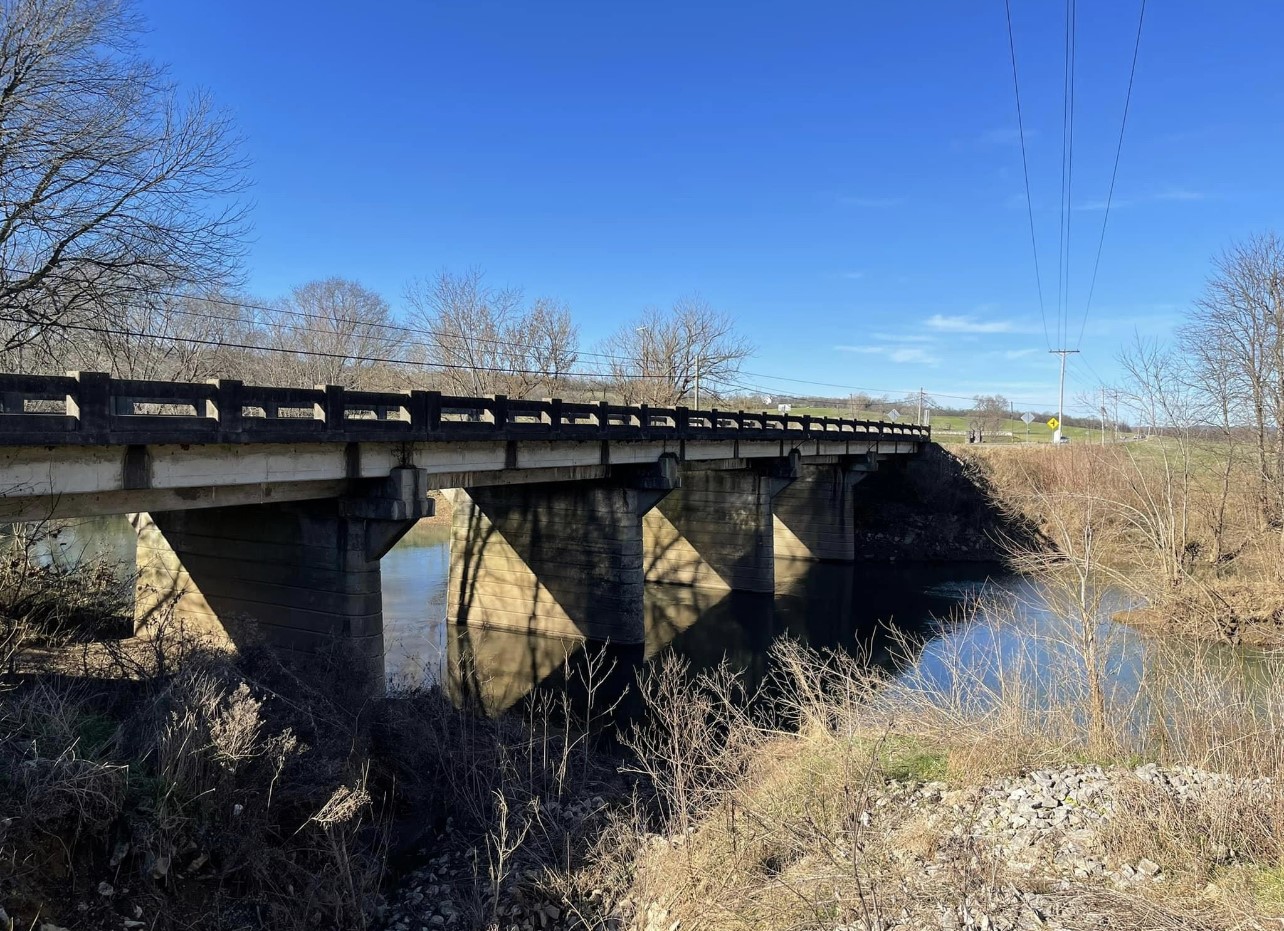
Modern bridge at Richland Creek on John Bell Hood's December 1864 retreat route.

Like this blog on Facebook | My YouTube videos

Unlike other battlefields on the Army of Tennessee's retreat route near Franklin, Tenn., little has changed on hallowed ground south of Columbia. No historical plaque, however, marks the Richland Creek battlefield, all privately owned. This wasn’t an epic battle afterall — at least by Civil War standards. 

On Dec. 24, 1864, roughly 6,000 United States soldiers fought 3,000 ragged Rebels. But it was a brutal, and often hand-to-hand, fight near the Pulaski Pike. Eager to bag Hood’s army, the U.S. cavalry pressed hard. 

Richland Creek battle map from
 Mark Zimmerman's excellent 
Mud, Blood & Cold Steel: The Retreat
from Nashville December 1864
“Those fellas,” Rebel cavalry commander Nathan Bedford Forrest said of the U.S. soldiers, “are wrathy today.” 

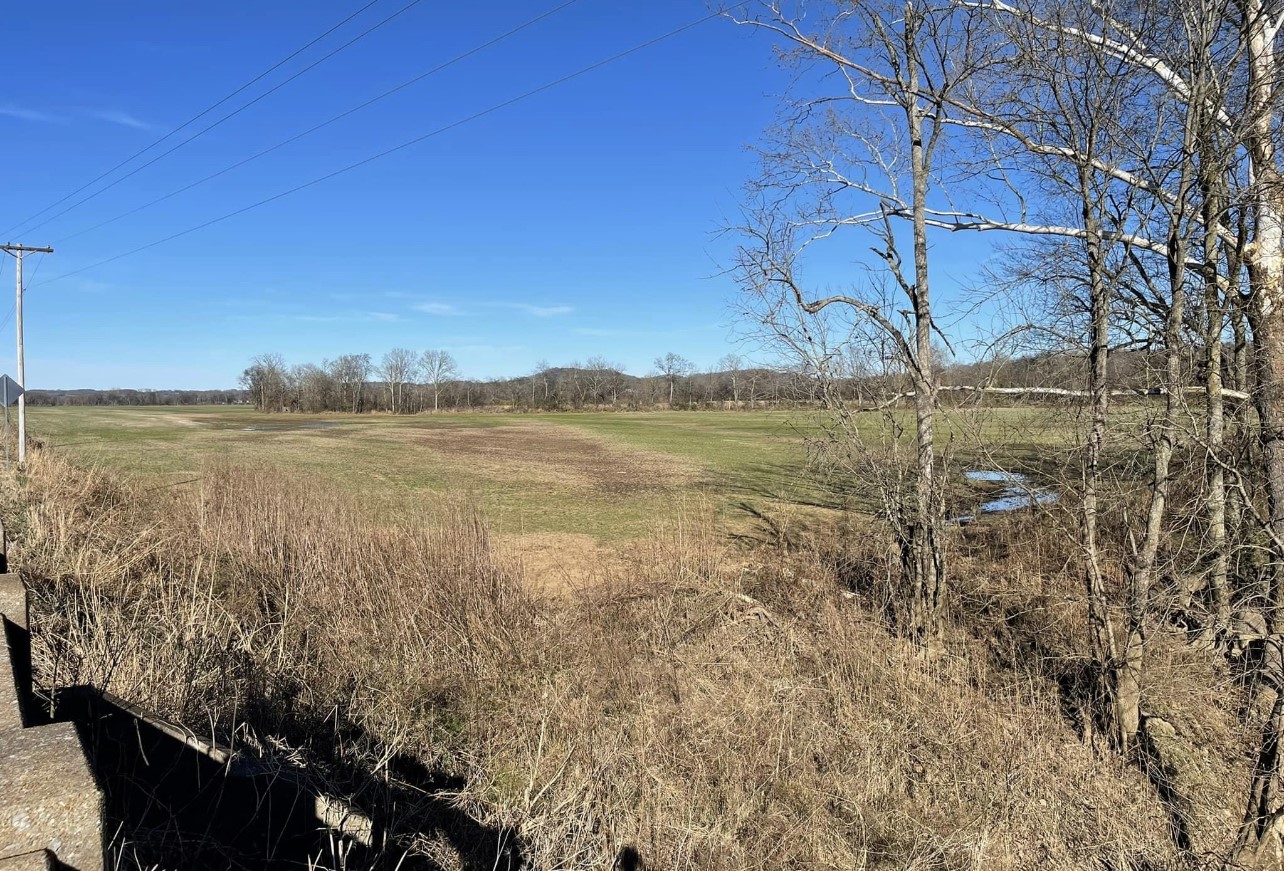
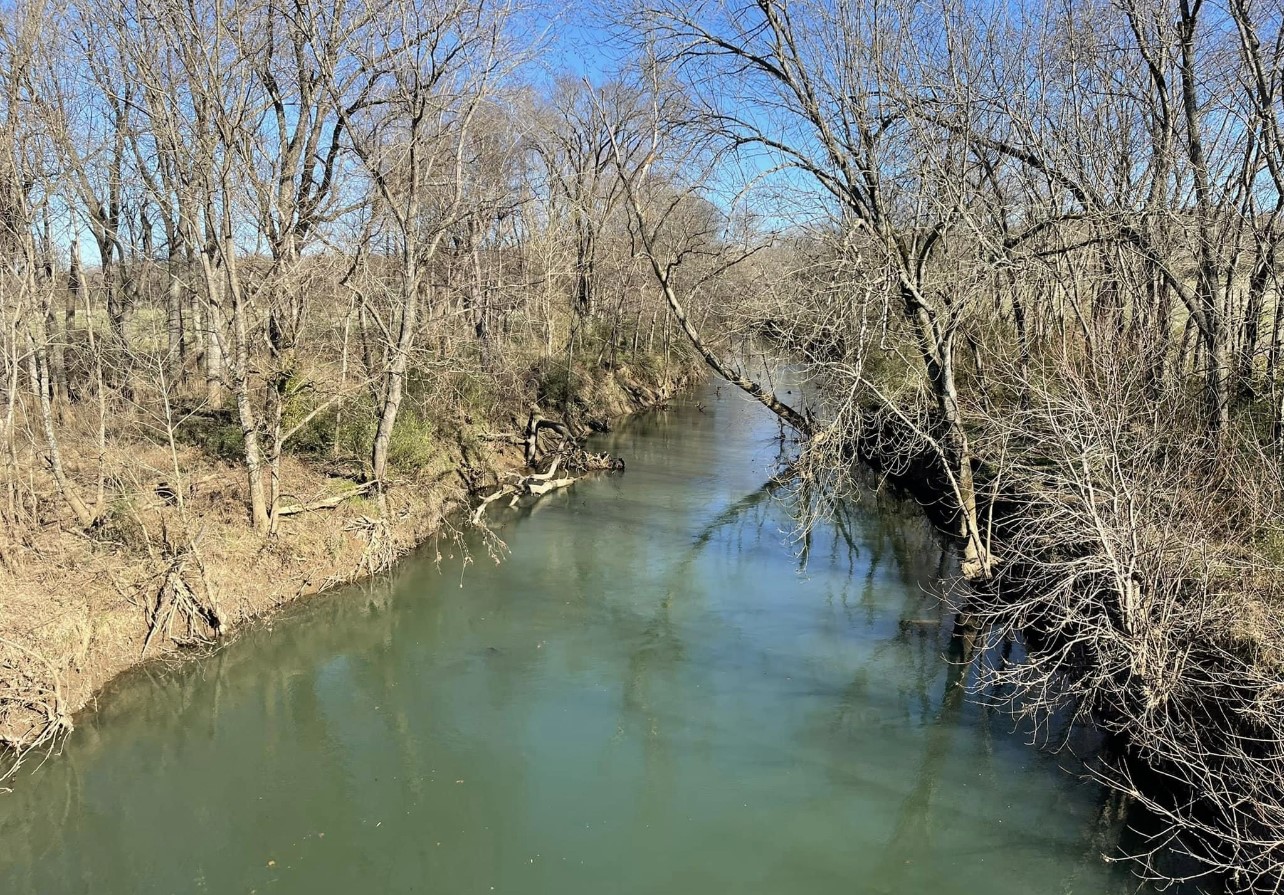
On a ridge near Richland Creek, not far from where I park, Confederates placed two cannons — they called ‘em “Bull Pups” — to stem the blue tide. Behind my battlefield tramping pal Jack and me stretches flat, open ground that meets another ridge about a half mile distant. The creek is roughly 15 yards wide.

Underneath the modern bridge, we find no evidence of its wartime cousin or any other evidence of 1864 nearby. On a walk across it, Jack reads aloud an account of the battle from a book while I look over his shoulder. Passersby speeding on modern Route 31 must wonder: "Why are those old dudes reading a book on a bridge in 27-degree weather?" 

At Richland Creek, an artillery shell burst cost Gen. Tyree Bell, one of Forrest’s top lieutenants, his right eye. He refused to relinquish his command until “The Wizard” ordered him to retire. Bell was one tough SOB. At Shiloh more than two years earlier, he had suffered three broken ribs and three horses killed under him.

The fight produced its share of hard-luck casualties — and unlikely heroes. Somewhere out here Harrison Collins of the 1st Tennessee Cavalry (U.S.) earned a Medal of Honor by capturing a flag, the object of his strange obsession for weeks. 

Left: Nathan Bedford Forrest called
the pursuing U.S. cavalry "wrathy."
Confederate Gen. Tyree Bell
lost his right eye at Richland Creek.
As the Union Army fell back toward Nashville in the aftermath of the Battle of Franklin, the 28-year-old corporal had spotted the enemy flag everywhere, like that helicopter in a scene with Ray Liotta’s Mafia character in Goodfellas.

“I shot at it every time I got a chance, sometimes under embarrassing circumstances,” Collins said. “It got to be so provoking that I made up my mind if we ever got a chance, I’d pay those rebels for flaunting that there flag in our faces.”

Near Richland Creek, where the Rebels made a stand, Collins spotted the flag again and saw an opportunity for glory. No matter the circumstances, capturing an enemy’s flag merited acclaim, sometimes even a Medal of Honor. 

As the Union cavalry charged, a Rebel officer ordered his men to dismount and fight on foot.

“Our party halted here, but I forgot everything but the prize, and riding through the dismounted enemy, overtook the color-bearer and demanded the flag,” Collins said. “He threw it on the ground. I dismounted and picked it up.”


Read more stories like this in my book, A Civil War Road Trip Of A Lifetime.
After a one- or two-hour fight, the U.S. Army forced Hood’s rearguard to flee toward Pulaski.

“The fire was the heaviest ever encountered,” recalled a Rebel soldier.

Now I’m usually skeptical of those “hail of fire,” “storm of lead,” “greatest cannonade of all time” recollections of Civil War soldiers from even the smallest fights. But if you were frozen, exhausted, frazzled, hungry, scared, and shoeless — like these retreating Rebels — you might think the same thing.

In the aftermath of the battle, soldiers found battered trees, plowed-up earth and a few dead and wounded across a frozen landscape. 

Now we see water-sodden fields, a few cows and speeding cars on ground where Harrison Collins became an instant hero.

Looking northeast on the battlefield. Union cavalry advanced toward camera.

Looking east from the Modern bridge over Richland Creek

 Have something to add (or correct) in this post? E-mail me here.

SOURCES

Wednesday, March 08, 2017

'No end to the things': Fabulous Gettysburg bullet find in 1910

              Widow Lydia Leister's house, George Meade's headquarters at Gettysburg.
        HOVER OVER IMAGE | Then: Alexander Gardner, LOC | Now: Google Street View

Like this blog on Facebook

While digging up Taneytown Road near General George Meade's old Gettysburg headquarters, workers made an amazing find in the spring of 1910: hundreds of bullets from the Civil War. It was the first big relic find on the battlefield in years, according to a local newspaper.

"The plough was turning up the road at a lively rate when the first were seen," the Gettysburg Times reported on May 14, 1910. "A hurried search was made and heaps of thirty or forty were found. There seemed to be no end to the things and before the time for quitting work came almost 850 had been found."

Nothing to sneeze at: A bullet story from the
  Oakland Tribune on March 22, 1915.
The newspaper speculated the ammunition was discarded by soldiers in the Pennsylvania Reserves after they were issued new ammo, or the bullets may have simply fallen from an ammo crate like this one. Or perhaps the little lumps of lead were placed there by someone with an ulterior motive.

"Some have even been so unkind to intimate that they may have been planted," the Times noted, "to accommodate the wishes of the tourist trade for that kind of relic to take home."

In any case, the relics were quickly snapped up by road workers. "One man had half a bucket full of the leaden things," the newspaper noted, "while others managed to get large shares of the bullets."

My all-time favorite Gettysburg "bullet" find story -- pardon the awful pun -- is nothing to sneeze at. During the battle, 6th North Carolina Sergeant Calvin Cook was shot in the head. He survived, but the wound he suffered at Gettysburg troubled him for decades. In the winter of 1915, nearly 53 years after the battle, the veteran from Catawba County, N.C., had a sneezing fit.

"... he 'blew' his nose with uncommon vigor and out rolled his souvenir of the greatest battle of the Civil War," a March 1915 story in the Oakland Tribune  noted under the headline "Vet Sneezes Out Gettysburg Bullet." The story, originally reported in North Carolina newspapers, was picked up by other newspapers in the United States.

“He always thought that it was a piece of shell that struck and cut him,” the Hickory (N.C.) Mercury reported in February 1915. “He had no idea it was a ball. The wound soon seemed to get well. He did not realize there was anything in there, but he could not breathe through one of his nostrils. Saturday, January 23, he blew his nose and a small minnie ball fell out of it on the floor. "

Cook's nasal trouble disappeared when the "bullet" -- perhaps really a large piece of buckshot -- rolled out.

Believe it or not.

-- See large-format Then & Now of Meade's headquarters here.

Friday, May 08, 2015

Amazing discovery: Image of his 18th Connecticut ancestor

Corporal John E. Barrows of the 18th Connecticut was captured at the
 Second Battle of Winchester (Va.) (Images courtesy of Alan Crane)
 Like this blog on Facebook.

When he was married 10 years ago, Alan Crane and his wife bought a family poster and filled out entries for his ancestors.

Great-grandfathers. Check.

Alan Crane and his sister celebrated after winning
 the auction for an image of 18th Connecticut 
Corporal John E. Barrows.
Great-grandmothers. Ditto.

Great-great grandmothers. All good.

Great-great-grandfather 1. Got it.

But when the Norwich, Conn., resident got to entry for his other great-great-grandfather, Crane didn't have a clue. That set him on a journey to fill in the blank in his family story and led to an amazing discovery last fall at an antiques auction in New York.

After doing some digging on ancestry.com, Crane determined that his missing great-great-grandfather was John E. Barrows, a corporal in Company H in the 18th Connecticut. From Windham, a small town in eastern Connecticut, Barrows was captured at the Second Battle of Winchester (Va.) on June 15, 1863, and confined in a Rebel prison at Belle Isle in Richmond, where he contracted an illness. After he was paroled on July 14, 1863, Barrows spent the rest of the war in and out of hospitals until he was discharged on June 23, 1865.

Over the past 10 years, Crane found mentions of Barrows in the 18th Connecticut's regimental history, snippets of information in the Willimantic (Conn.) Chronicle and his grave in Willimantic Cemetery. In Barrows' widow's pension file, he even found a poignant letter from his great-great grandmother to the Connecticut Adjutant General's office in which she pleaded for government assistance. Any aid, she wrote, would be looked upon with favor by the "god of widows and orphans."

John E. Barrows' grave in Willimantic (Conn.) Cemetery.
He was only 34 when he died.
But Crane still was missing the holy grail of his search: a wartime image of his great-great grandfather.

Fast-forward to last fall.

Crane, who over the years has collected or catalogued every 18th Connecticut image he could find, received a text from a friend who was on a similar mission to find an image of his ancestor, who was in the 77th New York. His friend's message included a link to an auction in Scarsdale, N.Y. Stunningly, one of the photos offered for auction was a wartime carte-de-visite of Barrows. His  name, company and regiment were in ink below the image.

"I nearly passed out when I saw it," said Crane, who took off from work and traveled to Scarsdale with a "wad of cash." Luckily, he put in a winning bid for the image of his great-great grandfather as well as images of other soldiers who may have known Barrows while he was at Camp Parole, Md.

Amazingly, Crane had similar fortune during his search for information on his other Civil War ancestor, Alvin M. Crane. At a local flea market, he bought a framed Soldier Memorial poster for the 21st Connecticut captain. And last year, Crane bought on eBay a Revolutionary War receipt signed by his fifth great-grandfather, Hezekiah Crane Jr.

"All in all," Crane said, "I'm pretty lucky with this kind of thing."

Have something to add (or correct) in this post? E-mail me here.