Showing posts with label Fort Pillow. Show all posts

Wednesday, December 25, 2019

Rambling: A year of listening, observing and learning

Ken Rutherford on the Cross Keys (Va.) battlefield in the Shenandoah Valley.
(CLICK ON IMAGES TO ENLARGE.)
Like this blog on Facebook | Follow me on Twitter

In rambling from Picacho Pass, Ariz., to Resaca, Ga., over the past year, I've focused on becoming a better listener. A better observer, too. Ah, what stories can be mined -- and what lasting connections can be made -- if you do. "If you make listening and observation your occupation," a smart person once said, "you will gain much more than you can by talk."

Here are people who have enriched my life over the past year:

On Father's Day weekend, Ken Rutherford and I toured the Cross Keys, Port Republic and Piedmont battlefields in the Shenandoah Valley in Virginia. We talked about the Civil War, football, life and his life-altering experience: In 1993, Dr. Rutherford, a professor at James Madison University, was critically injured in a landmine explosion in Somalia. His legs were amputated. Ken's tremendously inspiring. Read my Civil War Times column.

W.C. "Burr" Datz holds a copy of an old image of the creation of the Robert E. Lee sculpture behind him.
Moments after I pass through the white doors of Lee Chapel on the Washington and Lee University campus in Lexington, Va., docent W.C. "Burr" Datz springs into action. “Do you have 10 minutes?” the Long Island native asks from atop the stage. Datz, whose white beard gives him a passing resemblance to Robert E. Lee, is flanked by a large painting of George Washington to his right and one of Lee to his left. Next to him is the chapel's original wooden podium, a work of art that dates to 1868. Behind Datz is the main attraction: a small room that houses Edward Valentine's impressive memorial sculpture of the recumbent Lee. Read more.

Stan Hutson in the Slaughter Pen at Stones River (Tenn,) battlefield.
“It’s all gone,” Stan Hutson tells me, referring to core Stones River (Tenn.) battlefield. Remorseless developers have pounded the life out of much of this great battlefield, where more than 24,000 souls became casualties in one of the bloodiest fights of the Civil War. Our aim on this deep-blue sky afternoon is to find where five of them fought and received their mortal wounds. What would we see on this battlefield lost? Read my Civil War Times column.

Larry DeBerry at his relic shop near the Shiloh (Tenn.) battlefield.
Shortly after greeting a visitor at his small museum/shop near the Shiloh (Tenn.) battlefield, 72-year-old Larry DeBerry deploys a time-tested technique to win him over: He tells a great story. "See over there?" he says, gesturing to painted toy figurines that fill several shelves at Shiloh Battlefield Museum and Souvenirs. The longtime accountant tells how he acquired the massive set (from an elderly man in New Mexico) and points out figurines of Chinese communist leader Mao Zedong ("look at that receding hairline") and a reviled Japanese World War II military commander (Hideki Tojo) whose name escapes him. Later, DeBerry hands me a very special gift. Read more.


Trapper Haskins founded a vintage baseball league -- it plays by 1864 rules -- in Middle Tennessee.
On the 157th anniversary of the Battle of Shiloh, I met Trapper Haskins at Duncan Field, scene of savage fighting in April 1862. The National Park Service granted permission for his Tennessee Association of Vintage Base Ball to play a doubleheader on the hallowed ground. In 2007, Haskins, a custom wood worker, was in Port Huron, Mich., working on a Gloucester schooner. At the local library, he saw a flyer for a vintage baseball team seeking players. He joined and was hooked. Read my story in America's Civil War magazine.


Along a wall at the H Clark Distillery in Thompson's Station, Tenn., site of the 1863 battle, sat a massive tub of brown liquid. Spent grain, it's called. A local farmer takes this waste product from the alcohol-making process and feeds it to his cows, a pleasing feast for the animals. “The cows love our bourbon mash,” Kim Peterson, the distillery's tour experience manager told me. "They come running for it. Then they just lay in the field, chilling.” She wants to shoot video of the cows enjoying the mostly alcohol-free slop someday. What a scene that must be. Read more.


At Point Park atop Lookout Mountain, Tenn., I briefly spoke with a group of Union reenactors portraying a Kentucky unit. The distinctive smell of burning firewood filled the air. Small talk led to a discussion of Civil War flags, which led to this image of Todd Watts of Nashville. The flag was a tremendous backdrop for a photo that was an exclamation point for a great day walking an awe-inspiring battlefield.


“Ladies and gentlemen, on our right is the oldest living fossil,” a reenactor said in jest about 83-year-old Jere McConnell at the reenactment at Resaca, Ga., in May. Jere sat by a tent eating a hamburger, giving visitors pointers in between bites. Wearing Federal blue pants and Confederate homespun, he told me he has reenacted for 30 or so years. What a distinctive face! Read my Civil War Times column.


And then there's 76-year-old Charles Garvin, a reenactor since 1962. He was chewing on the stubby remains of an unlit cigar at Resaca as we talked about his hobby. He made me laugh when he mentioned a reenactor who used to put moonshine in his canteen. “He put in some water," he told me, "to make it 100 proof.”
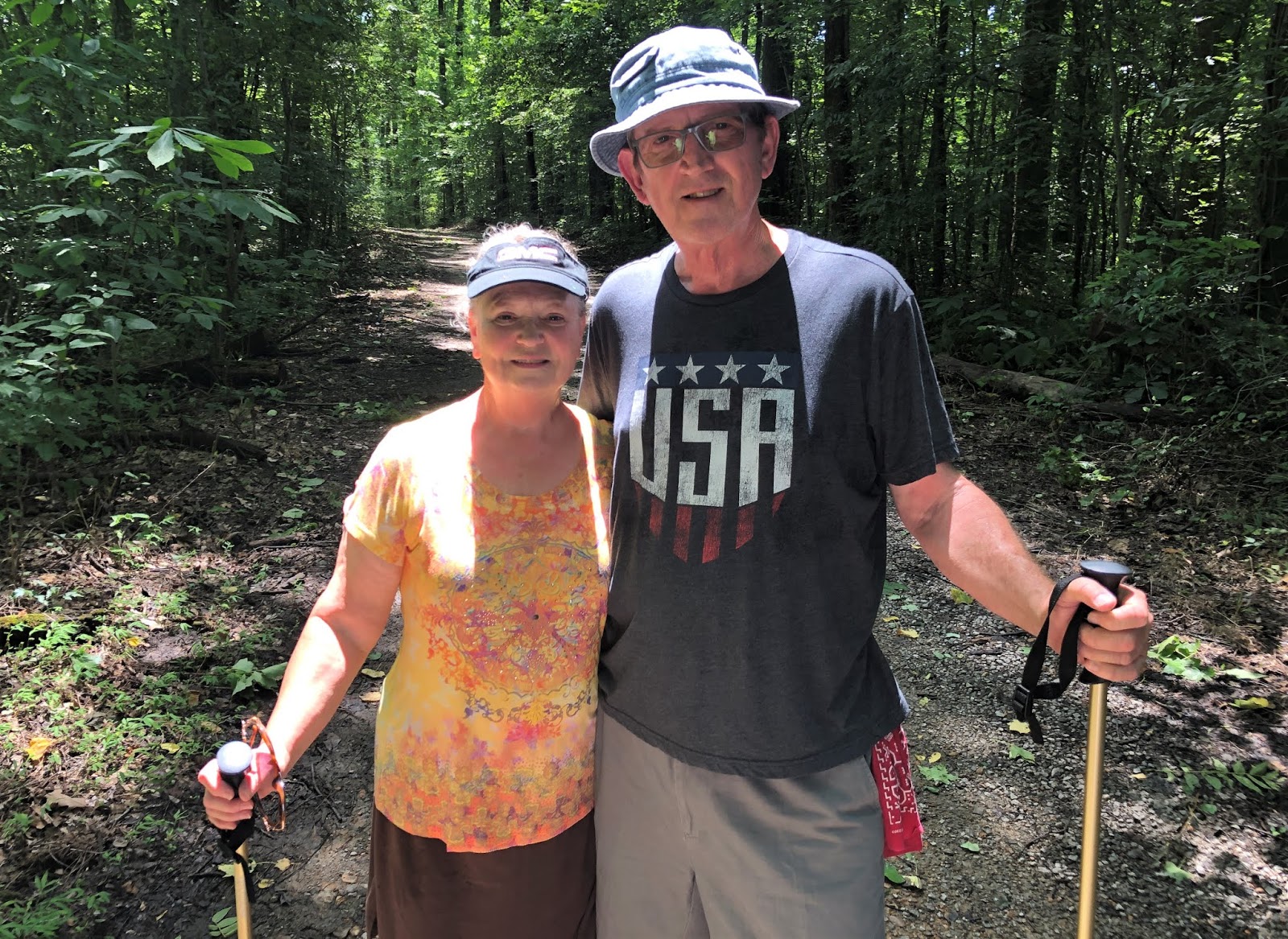

On the 2.5-mile trail at Fort Pillow (Tenn.), I met a terrific couple from Louisiana, Carolyn and Mike Goss from Bossier City. Carolyn's great-grandfather George "Washie" Johnson, who served in a Louisiana regiment, lost a leg at the Battle of Mansfield (La.) on April 8, 1864. He was probably only a teenager. After the war, "Washie" eventually turned to drinking and gambling. (He apparently had a fondness for slot machines.) Johnson also befriended a former slave named Dick Chaney, who was treated like a member of the family. When Chaney died, he was buried next to the Johnson family cemetery in Louisiana, outside the fence. Years later, Carolyn discovered the fence was extended around Chaney's grave. How cool. Read more.


No one on the planet knows more about the rich Civil War history of Culpeper County, Va., than Clark "Bud" Hall. No one is as passionate about saving hallowed ground there than the ex-FBI agent and former Marine. “Young Americans fought, bled, and died on our Civil War battlefields,” he told me, “and I profoundly believe we share a collective responsibility to secure and save these sacred fields.” Above, Hall leans against a pillar at Powhatan Robinson’s war-time home, “Struan.” It was used by Union Maj. Gen. Gouverneur K. Warren as a headquarters and by the Army of the Potomac as a hospital in the aftermath of the Battle of Morton Ford’s in early February 1864. Hall knows the 1840 house and its owner well; its expansive porch is a perfect place for a man with a full flask and an active imagination. Read my Civil War Times column.


As a steady rain sent many fans scattering for shelter in the bars at the NFL draft in Nashville in late April, David McCormick watched from behind the counter at Ernest Tubbs Record Shop. The 69-year-old Tennessee native has worked at the store since 1968, owned it since 1972. Outside the Lower Broadway landmark, a large sign proclaims “Real Country Music Lives Here. Our 72nd Year.” Inside, the aisles are filled with country music albums and memorabilia. "It’s a joy for me every day to meet people from all over the world who may find something here they want," McCormick said. Oh, man, I wish I asked him one more question: "Did you know your building was used as a Civil War hospital during the Union occupation?" Read my Yardbarker story.


Retired chimney sweep John Mack – you can call him “The Mad Hatter” -- aimed to persuade visitors at the Resaca reenactment to purchase replica coonskin caps. The 6th Alabama, the “Raccoon Roughs," wore them, he insisted. Years ago, Mack was passionate about the Revolutionary and French and Indian wars, leading an inquisitor to believe the caps with real raccoon tails may simply be, ah, re-purposed.


Melea Medders Tennant has lived on the Resaca (Ga.) battlefield most of her life. "I can’t tell you how many times I've been working, pulling weeds and [visitors] come by telling me about a great-great uncle or great-great granddaddy who fought here." Occasionally, Tennant gives them a bullet she found on the battlefield. Melea regrets not keeping a diary to document meetings with battlefield tourists. On a Saturday afternoon, Tennant took me to see the remains of embrasures for Captain Maximillian Van Den Corput's "Cherokee Battery" of four Napoleons (above). It used to be her family's property. Read more.


On a Sunday morning, Gary Burke and I stood on a graffiti-marred, modern overpass in South Nashville to view a seldom-seen railroad cut. It was there on Dec. 15, 1864, that Burke's ancestor and his comrades in the U.S. Colored Troops were caught “like pickles in a barrel” during the Battle of Nashville and routed by Confederates. Burke once sneaked into the cut — it’s about 10 feet deeper than it was during the war — because he wanted “to feel the fear that went through them.” Read my Civil War Times column.


At the Resaca reenactment, Robert Miller sat at table with a pile of his books on the 129th Illinois, his great-great grandfather's regiment. His ancestor was killed at the northwestern Georgia battlefield, less than a quarter-mile from where we talked on a blazing-hot Saturday. The 78-year-old retired computer programmer from Oklahoma enjoyed telling me about Private Joseph Peters of Company F. Miller eagerly agreed to be photographed holding a copy of an image of his ancestor. We shook hands as we parted. It was one of the firmest handshakes I can remember.


In the pre-dawn darkness in Plains Ga., Mayor Lynton Earl Godwin III – almost everyone calls him “Boze” -- talked about his friend, Jimmy Carter.  He has known the former president most of his life. “He has not forgot where he comes from,” the 75-year-old told me. “He hasn’t changed one bit.” How I got to Plains in the wee hours on Super Bowl Sunday was, well, a little odd. The day before in nearby Andersonville -- site of the notorious Civil War prison camp -- I stopped in a small antiques store. "Does President Carter still teach Sunday school in Plains?" I asked the lovely woman behind the counter. "He sure does," she told me. "You should go." I had nothing to wear but a sloppy sweatshirt and black sweat pants. It's OK, she said. And so I booked a room in Americus, got up super-early the next morning and ...


... attended a Sunday school lesson  with these nice folks.

Life.

Enjoy the journey.

Always.

-- Have something to add (or correct) in this post? E-mail me here.

Tuesday, December 03, 2019

From Antietam to Shiloh, my 25 favorite 2019 photos


"The world is a book and those who do not travel read only a page."

 -- Saint Augustine


LOOKOUT MOUNTAIN, CHATTANOOGA, TENN: Reenactor Todd Watts of Nashville. 
ANTIETAM (MD.) BATTLEFIELD: 132nd Pennsylvania monument at Bloody Lane. 
ANTIETAM (MD.) BATTLEFIELD: Sunrise at the Samuel Mumma farm.
LEXINGTON, VA.: Lee Chapel, Washington and Lee campus. (READ POST.)
SHILOH (TENN.) BATTLEFIELD: Trapper Haskins, vintage baseball league player.
CHICKAMAUGA (GA.) BATTLEFIELD: Confederate Brigadier General Bushrod Johnson monument. 
ANTIETAM (MD.) BATTLEFIELD: Early morning at Dunker Church.
LOOKOUT MOUNTAIN, CHATTANOOGA, TENN.: Marker near the Cravens House, vortex of battle.
MISSIONARY RIDGE, CHATTANOOGA, TENN.: Witness tree.
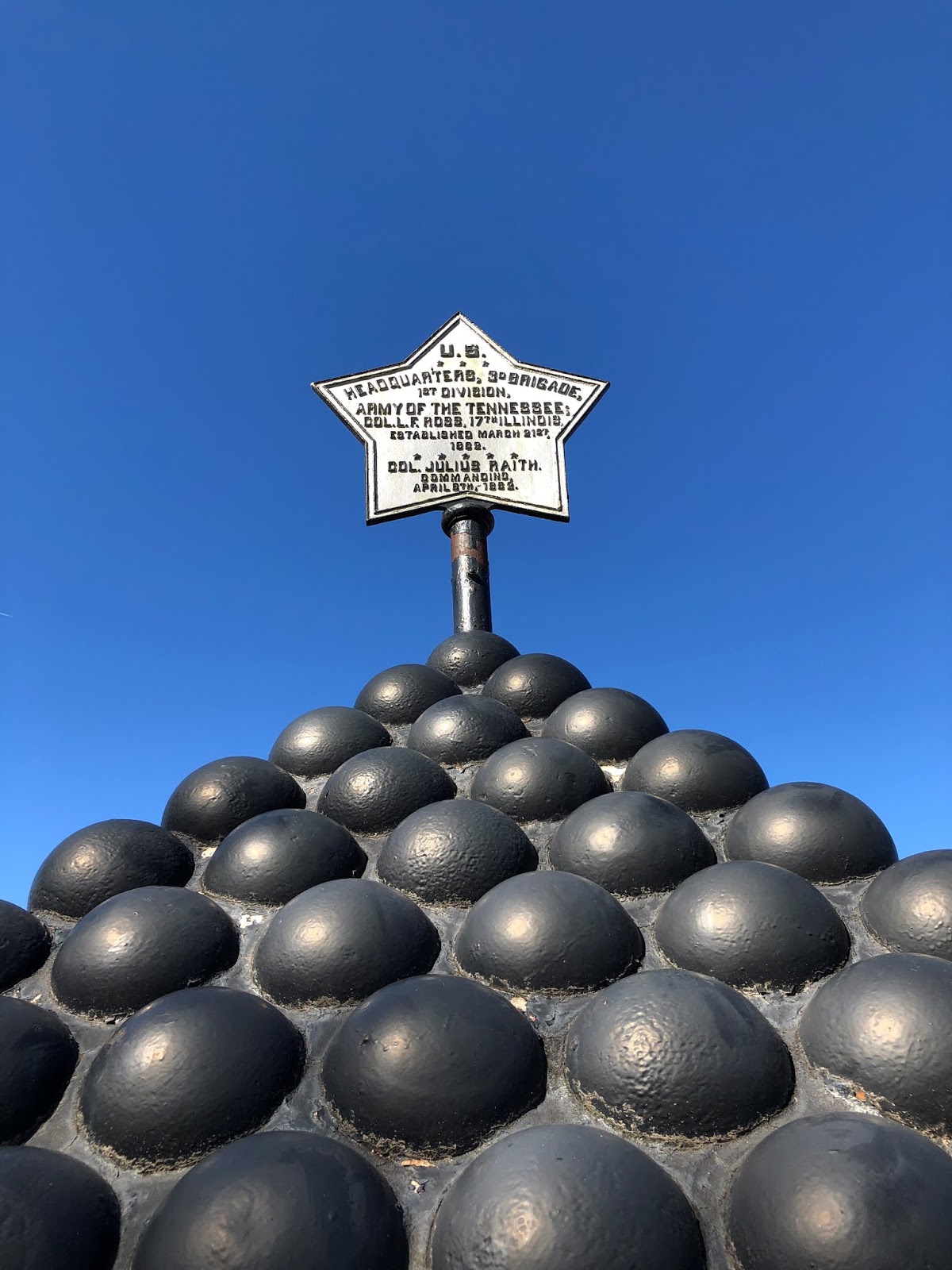
SHILOH (TENN.) BATTLEFIELD: Union brigade headquarters marker.
SAVANNAH, TENN.: Ulysses Grant headquarters site before the Battle of Shiloh.
ANDERSONVILLE, GA.: Site of  infamous deadline at the notorious POW camp. (READ POSTS.)
SHILOH (TENN.) BATTLEFIELD: Close-up of old, cast-iron marker for Confederate unit. (READ POST.)
ANTIETAM (MD.) BATTLEFIELD: William McKinley monument near Burnside Bridge.
CROSS KEYS (VA.) BATTLEFIELD: James Madison University professor Ken Rutherford,
a landmine explosion survivor. (READ MY CIVIL WAR TIMES COLUMN.)
RESACA, GA.: 83-year-old reenactor Jere McConnell. (READ MY CIVIL WAR TIMES COLUMN.)
SHELBYVILLE, TENN.: Bronze plaque on grave of Sumner Cunningham, founder and publisher 
of Confederate Veteran magazine, at Willow Mount Cemetery.  (READ POST.)
LEXINGTON, VA.: Lee Chapel on Washington and Lee campus. (READ POST.)
LEXINGTON, VA.: Stonewall Jackson statue at Virginia Military Institute.
SHILOH (TENN.) BATTLEFIELD: Monument for Union brigade headquarters. (READ POST.)
WHITES CREEK, TENN.: Tennessee Association of Vintage Baseball game. Love Norman Rockwell-like
quality of this image. League plays by Civil War-era rules. (READ MY AMERICA'S CIVIL WAR STORY.)
FORT PILLOW, TENN.: An attacking Confederate's view of the fort. (READ POST.)
ANTIETAM (MD.) BATTLEFIELD: 11th Connecticut monument near Burnside Bridge.
CORINTH, MISS.: Statue at contraband camp.
FRANKLIN, TENN.: Half-dozen red roses on grave of 16th South Carolina Private Hembry Chapman 
 at McGavock  Confederate Cemetery. Chapman, killed at the Battle of Franklin, was 17 or 18. 
His brother also is buried here. (CLICK ON ALL IMAGES TO ENLARGE.)

-- My favorite photos of 2017 and 2018
-- Have something to add (or correct) in this post? Email me here.

Sunday, June 23, 2019

From Nutbush to state penitentiary, my Fort Pillow adventure

Nutbush, Tenn., population about 250, and birthplace of Anna Mae Bullock, aka Tina Turner!
(CLICK ON IMAGES TO ENLARGE.)

Like this blog on Facebook | Follow me on Twitter

The scouting report on Fort Pillow from friends, acquaintances and hangers-on is not encouraging:

"Hot and humid. Go in the fall."

"Snakes, bugs and mosquitoes."

"Be wary of creepy crawlies."

"Ticks."

"You’ll ride through a big prison farm to get there." (Well, I always was a big fan of Shawshank Redemption.)

And so early Saturday morning, I  courageously drive from Nashville through a rainstorm for my first visit to the fort in West Tennessee. It might as well be in the Far East. It's like another world — a very hot, humid, remote "another world." Distance: Approximately 200 miles. Your travel time (legally): 3 hours, 30 minutes. Mine? Let's quickly move along here.

In Tina Turner's birthplace, no one can take just one photo.

On a two-lane road outside Brownsville, I trail a barbecue smoker — while it's smoking — for several miles. Smell is tremendous, but I'm wary of getting too close. Mull purchase of "I Break for Barbecue Smokers" bumper sticker. Pass through Nutbush (population about 250), which makes me little tense. Claim to fame: R&B legend Tina Turner's birthplace! Who's not a fan of "Proud Mary"? 

A sucker for historical signs and markers, I stop to take photos, drawing wary glances from passers-by. Perhaps it's because I shot images from middle of road. Nutbush is also birthplace for blues musicians "Hambone" Willie Newbern and "Sleepy" John Estes. Must be something in the water here. Sadly, absolutely no sign of Tina in the flesh, so I head on down the road ...


... passing by aforementioned state penitentiary farm. I do not wave. I stare straight ahead, desperately trying to make myself look as small as possible. On two-lane back roads in Tennessee, I always keep firm grip on steering wheel and close eye on what's behind me in rearview mirror. (Another movie in mind there.) Tally of dead animals spotted: one black cat — is that good luck? — one raccoon, one possum and one armadillo, per usual feet pointed to the heavens. Don’t ask me why, but that always makes me chuckle. Also see one live raccoon, a nocturnal beast strangely out for daytime sojourn.


Arrival at Fort Pillow, a Tennessee state park. Dang, it’s hot and humid here. Temperature: 89. Humidity: 1 billion percent. Shockingly, I spot a Civil War Trails sign here. They must be all over the planet. I believe a friend saw one in Bulgaria last week, too. Super-excited, I pull a "Van Gogh," slicing off my ear in a selfie taken in front of Civil War Trails sign. OMG! No cell service. I need a drink.


In the distance, behold the Mighty Mississippi — or as it's better known on this day, the "Muggy Mississippi." Looks like steam rising from the river, which last century moved a mile farther west, toward Arkansas. Gosh, is the river insane? My gawd, why would anything want to move toward Arkansas? The course change means the Mississippi no longer flows directly below Fort Pillow.


OK, timeout on the schtick. Full disclosure: I am out of my depth discussing what happened at Fort Pillow on April 12, 1864. I'm here to educate myself. Facts: With the defenders nearly surrounded, Confederate commander Nathan Bedford Forrest demanded the garrison's surrender. Union command refused. Confederates stormed the fort, overwhelming nearly 600 Federals who included soldiers in the 2nd U.S. Colored Light Artillery, one battalion from the 6th U.S. Colored Heavy Artillery and the Unionist 13th West Tennessee Cavalry. 

Widespread reports said Confederates massacred troops who surrendered. Half the garrison was killed, including two-thirds of the Black soldiers. Was it a massacre? A congressional investigation said yes. Even today the battle remains controversial. Fort Pillow became a rallying cry for the North. My Fort Pillow museum report: Small but good. Nice exhibits, which include the image above. Friendly staff.


My motto: Refuse to schmooze and you lose. On the 2.5-mile loop that goes to Fort Pillow, I meet a couple from Louisiana, Carolyn and Mike Goss from Bossier City. Everyone has a story. Carolyn has a good one: Her great-grandfather George "Washie" Johnson, who served in a Louisiana regiment — probably only a teen, she says — lost a leg at the Battle of Mansfield (La.) on April 8, 1864. After the war, "Washie" eventually turned to drinking and gambling. (He apparently had a fondness for slot machines.) Johnson also befriended a former slave named Dick Chaney, who was treated like a member of the family. When Chaney died, he was buried next to the Johnson family cemetery in Louisiana, outside the fence. Years later, Carolyn discovered the fence had been extended around Chaney's grave.


Carolyn and Mike agree to hike with me over rugged terrain, toward a reconstruction of the 1864 Union fort, guaranteeing I won't pass out alone in the woods. Did I mention it was hot, muggy and buggy? From this position, Confederate troops attacked a Federal redoubt.


Lord, I hope my driver's license is in my wallet so my corpse can be ID'd.


Here's a 25-second video of the torture I put my body through. State should advertise summer walk at Fort Pillow as terrific weight-loss plan.


A fall here and my girls will lose their papa...


Arrival, about 1.25 miles into my journey. The re-built interior of the 1864 Fort Pillow, defended by U.S. Colored Troops and other Federal forces. A cannon lover's delight.


View absolutely no attacker wants.


It's impossible for me to walk away from Fort Pillow without shooting a pano. Here's a view of the exterior. (Click at upper right for full-screen experience.)


Subtract the trees, and this is the attacking Confederates' view of the fort.


Confederates used the ravine in background as cover to attack the fort.


In early January 1866, the U.S. War Department authorized the purchase of land near the fort for a cemetery for "the victims of the massacre." Only 34 of the 258 were identified. The next summer, the remains were removed to a national cemetery in Memphis. Deep respect.


Minus Carolyn and Mike Goss — don't worry, they're OK — I head back to the museum. One more mile.  I. Can. Do. This!


In the sweaty home stretch, my heart is pumping, perhaps not this high since I met my wife in 1990. Kidding! Visit complete, I purchase in the museum a Tennessee Walking Stick, crafted from real Tennessee wood. Price: 15 bucks, plus tax. Mrs. B will be pleased.


Before I leave the state park, I check out these earthworks, part of original fort built by Confederates in 1862. My daughters should be here!


Suckered in by one of those historical markers en route back to Nashville, I stop in tiny Henning at the boyhood home of Alex Haley, author of Roots.


And here's where Roots was born. "Summer after summer, as I grew up, my Grandmother and my great aunts told our family's treasured story all the way back to the African who said his name was Kinte," reads a quote from Haley on a marker in front of the modest home.

Life.

Enjoy the journey.

Always.

Until next time ...


-- Have something to add (or correct) in this post? E-mail me here.