Showing posts with label General Joseph Mansfield. Show all posts

Sunday, September 25, 2016

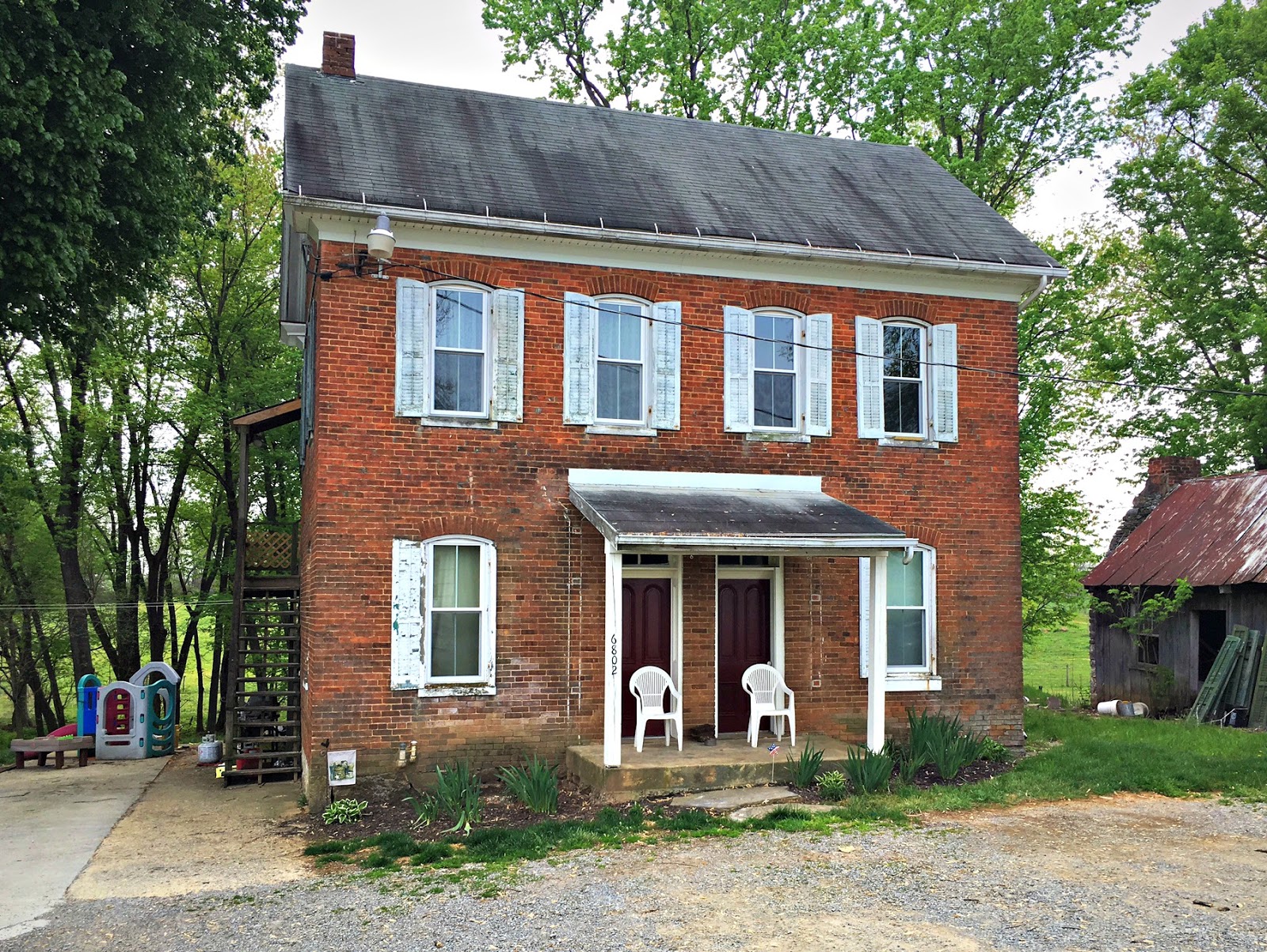
Antietam: Is this house where General Joseph Mansfield died?

2000: During a renovation of the house,  the current owner discovered log construction underneath.
(Images showing log construction courtesy Marvin Diller)
TODAY: The old Daniel Bovey house. The log portion of the house is behind 
the brick and to the right of the front porch.
Like this blog on Facebook | Follow me on Twitter

WARNING! FOR HISTORY GEEKS ONLY. :)


Three Union generals suffered mortal wounds at Antietam, and for students of the battle, the sites where  two of them died are well known.

Israel Richardson, struck in the chest by an artillery shell fragment near the Sunken Road on the morning of Sept. 17, 1862, was taken to the Philip Pry farm, where a makeshift hospital had been set up in the barn and house. President Lincoln visited him in Pry's house in early October, and the general's wife Fannie and sister traveled from Michigan to help care for him there. But the 46-year-old officer -- "Fighting Dick," he was called because of his prowess on the battlefield -- died of complications from his wound on the second floor on Nov. 3, 1862. The beautiful, brick house is now home for excellent displays by the National Museum of Civil War Medicine.

Wounded in the chest during the IX Corps' afternoon attack, Isaac Rodman died on Sept. 30 in Henry Rohrbach's farm house, near Burnside Bridge. His wife Sally, who had traveled from Rhode Island, was by his side. Before his death, the smell of the 40-year-old brigadier general's wound became so offensive, according to a witness, that the dinner table was moved outside to the porch for meals. Privately owned, the Rohrbach house is inaccessible to the public.

Antietam proved to be the first and last Civil War field command for Joseph Mansfield, who had served far from major action until he was given the reins of the XII Corps only two days before the battle.
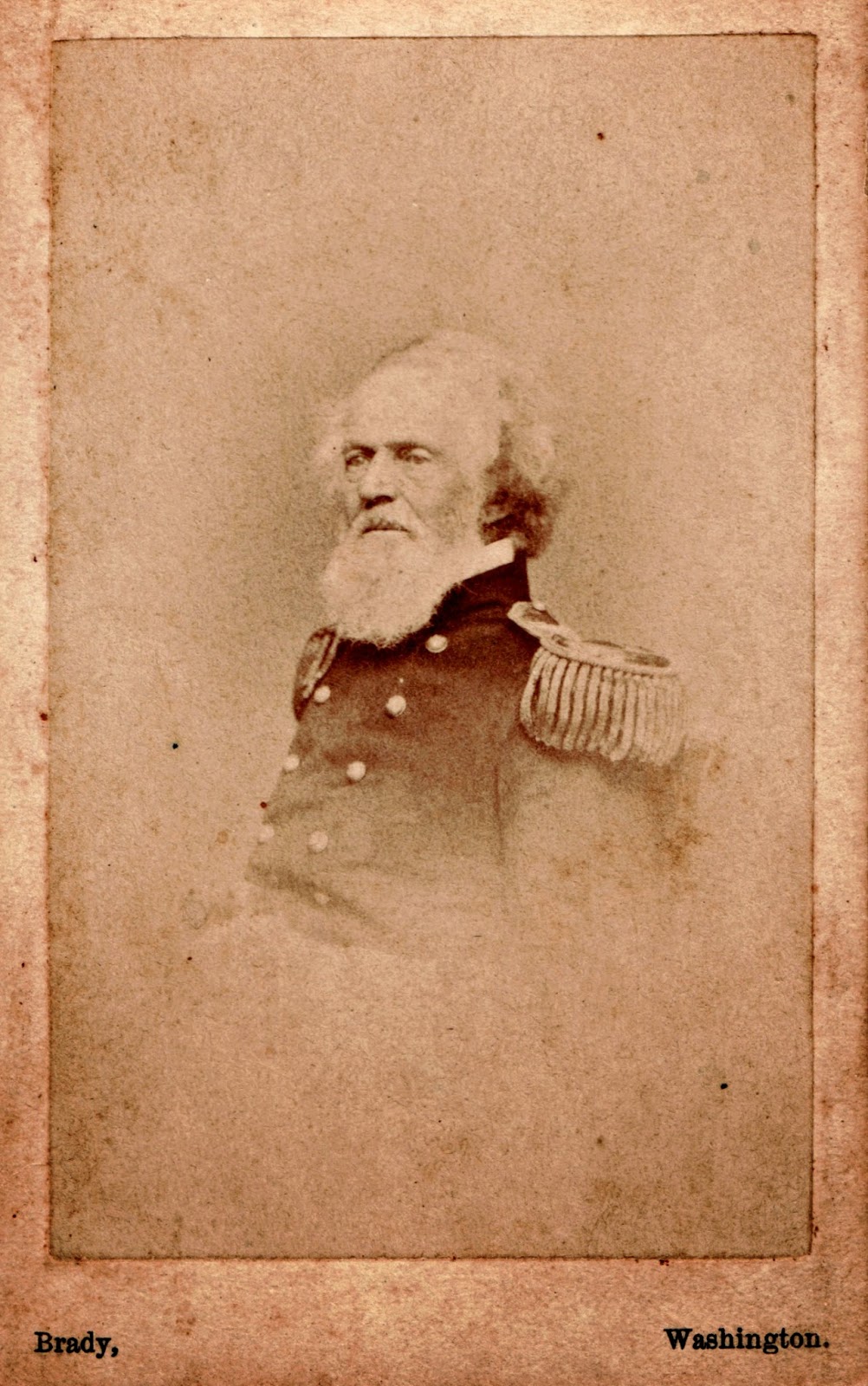
General Joseph Mansfield of Middletown, Conn., died 
 of  his Antietam wound on Sept. 18, 1862.
(Middlesex County History Society)
Wounded in the chest by a bullet in the East Woods, Mansfield was carried about a quarter-mile to the rear by soldiers, who used their muskets to form a stretcher. Then he was taken by ambulance another quarter-mile or so to to a log house owned by farmer George Line. On his way there, Mansfield, his wound tightly bandaged to stop the bleeding, repeatedly said, "Oh my God, am I to die thus!" and "Oh my poor family!"

Line's two-story house, which measured about 26 feet by 22 feet, became known as the "White House Hospital," undoubtedly because the logs were painted white. A thousand wounded soldiers, including more than 100 Confederates, received care in his house and in the outbuildings on his farm.

Patrick Henry Flood, the 107th New York surgeon who came to Mansfield's aid after he was shot, feared the general would die before he even arrived at Line's farm. The bullet penetrated about "two inches from the nipple ... passing out at the back, near the shoulder blade," Flood wrote to Mansfield's wife, Louisa, in April 1863. (Read the complete letter on my blog here.) "The lung was much torn," the surgeon added, "and I saw at a glance the wound must prove fatal."

At 8:30 a.m. on Sept. 18, 1862, about 24 hours after Mansfield was shot, the 58-year-old officer from Middletown, Conn., died in a bedroom in Line's small house. Just off the gravel, war-time portion of Smoketown Road, a short distance from the site of Line's house, a small, black-and-white metal marker points to where Mansfield's life ended.

That sign is wrong.

Mansfield didn't die at noon on Sept. 17, and although he indeed died in the house on George Line's farm, the 1862 log house was long ago moved and forgotten.

Until now.

A sign just off Smoketown Road incorrectly notes the date and time of Mansfield's death. The
 log house in which the general died was purchased by Daniel Bovey, who moved it
sometime during the 19th century and reassembled it on his nearby farm.
This house on the site of George Line's log house was probably built after the Civil War. 
This is private property. Do not trespass.
             Google Earth view of the old Line farm. The house shown in the image above 
                        is in the grove of trees to the right of the long, thin outbuilding.

On a Saturday morning in Captain Bender's Tavern on Main Street in Sharpsburg Md., my friend John Rogers and I marveled at tales told by Richard Clem, who has a longtime passion for hunting for Civil War relics in area fields and woods. Clem pulled from a small case pieces of art made from lead by Civil War soldiers -- a VI Corps badge, a cannon tube and even a small, intricately carved walnut. A lifetime Washington County, Md., resident, Clem also has a remarkable knowledge of local history. The 78-year-old retired woodworker still fondly remembers his grandmother recounting visits with Civil War veterans, proving the war isn't as long ago as some of us might think.

An 1877 Washington County atlas shows the location of 
the old Daniel Bovey farm near Hooker Bridge, also
known as Upper Bridge.
During our visit, Clem casually mentioned he knew the location of General Mansfield's death house.
And so we three history geeks hopped into Rogers' car to find out more about a footnote in history.

After a quick stop at the site of the old O.J. Smith farm/Civil War hospital on Mansfield Road near the battlefield, we drove a short distance before we made a right turn up a long, gravel lane. At the top of the hill, we saw a two-story brick house with a modern addition and a friendly dog. (See Google Earth view below.) In the far distance, we could barely make out the old Hooker Bridge (or Upper Bridge), named for the general whose I Corps marched across it on the way to battle. Richard knew the owner of the farm, Marvin Diller, who had an interesting story to tell. During renovation work on the house in 2000, he discovered a log structure beneath the brick exterior. He even had pictures to prove it. Each log was marked with Roman numerals, Diller said, which seemed odd a first.

A little local history lesson made sense of it all.

In 1906, O.T. Reilly authored The Battlefield of Antietam, a 32-page booklet of  photos, stories and remembrances about the battle. Reilly, who claimed he witnessed the battle as a 5-year-old, was the first Antietam guide, serving as a battlefield expert for decades. In his booklet, the longtime area resident wrote this brief passage:
O.T. Reilly 
(Image courtesy Stephen Recker)
The brick house that stands near the Hooker Bridge, on the southwest side, is the old log house that formerly belonged to George Line and was purchased by Mr. Bovey, removed, rebuilt and brick-cased, and was the house in which General Mansfield died. Mr. George Line built a new house on the site of the old one. The road to the left (southwest) of the Hooker Bridge was, during war times, only a private farm road, but now is a county road. The road to the right is the old road running through Bakersville to Williamsport; a portion of the army took this road before the battle to get on the right. All the buildings as you pass along were, for a short while, filled with wounded soldiers until they could be placed in the regular hospitals.
A similar account, perhaps borrowed from Reilly, appeared in the regimental history of the 124th Pennsylvania, which bivouacked on Line's farm the night before the battle. Further evidence that Line's log house was moved comes from this 1996 survey by the Maryland Historical Trust, which noted the brick house on the property today "shows characteristics of later 19th century construction."

Bovey was Daniel R. Bovey, a local minister, farmer and longtime Keedysville, Md., resident. The exact date of his purchase of the house from Line is unknown, although it must have been before 1892, the year Bovey died. When Bovey reassembled the house on the hill near the Hooker Bridge, the Roman numerals on the logs evidently made reassembling it easier. The date the house was brick-cased, apparently a fairly common practice in Washington County, merits more research. Diller's property encompasses what was the old Bovey farm, which is shown in the 1877 Washington County atlas.

The available evidence seems to add up -- the house Mansfield died in has indeed survived the ravages of time.

Whether Mansfield died in his house or on Mars, it doesn't really make a difference to Diller. When I asked him how he felt living where a Civil War general died, he looked me in the eye and smiled.

"We don't even think about it," he said.

A 1906 reunion of the Bovey family at the family farm. An arrow points to Mary Ann Bovey, 
Daniel's wife.  Daniel Bovey died in  1892. (Courtesy Bovey descendant)
CLICK ON IMAGE TO ENLARGE.
Another view of the log construction of what once was George Line's house...
... and the same view today. The current owner of the house,  Marvin Diller (blue pants), appears at right.
View from the front of the house. The Hooker Bridge. or Upper Bridge, crosses
Antietam Creek in the middle distance.
A brick on the house designates the year it was renovated.
Google Earth view of the old Daniel Bovey farm. The brick-cased log house
is next to the Creekview Dairy designation.

Have something to add (or correct) in this post? E-mail me here.


SOURCES:

--Find a Grave

--Hagerstown Daily Mail, Feb. 16, 1934. Description of Rodman's offensive wounds comes from Fred Cross, a military archivist at the Massachusetts Archives, who was told the story by area resident Jacob McGraw. McGraw helped Rohrbach clean up his property after the battle.

--Maryland Historical Trust, Inventory of Historic Properties, accessed online Sept. 25, 2016.

--Nelson, John H, As Grain Falls Before The Reaper, The Federal Hospital Sites And Identified Federal Casualties at Antietam, Privately published CDHagerstown, Md., 2004. (Nelson's excellent work is source for description of Line's farm as the "White House Hospital" and dimensions of Line's log house. He cites The Medical Department of the United States Army in the Civil War by Louis Duncan, published early in the 20th century, as source for number of wounded treated at the Line Farm. He cites Dr. Elisha Hunt's "Report on Field Hospitals Indicated on Map of Battlefield of Antietam" for note on Confederate wounded treated at Line farm. Harris was in charge of distribution of supplies by the United States Sanitary Commission.)

--Dr. Patrick Henry Flood letter to Louisa Mansfield, April 28, 1863, Middlesex County Historical Society, Middletown, Conn.

--Reilly, Oliver T., The Battlefield of Antietam, Hagerstown Bookbinding and Printing Co., Hagerstown, Md., 1906

Wednesday, May 04, 2016

4 seldom-seen Antietam sites (Little Mac's battle view, too?)

Armed with an iPhone6 and fueled by desire,  I roamed the Antietam battlefield recently during my annual Civil War Power Tour with the aim to visit and document off-the-beaten path sites. (Actually, I made it up as I went along.) Here's what I found:
William Roulette's barn, where hundreds of wounded soldiers were treated.


SECOND IMAGE ABOVE: Click at upper right for interactive panorama of Roulette barn interior.
ABOVE: Roulette farmhouse seen through a knothole in the nearby barn.

INSIDE WILLIAM ROULETTE'S BARN-TURNED-HOSPITAL


In dozens of visits to the Roulette farm over the years, I have poked my head into the spring house where grievously wounded 14th Connecticut lieutenant George Crosby had surgery, inspected the fabulous, thick-walled ice house, peered through the old farmhouse windows and mulled the story of those dang bees. Until last weekend, I had never been inside the Roulette barn, which was used as a field hospital during and after the battle.

Save for the foundation and perhaps some of the flooring, much of the 1862 barn is long gone. Nevertheless, the experience was quite eerie after we slipped through a narrow opening into the large, open space. Birds fluttered through slits, and sunlight on the beautiful morning cast unusual shadows inside. Perhaps this early 20th-century account by a Pennsylvania veteran who witnessed what happened there more than 152 years ago explained my uneasiness:
The tables on the Roulette barn floor presented a scene of  the schambles. Piles of amputated legs and arms were in evidence, inviting even from stolid hearts, commiseration, pity, tears. In the stables below. and under temporary straw sheds along the adjacent fences and out buildings, were to be found hundreds of wounded and dying men.
Wounded in the East Woods, General Mansfield died at the George Line farm on Sept. 18, 1862.
Another view of  Line's farmhouse as well as the summer kitchen, which may date to the Civil War.
The sign on historic Smoketown Road near the George Line farm.
Joseph Mansfield

FARM WHERE GENERAL MANSFIELD DIED

The old, black-and-white metal sign along historic Smoketown Road -- the route XII Corps took to the battlefield -- points to the site where Union General Joseph Mansfield died. Wounded in the chest in the East Woods just after dawn, the 58-year-old officer from Middletown, Conn., was transported about a quarter-mile by soldiers using muskets to form a stretcher and then another quarter-mile by ambulance to George Line's farm.

The sign, however, is inaccurate: Mansfield died of his wounds on Sept. 18, 1862, a day after the battle. The loghouse in which the general expired was sold by Line to another man, dismantled, moved to another area location and "brickcased," according to an account in the 124th Pennsylvania regimental history, sometime in the 19th century. The current brick house, shown above, may be post-war, although the summer kitchen shown in the second photo may date to the Civil War. (Please note this is private property; do not trespass.)

Israel Richardson died in the second-floor room at upper right in the Philip Pry house.
ABOVE: President Lincoln visited the ailing Richardson here in early October 1862. 
BELOW: In the video, Jake Wynn of the National Museum of Civil War Medicine
 explains one of  the room's little secrets.

Israel Richardson

WHERE 'FIGHTING DICK' DIED

Leading an attack at Bloody Lane, Union General Israel Richardson was struck in the chest by a piece of artillery shell. Initially taken to another field hospital, the 46-year-old officer eventually was transported for treatment to the Pry House -- the same site where General Joseph Hooker, who was shot in the inner side of  his right foot during the I Corps' assault earlier that morning, was hospitalized.

After she received news of her husband's wounding, Fannie Richardson traveled from Michigan with her sister-in-law to the Pry house near Keedysville, Md., to help care for her husband, and President Lincoln himself visited the general there in early October. (Supposedly, Mrs. Pry cooked breakfast for the president, who left an appreciation note signed "A. Lincoln.")

Unfortunately, "Fighting Dick" suffered complications, and he died in the second-floor Pry room on Nov. 3, 1862. Keep in mind the room is really not all original. The inside of the Pry House was gutted by a fire of unknown origin in 1976, and the beautiful brick house was painstakingly restored by the National Park Service.

In the video above, Jake Wynn of the excellent National Museum of Civil War Medicine explains why Mrs. Pry hid candy in the room after the general's death.


SECOND IMAGE ABOVE: Click at upper right for interactive panoramic view from Pry house attic. 
ABOVE: Present-day view of Antietam battlefield from attic trapdoor is obscured by trees.

George McClellan
LITTLE MAC'S VIEW FROM PRY HOUSE?

Last Sunday, I had the rare opportunity to view the Antietam battlefield from the trapdoor in the attic of the Pry house -- perhaps the same view diminutive Army of the Potomac commander George McClellan had.  As the story goes, "Little Mac" is believed to have stood on a barrel for unobstructed views of fighting at Bloody Lane, the West Woods and more. I  haven't read any first-hand account that corroborates that story, so it could just be -- ahem -- a tall tale. The present-day view from atop the Pry House is impressive, although the battlefield is now obscured by trees. The trapdoor attic is inaccessible to the public.

Like this blog on Facebook.


Tuesday, January 24, 2012

Letter to Mrs. Mansfield: 'Depths of Pandemonia'

 "It seemed as if the very depths of Pandemonia, had sent her furies, and such a tornado of deadly
missiles screaming through the air," a surgeon wrote to General Joseph Mansfield's wife about the
circumstances before her husband's death at Antietam.  Below, Mansfield's grave in Middletown, Conn.
In a neatly written five-page letter to Louisa Mansfield dated April 28, 1863, a surgeon in the 107th New York described in detail the circumstances before her husband's death and his last hours at a Union field hospital. General Joseph K Mansfield of Middletown, Conn. was mortally wounded by a shot to the chest near the East Woods during the Battle of Antietam.

General Joseph Mansfield lived in this house in
Middletown, Conn.,  during  the Civil War. 

It now houses the Middlesex County
 Historical Society.
"The wound was inflicted by a 'Minnie ball,' Dr. Patrick Flood wrote. "When I came up, some men were trying to carry him in a blanket, but the jolting motion, made him bleed so fast, they were afraid to move. I found the clothing around his chest saturated with blood, and upon opening them, found he was wounded in the right breast, the ball penetrating about two inches from the nipple, and passing out of the back, near the edge of the shoulder blade."  (Major hat tip to Randy Buchman's Enfilading Lines blog for first posting the contents of the letter.)

Mansfield died on Sept. 18, 1862, about 24 hours after he was wounded. He was 58 years old.

The original Flood letter to Mrs. Mansfield is now in the collection of the Middlesex County Historical Society at the general's Civil War home in Middletown. Middlesex County Historical Society director Deborah Shapiro kindly photocopied Flood's letter for me recently, and a good friend of the blog enhanced it to make it even more readable than the original. Not quite as exciting as, say, purchasing a bible of a soldier who served in the 8th Connecticut for $3 at a community yard sale, but it's close. Sort of. (CLICK HERE FOR .PDF OF ENTIRE LETTER. IT'S A LARGE FILE.)

General Mansfield was one of more than 100 soldiers from Middletown, about 18 miles south of Hartford, who died during the Civil War. The most impressive exhibit at the Middlesex County Historical Society is a wall of photos of some of those soldiers from the town who gave the last full measure, including Mansfield and Private Robert Hubbard of the 14th Connecticut. I'll write much more about some of these soldiers in the coming weeks.

A wall of Middletown's Civil War dead at the Middlesex County Historical Society
in the former home of General Joseph Mansfield, who was mortally wounded at Antietam.
(The gentleman  in the middle was not from Middletown, Conn.)

Monday, January 16, 2012

Antietam: A visit to General Mansfield's house

"He lived about 24 hours after he was shot,"  Dr. Patrick Flood wrote about
General Joseph  Mansfield in this letter to his widow. The letter is in the archives at the

Middlesex County Historical Society in Middletown, Conn.
.
Middlesex County Historical  Society director
 Deborah Shapiro holds a letter from the physician
who saw Joseph Mansfield die to his widow.
Suffering from a gunshot in the right breast, General Joseph K. Mansfield clearly was in dire condition at a field hospital at a farmhouse about a mile behind Union lines.

"He was very pallad (sic), almost as white as paper as I approached him -- his pulse was small and quick," an attending physician wrote in a five-page letter to Mansfield's widow seven months after her husband was mortally wounded at the Battle of Antietam.

At first, the general was "very talkative,"  Patrick Flood, a surgeon in the 107th New York wrote, and he was lucid until around midnight. The old soldier from Middletown, Conn., was given a canteen filled with cool water and brandy, but the mixture didn't agree with him.

"On our way to the hospital," Flood wrote to Louisa Mansfield, "he repeated many times 'Oh my God, am I to die thus?' – 'Get me a horse.'  'Oh my poor family.' "

Given command of the XII Corps just two days before Antietam, the 58-year-old general went downhill fast.

Post-war painting of Mansfield at the
Middlesex County Historical Society.
"After I had dressed his wound," Flood continued in the letter to Mrs. Mansfield, "I left him in charge of the medical director, but called to see him often, and saw him one hour before he expired. ... He lived about 24 hours after he was shot. Had the very best of care and attention."

Connecticut suffered terrible losses at Antietam, but perhaps no death was as shocking as Mansfield's. On the day of his funeral in Middletown, about 18 miles south of Hartford, "emblems of sorrow appeared in all directions." (1) Most businesses were shut down, and stores and homes along the route of the funeral procession were draped in black.

Following an elaborate memorial service attended by Governor William Buckingham, U.S. Sen. James Dixon, the wife of General George McClellan and hundreds of others, Mansfield was buried in Middletown on Sept. 23, 1862.  As his coffin was lowered into the ground at Mortimer Cemetery, the Mansfield Guard, a local militia group head by Mansfield's friend Elihu Starr, fired three volleys. (Mansfield was reburied at Indian Hills Cemetery in Middletown in 1867.)

The circumstances of Mansfield's wounding at Antietam on the morning of Sept. 17, 1862 are well known to many Civil War buffs, but Flood's letter describing the general's last hours was news to me. Randy Buchman, an Antietam battlefield guide, discovered an old, typewritten copy of the surgeon's letter to Mansfield's widow in the basement of the Antietam National Park Visitor's Center and posted the complete contents on his terrific Enfilading Lines blog. Curious, he wondered if the original belonged to the Middlesex County Historical Society. I aimed to find out.
Order directing Mansfield to hold
 his command at Antietam. 
(Middlesex County Historical Society)

Fifty-two years ago, the house Mansfield lived in during the Civil War was set to be demolished and turned into a parking lot. Thankfully, the Middlesex County Historical Society bought the red-brick home on Main Street in Middletown from Mansfield's descendants and turned it into a museum.

An exhibit focused on Middletown soldiers who served during the Civil War takes up a good chunk of space in the small, well-kept building. The historical society also displays an extensive collection of Mansfield memorabilia, including a daguerreotype of a much younger Mansfield as a soldier, a pre-Civil War letter from Robert E. Lee and a pair of black-and-white striped pants Mansfield wore as a tot.

And in a manilla folder in the small research room, there's a five-page letter, yellowed with age and difficult to read, to a Middletown widow.

"I have endeavored to give you a faithful detail of all that transpired in my relations with your lamented husband," closed Dr. Patrick Flood's letter to Louisa Mansfield on April 28, 1863. "... The Country has suffered an irreparable loss in his death."

(1) Hartford Courant, Sept. 24, 1862

Joseph Mansfield lived in this house on Main Street in Middletown. It now houses
the Middlesex Historical Society, which operates a small museum here.