Showing posts with label South Mountain. Show all posts
Showing posts with label South Mountain. Show all posts
Thursday, May 23, 2024
Podcast: Author Steve Stotelmyer on Battle of South Mountain

Thursday, June 17, 2021
Shepherdstown to Port Republic: 10 unheralded battlefields

Here's my list, ranked...
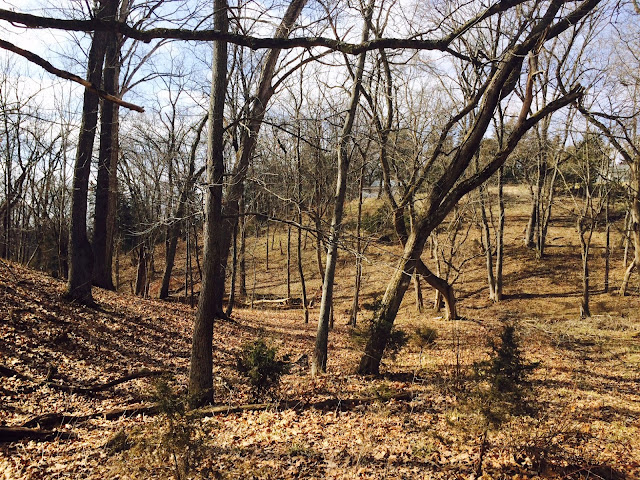
1. SHEPHERDSTOWN (W. Va.) | Sept. 20, 1862: Fascinating terrain at final Maryland Campaign battle. Most of battlefield is private property -- including this ground (above) upon which A.P. Hill soldiers advanced (toward camera). Recent visit made doubly good by excellent time spent with town parking cop, who uses a Segway on the job. Regarding the battlefield, he warned me about bears, coyotes, snakes, and ticks. What, no sea serpents? Read about amazing heroism on this battlefield.

3. BRANDY STATION: (Va.) | June 9, 1863: View from Fleetwood Hill. Oh my. Meet the man who was instrumental in saving this hallowed ground. Explore panorama.

4. PICKETT'S MILL (Ga.) | May 27, 1864: The Yankees attacked through that ravine? Really? Ranger Jeff Wright (above) warned snakes lurk here. Grrrr. Another Shepherdstown.

6. PIEDMONT (Va.) | June 5, 1864: “Grumble” Jones death site at extreme right of panorama. Best Civil War nickname, by the way. Mrs. B could use for me.
8. NEW MARKET (Va.) | May 15, 1864: Field of Lost Shoes! Explore panorama.
9. BALL'S BLUFF (Va.) | Oct. 21, 1861: Federals -- including this 15th Massachusetts soldier -- swam Potomac under fire. (Video from Visit Loudoun via YouTube.)


2. SOUTH MOUNTAIN: (Md.) | Sept. 14, 1862: Rugged! How the hell did they fight here? George Meade’s men marched past this old house on Frostown Road on Sept. 14, 1862. Once owned by two brothers, locals told me, it and surrounding land were acquired by American Battlefield Trust. As you can tell by the deep-blue sky, this was one of those fabulous western Maryland afternoons.

4. PICKETT'S MILL (Ga.) | May 27, 1864: The Yankees attacked through that ravine? Really? Ranger Jeff Wright (above) warned snakes lurk here. Grrrr. Another Shepherdstown.

5. CROSS KEYS (Va.) | June 8, 1862: I lost recent staredown here with cows and bull here, preventing a higher ranking. Long story. 😫

7. CEDAR CREEK (Va.) | Oct. 19, 1864: Would be higher if they bagged I-81. Ugh. Here's where 8th Vermont advanced through a ravine. Read more.

10. FISHER'S HILL (Va.) | Sept. 21-22, 1864: I deftly eluded “cow mines.” Angry herd here eyed me warily, apparently despondent over recent death of one of their own. Weird vibe. Dandy view and a magnificent witness tree (above). Curses to you, I-81!

HONORABLE MENTION: Port Republic, Va., above (June 9, 1862), Britton's Lane, Tenn. (Sept. 1, 1862), Tebbs Bend, Ky. (July 4, 1863), Morton's Ford, Va. (Feb. 6-7, 1864), Monocacy, Md. (July 9, 1864), Allatoona Pass, Ga. (Oct. 5, 1864), Spring Hill, Tenn. (Nov. 29, 1864),
What do you think of my list?
-- Have something to add (or correct) in this post? Email me here.
Thursday, October 22, 2020
Where Union General Jesse Reno fell at Fox's Gap
Thursday, October 08, 2020
Monday, September 16, 2019
History up close: A Maryland man's presidential connection
 |
| Donald Shank holds an image of Rutherford Hayes given to his grandfather by Hayes' son. |
Years later, Hayes’ son visited with Shank’s grandfather at the residence — he lived there, too — and gave him an image of his father in uniform. Shank, who was born in the historic house and has lived in it since 1960 with his wife Lois, posed for me with the framed photo, a family heirloom. The couple was gracious during my short visit two years ago. (Read my Civil War Times column on Hayes.)
 |
| Early 20th-century postcard of Jacob Rudy house, where Rutherford Hayes recovered from battle wounds. |
THEN AND NOW
Have something to add (or correct) in this post? E-mail me here.
Saturday, December 23, 2017
From Sharpsburg to Fredericksburg: 15 cool photos from 2017
 |
| ANTIETAM: Bloody Lane on a frosty fall morning. (CLICK ON IMAGES TO ENLARGE.) |
Like this blog on Facebook
CHARLESTON, S.C.: War-time house in city's historic district
 |
| On a beautiful, late-summer morning, Old Glory barely moves. (See more Charleston images on my blog.) |
ANTIETAM: The 40-acre Cornfield
 |
| Wildflowers bloom in a field that was site of carnage on Sept. 17, 1862. The 16th Connecticut monument appears in the background.. |
DALLAS: Robert E. Lee Park
 |
| Flowers on the lip of the pedestal that once held the statue of the Confederate general, removed days earlier. (READ MORE.) |
BRISTOL, CONN.: Civil War veteran's grave in West Cemetery
 |
| As I shot this image of the grave of 16th Connecticut Captain Timothy Robinson, the flag eerily snapped to attention in a brisk wind. (READ MORE.) |
CHARLESTON, S.C.: St. Michael's Episcopal Church
 |
| The fabulous altar of the historic church, which suffered slight damage during the Civil War. My intention was to just shoot images of the church, but I ended up attending the Sunday service. |
CHARLESTON, S.C.: Old Market Hall
 |
| During the Civil War, men and boys signed up for the Confederate army here. Today, the building houses an excellent Confederate museum. |
CHARLESTON, S.C.: Modern-day tintypist creates work of art
 |
| Christine Eadie, "The Charleston TinTypist," holds her image of 2017 Center for Civil War Photography Image of War attendees. (READ MORE.) |
HARTFORD, Conn.: Folk art at Wadsworth Atheneum Museum of Art
 |
| An ambrotype of 21st Maine Private Adoniram Trask among seashells on an unusual piece of folk art created by his wife. (READ MORE.) |
ANTIETAM: Cannon peeks above spring corn
 |
| I shot this image yards off the old Hagerstown Pike. |
MIDDLETOWN, CONN.: Grave of 15-year-old mortally wounded in battle
 |
| On a raw, late-fall afternoon, the sunlight was perfect for this photo of the grave of Private Daniel Otis, who was mortally wounded at the Battle of Fredericksburg on Dec. 13, 1862. (READ MORE.) |
CARNEGIE, PA.: Relic board at Grand Army of the Republic Hall
 |
| Relics gathered by a Civil War vet from Virginia battlefields on display at the Captain Thomas Espy GAR Post room. (READ MORE.) |
BURKITTSVILLE, MD.: General William B. Franklin's headquarters
 |
| The exterior of the circa-1820 farmhouse provides interesting subject matter. (READ MORE.) |
FREDERICKSBURG, VA.: Infamous stone wall at base of Marye's Heights
 |
| In brilliant sunshine, the re-built wall almost glows. (READ MORE.) |
FOX'S GAP ON SOUTH MOUNTAIN (MD.): Where N.C. troops made a stand
 |
| As the sun was primed to set, I shot this image of the remains of the war-time stone wall valiantly defended by Southern boys during the Battle of South Mountain on Sept. 14, 1862. (READ/SEE MORE.) |
Have something to add (or correct) in this post? E-mail me here.
Friday, December 01, 2017
Gallery: At Fox's Gap, valor, death and remains of the day
 |
| Deep in the woods, a seldom-visited monument honors the North Carolina soldiers who fought at Fox's Gap during the Battle of South Mountain (Md.) on Sept. 14, 1862. (CLICK ON ALL IMAGES TO ENLARGE.) |
At the end of a leaf-covered trail deep in the woods on South Mountain, a North Carolina color-bearer, veins bulging in his hand, grasps a bullet-riddled battle flag as he lays wounded atop a black-granite pedestal. On this late-autumn day, a lone monument visitor, invigorated by a chill in the air, inspects the nearby remains of the stone wall. On Sept. 14, 1862, during fighting at Fox's Gap, this remote place was valiantly defended by North Carolina soldiers -- a prelude to the much-bloodier Battle of Antietam three days later. Twelve regiments from the Tar Heel State fought here on the old Daniel Wise farm and elsewhere in the vicinity, before they were pushed off the mountain by an overwhelming Union force. Afterward, 58 dead Southern boys were unceremoniously dumped into Wise's well by Union burial parties looking for a quick way out of their onerous task. Like the long-ago soldiers, the well has vanished into the mists of history.
 |
| In apparent agony, a North Carolina soldier grips his bullet-riddled battle flag. |
 |
| Who placed this replica North Carolina sunburst button in the eye of the soldier? |
 |
| Veins bulge in the wounded soldier's hand. |
 |
| An attacking Yankee's view on Sept. 14, 1862. |
 |
| A close-up of farmer Daniel Wise's old stone wall. |
 |
| Remains of the war-time stone wall defended by North Carolina troops on Sept. 14, 1862. |
 |
| Sun primed to set on the old battlefield. The stone wall borders the Daniel Wise field. (CLICK ON ALL IMAGES TO ENLARGE.) |
Have something to add (or correct) in this post? E-mail me here.
Thursday, November 09, 2017
'A Real Love Story': Lt. Colonel Rutherford B. Hayes' recovery
 |
| Lucy and Rutherford Hayes on their wedding day on Dec. 30, 1852. Nearly 10 years later, he would be seriously wounded at the Battle of South Mountain. (Library of Congress) |
In late summer and early fall 1862, future U.S. president Rutherford B. Hayes spent weeks in Captain Jacob Rudy's two-story brick house in Middletown, Md., in the heart of the beautiful Middletown Valley.
The 23rd Ohio lieutenant colonel wasn't there on a furlough.
On Sept. 14, 1862, while leading his troops at Fox's Gap during the Battle of South Mountain, Hayes was seriously wounded. "Just as I gave the command to charge," the 39-year-old officer wrote in his diary, "I felt a stunning blow and found a musket ball had struck my left arm just above the elbow. Fearing that an artery might be cut, I asked a soldier near me to tie my handkerchief above the wound. I soon felt weak, faint and sick at the stomach."
 |
| 23rd Ohio Lt. Colonel Rutherford B. Hayes (Library of Congress) |
After his wound was dressed, Hayes walked a half-mile to the small house of a widow named Elizabeth Koogle, remaining there for two or three hours. Still faint from loss of blood, he was taken by ambulance three or four miles or so into Middletown -- "Little Massachusetts," it was called, because of its pro-Union sentiment. The town's churches, private homes, barns and other buildings threw open their doors for Union wounded. Hayes' association with local merchant Jacob Rudy, his wife Elizabeth and their two sons and five daughters began that night.
So, too, did a mutual admiration society.
Hayes grew quite fond of the Rudys -- he felt "as snug as a bug in a rug" while he lay in an upstairs room in their house. "I am comfortably at home," he wrote his mother the day after he was wounded, "with a very kind and attentive family here named Rudy."
Two days after he was wounded, Hayes was free of pain when he lay still. He delighted in sampling Elizabeth Rudy's currant jellies. The family's youngest son, 8-year-old Charlie, enjoyed describing for Hayes the troops as they passed their house on the busy National Pike. "Charlie, you live on a street that is much traveled," Hayes said. "Oh, it isn't always so," the youngster replied, "it's only when the war comes."
In April 1877, a lengthy, and remarkably detailed, account of Hayes' stay with the Rudys was published in the New York Herald. Under the headlines "Reminiscences of His Treatment With A Friendly Family" and "A Real Love Story," Rudy's wife and daughters Kate and Ella recounted their experiences with Hayes, sworn in as 19th U.S. president the previous month.
When the ambulance carrying Hayes and army surgeon Joseph Webb, his brother-in-law, arrived about sunset at the Rudy's house on the National Pike, near the western edge of town, the family was in the midst of their own health crisis. Twenty-one-year-old Daniel Webster Rudy, the couple's eldest son, was seriously ill with smallpox, and daughters Laura, 11, and Ella, 9, had scarlet fever.
Still, the Rudys welcomed the disheveled and badly wounded Hayes, whose uniform was spattered with dust and mud. The officer was carried up the narrow staircase and placed in a bed in a room next to the one where Daniel lay ill. Webb and his brother, James, also an army surgeon, tended to Hayes' wounded arm. A highly respected local physician named Charles Baer aided them. The two black servants who accompanied Hayes and Joseph Webb in the ambulance to Middletown slept on the floor of Daniel's room.
 |
| Early-20th century postcard of the Rudy house, where Hayes recovered from his wounds. |
When Lucy Hayes, the lieutenant colonel's 31-year-old wife, arrived from Ohio more than a week after the Battle of South Mountain, Elizabeth Rudy made an instant connection with the mother of five young sons. "... the moment she crossed our threshold," she told the reporter, "I knew she was a good woman and a natural lady. Of course her husband was rejoiced to see her and hear about his children, and she was relieved to know that his wound was not so dangerous as she had imagined it. She made herself easily at home here at once."
Mild-mannered Rutherford Hayes didn't talk much, Mrs. Rudy recalled, and when he did, he never had a cross word to say about the Rebels. "... though he suffered constantly and got little sleep for a week and longer," Ella Rudy said, "he was always cheerful. He not only wouldn't be cross -- he wouldn't allow any extra trouble to be taken on his account. Mother used to ask him if she could not 'do something' for him. He always thanked her, but said no ... "
 |
| Lucy Hayes, Rutherford's wife, in 1877. (Library of Congress) |
In late September, Hayes was well enough to walk about Middletown. He preferred the unpaved south side of the street, sometimes sloshing through shoe-deep mud, instead of the paved north side, causing the town's tongues to wag. In early October, he and his wife visited the Lutheran Church cemetery, where they could watch the sun set and admire gorgeous fall foliage. On his 40th birthday on Oct. 4, Hayes and Lucy traveled with Jacob Rudy and two other men to the South Mountain battlefield. "Hunted up the graves of our gallant boys," he wrote in his diary. Later that month, Hayes finally returned to his home in Cincinnati, Ohio with his wife.
Weeks after Hayes' departure, every member of the Rudy family contracted smallpox. Charlie died from the disease on Nov. 4.
In the summer of 1864, with the Union army again in western Maryland, Hayes found time to visit with the Rudys."They were so kind and cordial," he wrote in a letter to Lucy. "They all inquired after you. The girls have grown pretty -- quite pretty."
Captain Rudy, who died on Christmas Day in 1876, had not forgotten about the soldier he took into his home in 1862. "Mr. Rudy said if I was wounded," Hayes told his wife, "he would come a hundred miles to get me."
Hayes remained close to the hearts of Elizabeth, Kate and Ella Rudy, too.
"So you all fell in love with the patient Colonel?" the reporter asked Elizabeth Rudy during his 1877 visit.
"We fell in love with him directly," she replied.
Have something to add (or correct) in this post? E-mail me here.
SOURCES
-- Diary and Letters of Rutherford Birchard Hayes, Ninteenth President of the United States, Volume II, 1861-1865, Edited by Charles Richard Williams, The Ohio State Archaeological and Historical Society, 1922.
-- New York Herald, April 9, 1877
Monday, November 06, 2017
Then & Now: Explore Fox's Gap at South Mountain battlefield


(HOVER ON IMAGES for NOW photos; effect does not work on phones, tablets.)
Fred Wilder Cross, military archivist for the state of Massachusetts from 1918-38, was drawn to Civil War battlefields, none moreso than Antietam and South Mountain. "There are few places that I have visited or of which I have ever dreamed," he wrote in 1926, "that have such a hold upon my heart as the picturesque hills and broad valleys of Western Maryland."
During summer trips to the area in the late teens and early 1920s, Cross took hundreds of images of the battlefields with a camera he had purchased in Fredericksburg, Va., in 1912. At Fox's Gap at South Mountain, he photographed the monument for Union Major General Jesse Reno, who was mortally wounded during the battle on Sept. 14, 1862, and many other nearby sites. Decades after the fighting, the battlefield looked to Cross much as it did in late-summer 1862. Farmer Daniel Wise's cabin, used as a makeshift hospital after the battle, was long gone, but the fields where the armies had clashed remained much as they appeared during the Civil War.
On a brisk fall Saturday afternoon in 2017, curious Appalachian Trail hikers examined the Reno monument while a handful of Civil War buffs pointed to the site of the infamous Wise well, where the bodies of Confederate dead were unceremoniously dumped. Across Reno Monument Road -- the old Sharpburg Road in 1862 -- a bird-watcher traipsed through a field where a rookie regiment from Michigan had charged more than 155 years ago.
The battlefield had definitely changed since Fred Cross' long-ago visits. Here's a Then & Now look:
FARMER DANIEL WISE'S HISTORIC FIELD
 |
| Union veteran Uberto Burnham in Daniel Wise's field at Fox's Gap. The Reno monument appears in the background. (Black-and-white images by Fred Wilder Cross | William Christen collection) |
 |
| In this view of farmer Daniel Wise's field, the Reno monument appears in the right distance. (CLICK ON IMAGES TO ENLARGE.) |
(Click at upper right for full-screen experience.)
 |
| The Central Maryland Heritage League wants to restore Wise's field to its 1862 appearance. |
"The next morning we took the bus on Boonesboro pike," recalled the former 76nd New York private, "and at that village connected with the Hagerstown bus which went through Turner's Gap, now a paved road. Quite early in the forenoon we found ourselves on the battlefield. I could hardly realize the situation." (Before enlisting, Burnham was a school teacher, earning $5 a week.)
Cross photographed Burnham in Wise's field, where the old man leaned on his cane and gazed across the landscape.
"It seemed to me almost a vision," he wrote in a story published in 1928 in The National Tribune, a newspaper for Union veterans. "I took great interest in looking over the field."
DANIEL WISE'S NORTH PASTURE
 |
| The view looking toward the Old Sharpsburg Road. The Reno monument is at left. Wise's small log house stood just out of camera range at right. (Fred Wilder Cross | William Christen collection) |
(Click at upper right for full-screen experience.)
"As soon as we had fixed the point of rendezvous, I secured a small detachment of men and started to care for the wounded who had been left in the field. Just as we finished removing or caring for the wounded in the field a few rebels without arms appeared coming into the field, ostensibly looking for their dead or helpless comrades. I quickly observed that they were pilfering from our dead as well as their own, and also gathering up arms, occasionally discharging a musket into the air."
-- Gabriel Campbell, 17th Michigan Captain, in letter to Ezra Carman in 1899.
OLD SHARPSBURG ROAD (PRESENT-DAY RENO MONUMENT ROAD)
 THEN: Unknown photographer, 1912 (History of the 45th Regiment
through Fox's Gap. (Click at upper right for full-screen experience.)
"We pushed steadily on and presently took a by-path that diverged to the left from the turnpike, and continued on over the rough ground and wooded hill until we came to a clearing where the column formed line of battle near an old log house, the right of the line of the Forty-fifth resting on the road. It must have been then not far from eleven o'clock. The Rebels were pelting us with grape and canister and it was only by lying down that we avoided serious punishment. Between us and the enemy was a cornfield on a side hill; then a piece of thin woods and, as we found out later on, an open space beyond the timber."
-- Private Eugene Beauge, 45th Pennsylvania
"Our regiment has been badly used since I was with it. Last Sunday at the Battle of South Mountain or Blue Ridge it lost 134 killed and wounded. I saw the place to-day where 28 were buried in a row on the battlefield. They are buried as nicely as possible and each grave is marked plainly with a headboard. Poor fellows! Dwight Smith and Jimmie Cole lie together and the first tears that have started from my eyes since my mother died fell on their graves. They were indeed the most intimate and truest friends I had in the army and fell at their posts, fighting like true soldiers and brave men."
-- 45th Pennsylvania Lieutenant Samuel Haynes, whose regiment suffered severely at Fox's Gap.
Have something to add (or correct) in this post? E-mail me here.
SOURCES
-- Cross, Fred Wilder, South Mountain and Antietam, Part I, self-published 1925 and 1926, respectively.
-- Gabriel Campbell letter to Ezra Carman, Antietam National Battlefield library.
-- History of the Forty-Fifth Regiment Pennsylvania Volunteer Infantry, edited and arranged by Allen D. Albert, Private of Company D, Grit Publishing Co., Williamsport, Pa. 1912.
Sunday, October 29, 2017
Meet man who documented, loved South Mountain, Antietam
 |
| In a circa-1944 photo, Fred Cross stands next to a sign at Chancellorsville. Cross loved to visit Civil War battlefields, especially Antietam and South Mountain. (William Christen collection) |
Fred Wilder Cross knew so much about the Civil War history of his home state of Massachusetts that a friend swore he could call the roll of many of its regiments from memory. He greatly admired the heroics of John Mosby — Cross owned at least six books on the Confederate guerilla — and relished walking Civil War battlefields, often with a half-dozen or so friends from Virginia and Maryland, whom he called "The Battle-field Expeditionary Force." Cross, who only stood about 5-foot-2 or 5-3, served as "General" of the Force while his friends in the merry band he called "Colonel or "Major" or a lesser rank.
 |
| Jim Clifford, shown in Confederate attire in the 1980s, was a "major" in "The Battle-field Expeditionary Force" of Fred Cross. (Photo: William Christen collection) |
"He would not sponge on any of the battlefield folks he stayed with," insisted Cross' friend, Jim Clifford, years later. "One hundred percent Massachusetts," Cross bragged of his Yankee roots, but his Southern hosts loved him anyway.
"I'll say this for 'general' Cross," Clifford remembered. "He appreciated a good soldier and a brave man on either side and said so!"
And when you walked hallowed ground with General Cross, oh, what an experience that was.
"He never stopped talking of what happened at that spot, at that instant, and who did what to who!" Clifford, a "major" in "The Battle-field Expeditionary Force," recalled of those excursions with Cross in the 1930s and '40s. "And [he was] waving his arms around and walking fast as he could travel! I mean, he was going a streak and you better listen to him and not interrupt the flow of facts."
Cross' had an impressive resume — Phi Beta Kappa graduate of Williams College in 1900, principal of Massachusetts high schools and member of the Massachusetts general court from 1914-1918 and a state senator representing South Royaltson in 1917-1918. From 1918-1938, he served as military archivist for Massachusetts, compiling during his tenure a 6,500-page history of the state's soldiers who served during the Civil War.
And when you walked hallowed ground with General Cross, oh, what an experience that was.
"He never stopped talking of what happened at that spot, at that instant, and who did what to who!" Clifford, a "major" in "The Battle-field Expeditionary Force," recalled of those excursions with Cross in the 1930s and '40s. "And [he was] waving his arms around and walking fast as he could travel! I mean, he was going a streak and you better listen to him and not interrupt the flow of facts."
Cross' had an impressive resume — Phi Beta Kappa graduate of Williams College in 1900, principal of Massachusetts high schools and member of the Massachusetts general court from 1914-1918 and a state senator representing South Royaltson in 1917-1918. From 1918-1938, he served as military archivist for Massachusetts, compiling during his tenure a 6,500-page history of the state's soldiers who served during the Civil War.
But Cross reveled in another title above them all: battlefield tramper.
 |
| "The Battle-field Expeditionary Force" on the steps of the famous Stone House at Manassas. From left: Edward Hofer, Richard D. Steuart, Robert E. Lee Russell, Fred Cross and John Winters. (Image courtesy Stephen Sylvia and Michael J. O'Donnell via John Winters) |
Of all the battlefields Cross visited, Antietam and South Mountain were easily his favorites. His love affair with the Civil War history of western Maryland may have begun with his first visit there in July 1903, when he was 34. On a summer vacation in 1919, his wife, Ida May, and daughters Bertha May and Dorothy accompanied him to the state. On other trips in the 1920s, he traveled to the region alone, documenting his experiences with a camera he had purchased in 1912 in Fredericksburg, Va.
"There are few places that I have visited or of which I have ever dreamed that have such a hold upon my heart as the picturesque hills and broad valleys of Western Maryland," Cross wrote in 1926. "A most beautiful and romantic country, much of it rich in agricultural resources, its low mountains not too lofty to be ascended with ease, their summits presenting to the traveler most wonderful landscapes, every hill and road and stream abounding in historic associations; there is a lure to this section, which calls me back to it again and again."
Eager to follow in the footsteps of Massachusetts soldiers, Cross walked Fox's Gap, Crampton's Gap, Turner's Gap, Antietam and elsewhere. He enjoyed visiting with the locals there, interviewing them about what happened in the area during the Civil War. Sometimes, an interview subject had first-hand knowledge of wartime events.
In Sharpsburg, a resident told of aiding the clean-up at Henry Rohrbach's farm, used as a makeshift hospital by the United States Army's Ninth Corps. The smell of the wounds of a dying Federal Major General Isaac Rodman became so offensive in the house, the man told Cross, that he had to eat outside on the Rohrbachs' porch.
"There are few places that I have visited or of which I have ever dreamed that have such a hold upon my heart as the picturesque hills and broad valleys of Western Maryland," Cross wrote in 1926. "A most beautiful and romantic country, much of it rich in agricultural resources, its low mountains not too lofty to be ascended with ease, their summits presenting to the traveler most wonderful landscapes, every hill and road and stream abounding in historic associations; there is a lure to this section, which calls me back to it again and again."
 |
| Fred Cross, who stood 5-2 or 5-3, was a "very nice, kind, old friendly man," recalled his friend, Jim Clifford. (Image courtesy William Christen) |
In Sharpsburg, a resident told of aiding the clean-up at Henry Rohrbach's farm, used as a makeshift hospital by the United States Army's Ninth Corps. The smell of the wounds of a dying Federal Major General Isaac Rodman became so offensive in the house, the man told Cross, that he had to eat outside on the Rohrbachs' porch.
"Such incidents as these are not pleasant to relate," Cross wrote, "but they represent the actual and terrible character of war."
During a visit to Antietam in 1919, Cross spoke with a man named Alexander Davis, who worked for the Nicodemus family at the time of the battle. "Uncle Aleck" told of burying bodies of Massachusetts soldiers in a hollow days after the battle.
During a visit to Antietam in 1919, Cross spoke with a man named Alexander Davis, who worked for the Nicodemus family at the time of the battle. "Uncle Aleck" told of burying bodies of Massachusetts soldiers in a hollow days after the battle.
While digging graves alone, Davis told Cross, a soldier approached and asked if he had seen the body of Jimmie Hayes, a private in the 19th Massachusetts. Just then, Davis turned over a body in a blanket to reveal Hayes, who was identified by letters that had fallen from the 18-year-old private's blouse. The soldier wept at the sight of his brother.
"Incidents, ludicrous as well as pathetic, the old gentleman often told me," Cross wrote about Davis, whose tales included the story of a stubborn battlefield bull.
"Incidents, ludicrous as well as pathetic, the old gentleman often told me," Cross wrote about Davis, whose tales included the story of a stubborn battlefield bull.
The night before major fighting erupted at Antietam, according to "Uncle Aleck," a "bovine majesty" refused to leave the barnyard of farmer David R. Miller, whose cornfield became site of horrific fighting on Sept. 17, 1862.
"In the morning, doubly excited and maddened by the artillery fire which began before dawn," Cross wrote, "the bull smashed through the barnyard gate, and with flaming eyes and waving tail charged along through the entire length of the cornfield which that day won its bloody name, and never stopped in his mad course until he had reached the banks of Antietam Creek."
Claimed Cross: "Some of the soldiers who were lying on their arms in the edge of the cornfield, and in the early gray of the morning saw the terrible apparition sweep past, laughed over it until their dying day."
Claimed Cross: "Some of the soldiers who were lying on their arms in the edge of the cornfield, and in the early gray of the morning saw the terrible apparition sweep past, laughed over it until their dying day."
 |
| An early 1920s image of the monument at Fox's Gap for Union General Jesse Reno, who was mortally wounded on Daniel Wise's farm. (Fred Wilder Cross | William Christen collection) |
 |
| Another view of Jesse Reno monument by Fred Cross. (William Christen collection) |
 |
| A page from Fred Cross' South Mountain report includes images he took of the monument for Union Major Jesse Reno and the sunken road near Fox's Gap, scene of brutal fighting. Confederate dead were piled here. (Fred Wilder Cross | William Christen collection) |
|
| Union veteran Uberto Burnham in Daniel Wise's field at Fox's Gap. The Reno monument appears in the background. (Fred Wilder Cross | William Christen collection) |
 |
| Fred Cross took this photo of the Middletown, Md., house where Ohio officer Rutherford B. Hayes, a future president, recovered from his South Mountain wounds. (William Christen collection) |
 |
| Fred Cross took this panorama of the South Mountain battlefield in September 1922. (William Christen collection | CLICK ON IMAGES TO ENLARGE.) |
In the 1920s, Cross gathered his experiences at South Mountain and Antietam into self-published reports that included the many photographs he had taken of the battlefields. He later shared the reports with friends, including Clifford.
In his South Mountain report, Cross included a photo of Carlton Gross, whose family's house suffered artillery damage from Rebel artillery during the battle.
In his South Mountain report, Cross included a photo of Carlton Gross, whose family's house suffered artillery damage from Rebel artillery during the battle.
"This little house was under fire during the artillery duel that proceeded the infantry attack, and a Confederate cannonball is preserved in the house, which was fired into it on the morning of September 14, 1862," Cross wrote. "It came in at the right end of the house ... pierced the westerly wall and the open front door, and wedged itself in the wall beside the door casing. I have a section of the shattered door casing in my collection at home."
Labors of love, the reports included images of Union Major General Jesse Reno's monument at Fox's Gap; the Middletown house where 23rd Ohio Lt. Colonel Rutherford B. Hayes, a future president, recovered from his South Mountain wounds; and a New York veteran's visit to a farmer's field where he had fought decades earlier.
In one of his reports, Cross wrote:
 |
| In an image taken by Fred Cross at South Mountain, Carlton Gross holds a six-pound Confederate cannonball that passed through his family's house. |
In one of his reports, Cross wrote:
"I have prepared and annotated this collection of pictures because of the pleasure that I enjoy in revisiting in fancy the scenes, which hold for me such surpassing interest, and because of the feeling that, perhaps, long years to come my children may like to view again in these pages the scenes, which they once visited with me -- scenes that are so intimately and pathetically connected with our Country's history, and that have always filled and thrilled me with such absorbing interest."After Cross' death in 1950, Jim Clifford and John Winters, a "colonel" in "The Battle-field Expeditionary Force," traveled separately from Virginia to their friend's house near the railroad tracks in South Royalston. Cross had put his friends in his will, designating each to receive some of the many Civil War relics and books he had collected during his lifetime.
 |
| The grave of Fred Cross, the "one hundred percent Massachusetts" man. (Find A Grave) |
Later, Clifford visited Cross' grave, only 50 yards from the house where the "hundred percent Massachusetts" man was born. It says so right on his gravestone.
"His tombstone [was] erected and carved to his specifications," Clifford recalled in 1987. "It was tall — maybe four feet and five or six inches thick, and made of pure black slate. Beautiful and solid looking. His wife͛'s, too."
Cross' heart, apparently, was as big as his love of battlefields. Next to his friend's grave, Clifford found a marker for a homeless Union veteran, whom Cross had befriended and aided.
"Wonderful of Mr. Cross," Clifford wrote. "This alone should get him into the kingdom of heaven."
NOTE: I thank William Christen, who generously shared photos and detailed information from his terrific collection and archives on Fred Wilder Cross.
Have something to add (or correct) in this post? E-mail me here.
SOURCES
- Cross, Fred Wilder, South Mountain and Antietam, Part I, self-published 1925 and 1926
- Hagerstown Daily Mail, Feb. 16, 1934, March 13, 1934
- New York Times, March 9, 1950
- Jim Clifford correspondence with William Christen, Nov. 15, 1985, Dec. 3, 1985, Dec. 23, 1985, Jan. 22, 1987, Feb. 1, 1987
Subscribe to:
Posts (Atom)