Pawlak, a board member of the Antietam Institute, is author of Shepherdstown in the Civil War: One Vast Confederate Hospital and other Civil War books. | Join the Antietam Institute.
Showing posts with label Shepherdstown. Show all posts
Showing posts with label Shepherdstown. Show all posts
Wednesday, October 02, 2024
Podcast: Antietam guide Kevin Pawlak on Final Attack, more

Friday, January 19, 2024
Podcast: Author Tom McGrath on Battle of Shepherdstown
We discuss:
- The 118th Pennsylvania and how a "Civil War badass" in its ranks became a hero.
- The amazing terrain of the battlefield.
- What you can see on the hallowed ground today (cement mill ruins and a house with a cannon ball embedded in it!) and much more.
McGrath is author of Shepherdstown: Last Clash of the Antietam Campaign, September 19-20, 1862, which you can purchase here.
Thursday, June 17, 2021
Shepherdstown to Port Republic: 10 unheralded battlefields

Here's my list, ranked...
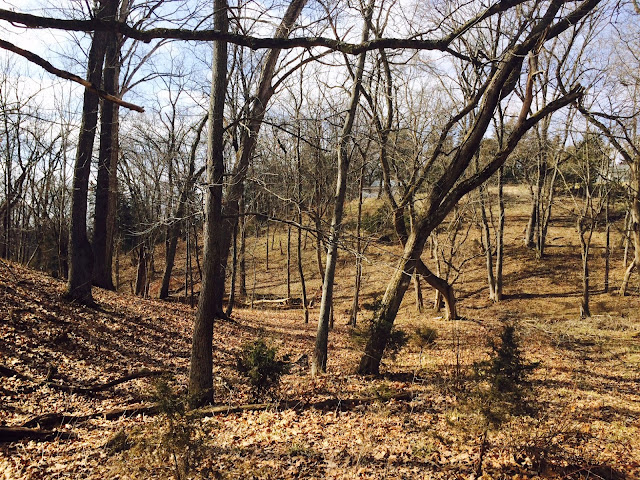
1. SHEPHERDSTOWN (W. Va.) | Sept. 20, 1862: Fascinating terrain at final Maryland Campaign battle. Most of battlefield is private property -- including this ground (above) upon which A.P. Hill soldiers advanced (toward camera). Recent visit made doubly good by excellent time spent with town parking cop, who uses a Segway on the job. Regarding the battlefield, he warned me about bears, coyotes, snakes, and ticks. What, no sea serpents? Read about amazing heroism on this battlefield.

3. BRANDY STATION: (Va.) | June 9, 1863: View from Fleetwood Hill. Oh my. Meet the man who was instrumental in saving this hallowed ground. Explore panorama.

4. PICKETT'S MILL (Ga.) | May 27, 1864: The Yankees attacked through that ravine? Really? Ranger Jeff Wright (above) warned snakes lurk here. Grrrr. Another Shepherdstown.

6. PIEDMONT (Va.) | June 5, 1864: “Grumble” Jones death site at extreme right of panorama. Best Civil War nickname, by the way. Mrs. B could use for me.
8. NEW MARKET (Va.) | May 15, 1864: Field of Lost Shoes! Explore panorama.
9. BALL'S BLUFF (Va.) | Oct. 21, 1861: Federals -- including this 15th Massachusetts soldier -- swam Potomac under fire. (Video from Visit Loudoun via YouTube.)


2. SOUTH MOUNTAIN: (Md.) | Sept. 14, 1862: Rugged! How the hell did they fight here? George Meade’s men marched past this old house on Frostown Road on Sept. 14, 1862. Once owned by two brothers, locals told me, it and surrounding land were acquired by American Battlefield Trust. As you can tell by the deep-blue sky, this was one of those fabulous western Maryland afternoons.

4. PICKETT'S MILL (Ga.) | May 27, 1864: The Yankees attacked through that ravine? Really? Ranger Jeff Wright (above) warned snakes lurk here. Grrrr. Another Shepherdstown.

5. CROSS KEYS (Va.) | June 8, 1862: I lost recent staredown here with cows and bull here, preventing a higher ranking. Long story. 😫

7. CEDAR CREEK (Va.) | Oct. 19, 1864: Would be higher if they bagged I-81. Ugh. Here's where 8th Vermont advanced through a ravine. Read more.

10. FISHER'S HILL (Va.) | Sept. 21-22, 1864: I deftly eluded “cow mines.” Angry herd here eyed me warily, apparently despondent over recent death of one of their own. Weird vibe. Dandy view and a magnificent witness tree (above). Curses to you, I-81!

HONORABLE MENTION: Port Republic, Va., above (June 9, 1862), Britton's Lane, Tenn. (Sept. 1, 1862), Tebbs Bend, Ky. (July 4, 1863), Morton's Ford, Va. (Feb. 6-7, 1864), Monocacy, Md. (July 9, 1864), Allatoona Pass, Ga. (Oct. 5, 1864), Spring Hill, Tenn. (Nov. 29, 1864),
What do you think of my list?
-- Have something to add (or correct) in this post? Email me here.
Sunday, October 27, 2019
Elmwood Cemetery, where Confederate Antietam dead rest
Wednesday, October 30, 2013
Faces of the Civil War: Rebel surgeon William S. Parran
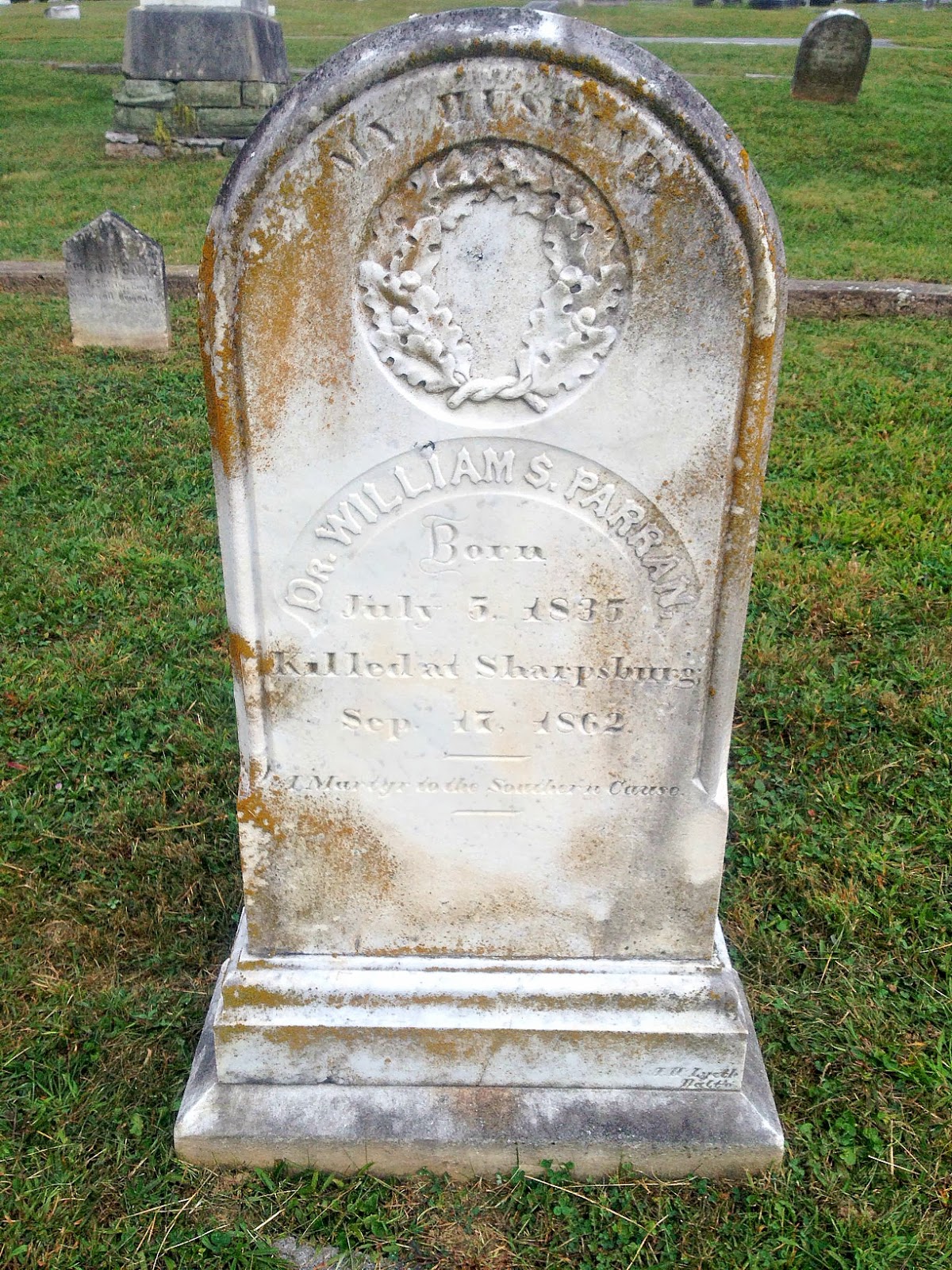 |
| Mortally wounded at Antietam, Rebel doctor William Parran is buried in Elmwood Cemetery in Shepherdstown, W.Va., which was part of Virginia during the Civil War. |
 |
| Close-up of William Parran's gravestone. (CLICK ON IMAGE TO ENLARGE.) |
 |
| The son of a doctor, William Parran was mustered in to the Confederate army as a captain on April 17, 1861. (Photo: Museum of The Confederacy, Richmond, Va.) |
"He was never backward in offering and rendering services whenever and wherever he thought they were needed and would be accepted," a friend wrote about Parran in November 1862. "He lost his valuable life while nobly working at another's battery, to which he had offered his services. He was a tender and affectionate father, and left a fond and devoted wife and a darling little daughter to mourn his untimely death. May the widow's God be her God, and a father to her fatherless!"
Parran's son, William S. Parran II, was born on April 19, 1863. His father lies buried in Shepherdstown, W.Va., in Elmwood Cemetery, where more than 100 other Confederates who were killed or mortally wounded at Antietam are also interred.
"Dr. Parran was ever an affectionate and dutiful son, a devoted husband and parent, a true friend, and an unswerving patriot," a short account of his life published in 1875 noted. "His genial social nature, his frank and manly qualities, made for him, wherever he went, hosts of friends, in whose memories and affections he has a monument to his honor more enduring and more to be coveted than brass or marble."
Subscribe to:
Posts (Atom)