Showing posts with label Richland Creek. Show all posts

Tuesday, December 24, 2024

Tales from the road: Sights, smells on Hood's retreat route

My journey started in Lynnville, Tennessee, the town that suffered a "partial burning" by
the Union Army, according to this historical sign.

                                     Like this blog on Facebook | My YouTube videos

After mentally checking out of the 21st century, I park in quaint Lynnville, Tennessee (population 313) for stops at the fancy leather goods place for sniffs of the wallets and at Soda Pop Junction (home of “Big Johnny” burgers) for a delicious fried apple pie.

Great fried pies are sold here in Lynnville.
I’m flying solo on this frigid Saturday morning for visits to obscure and largely forgotten battlefields on John Bell Hood’s retreat route in the aftermath of his Army of Tennessee’s crushing defeat at Nashville on Dec. 15-16, 1864. Were if not for, like, 5,000 football games scheduled, sports fanatic Mrs. B might be with me. But as she mutters this morning at 3:23, “I don’t do well in the cold.”

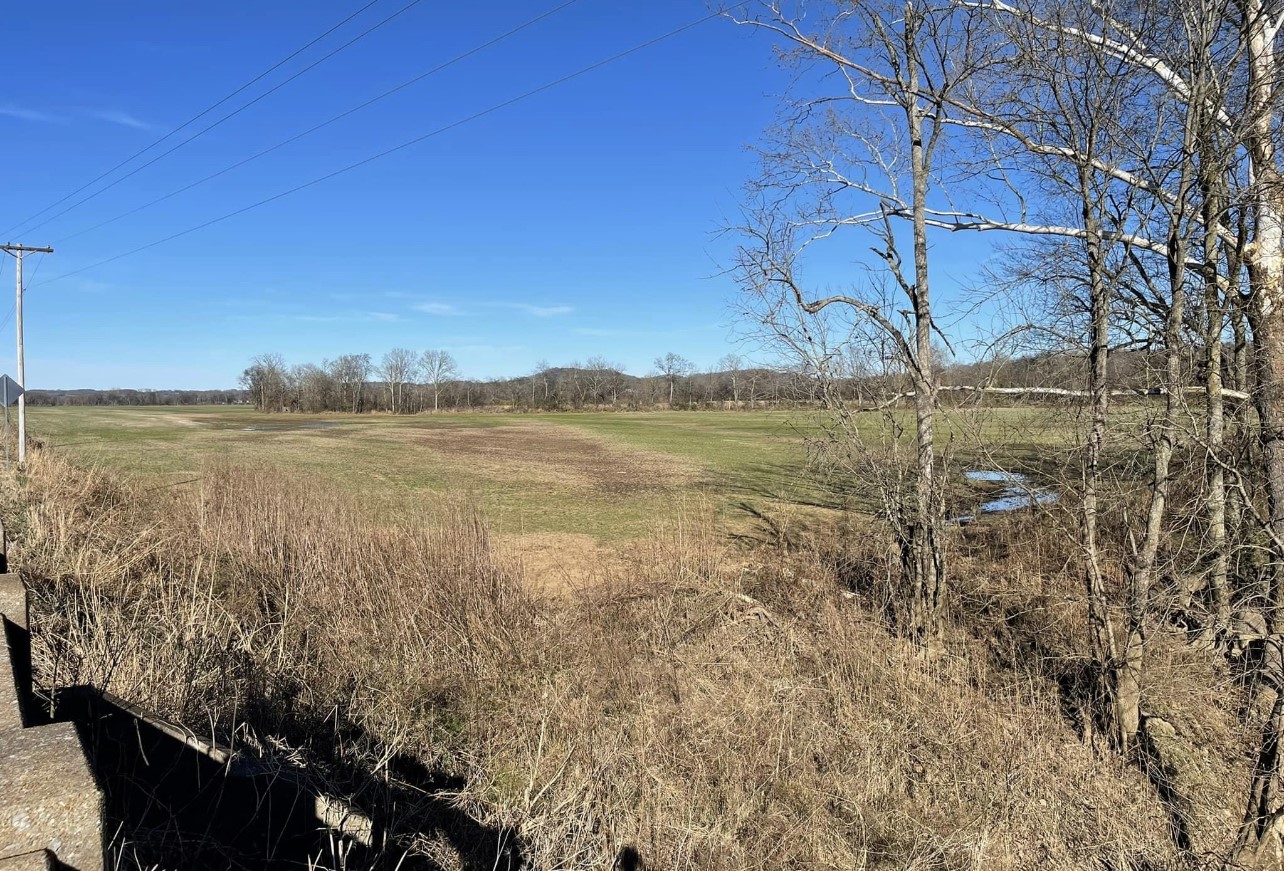
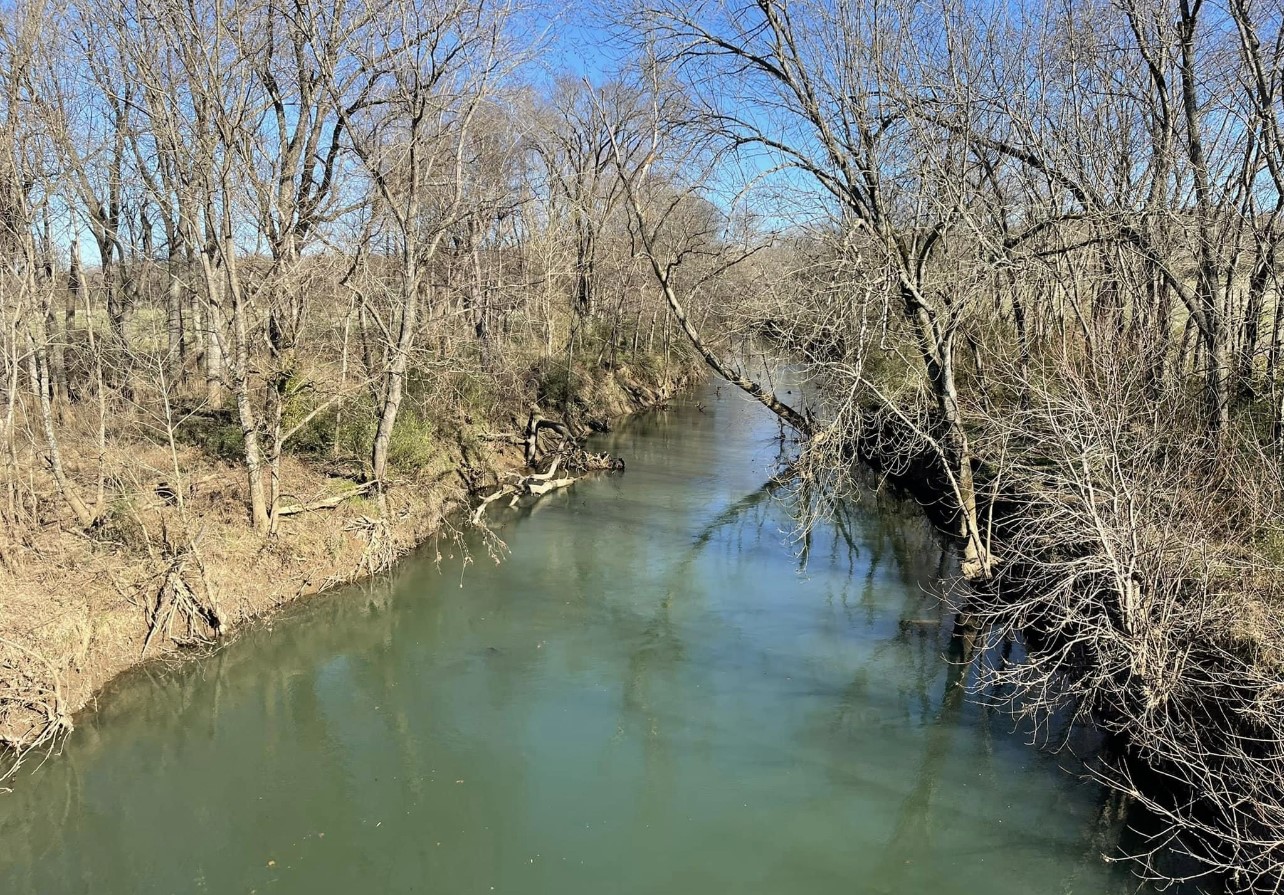
My first stop after departing Lynnville — which suffered a “partial burning” by the United States Army during the war, per a historical marker in town — is the Richland Creek battlefield. Here, on Christmas Eve 1864, the outnumbered and ragtag rearguard of Hood’s army fought against United States cavalry. As I have a half-dozen times, I park near the modern bridge over Richland Creek and try to imagine the fighting.

Somewhere out here, perhaps on Milky Way Farm across the Pulaski Pike, Nathan Bedford Forrest — Rebel cavalry genius, “The Wizard Of The Saddle” and postwar Klansman — directed troops. And somewhere out here, an obsessed Union cavalryman named Harrison Collins captured the object of his longtime desire — a Rebel flag — by stooping down and picking it up. For his bravery, he earned a Medal of Honor.

Unheralded Richland Creek battlefield.
Naturally, I need to know much more about the battlefield, so I drive on a side road and across the railroad track for a stop at a gift shop. I figure someone inside might direct me to a local who can give me a tour of the unmarked hallowed ground.

“Your shop sure smells good,” I tell the three delightful women behind the counter. No battlefield tour results, but I enjoy a brief staredown with a strange-looking cat who smiles at me from covers of a half-dozen Dr. Seuss books on the gift shop shelves.

On my return to the pike, I flag down a local in a pickup truck, but the conversation goes like one you might have underwater with a friend. All the time I am thinking to myself: “DON’T YOU KNOW HARRISON COLLINS OF THE FIRST TENNESSEE CAVALRY (U.S.) EARNED A MEDAL OF HONOR OUT HERE FOR CAPTURING A FLAG!” 

“I shot at it every time I got a chance, sometimes under embarrassing circumstances,” Collins said of the flag. “It got to be so provoking that I made up my mind if we ever got a chance, I’d pay those rebels for flaunting that there flag in our faces.”

Sigh. My life as a Civil War obsessive.

After that respectful convo with the man in the pickup, I travel south past Pulaski, where ex-Rebel soldiers founded the evil Klan on Christmas Eve 1865, and toward the Alabama border (gulp) for a visit to the Anthony’s Hill battlefield, where “The Wizard” fought off U.S. cavalry on Christmas Day 1864.

Before the battlefield stop, I visit a place my dad (“Big Johnny”) and momma (“Sweet Peggy”) — RIP to both ❤️❤️ — would have loved: a combo antiques store/AJ’s One Stop Deer Processing. An antler cap cut here will set you back 10 bucks, extra sausage is a cool 30 large.

Mom and Dad would have appreciated this place.

Inside I enjoy the smell of deer carcasses — pssst! it’s not like those wallets in Lynnville — and admire a multitude of deer heads hanging from the wall and a 1964 Sport magazine in a bin with fireballing lefty Sandy Koufax, a hero of mine, on the cover.

Confederate dead from 
Battle of Anthony's Hill.
Near core Anthony’s Hill battlefield, owned by a descendant of enslaved people, I briefly stop at a small cemetery. Leaves and twigs crackle and groan beneath my feet. A hundred yards or so from the trace of a wartime road on this unheralded battleground rest a few dozen Confederate soldiers, some killed on Christmas Day 1864. My God.

In a flash, I’m zipping south on the pike, destination Sugar Creek — the final battle of the Nashville Campaign. I hope to put my drone in the air for a view of the battlefield, where only a few dozen fell on Dec. 26, 1864. But remember: Somewhere a momma and poppa mourned their deaths just the same.

Unfortunately, I don’t find a launch point, but I do find a general store (closed), where according to a source, Sugar Creek battlefield relics are somewhere inside. Nearby, behind a barbed wire fence, a brown and white horse walks my way.

“What does he know about the Battle of Sugar Creek?” I wonder. But alas, I must go. Sadly, a return to the 21st century awaits.

Saturday, December 10, 2022

How obsessed dude earned MOH in obscure Tennessee battle

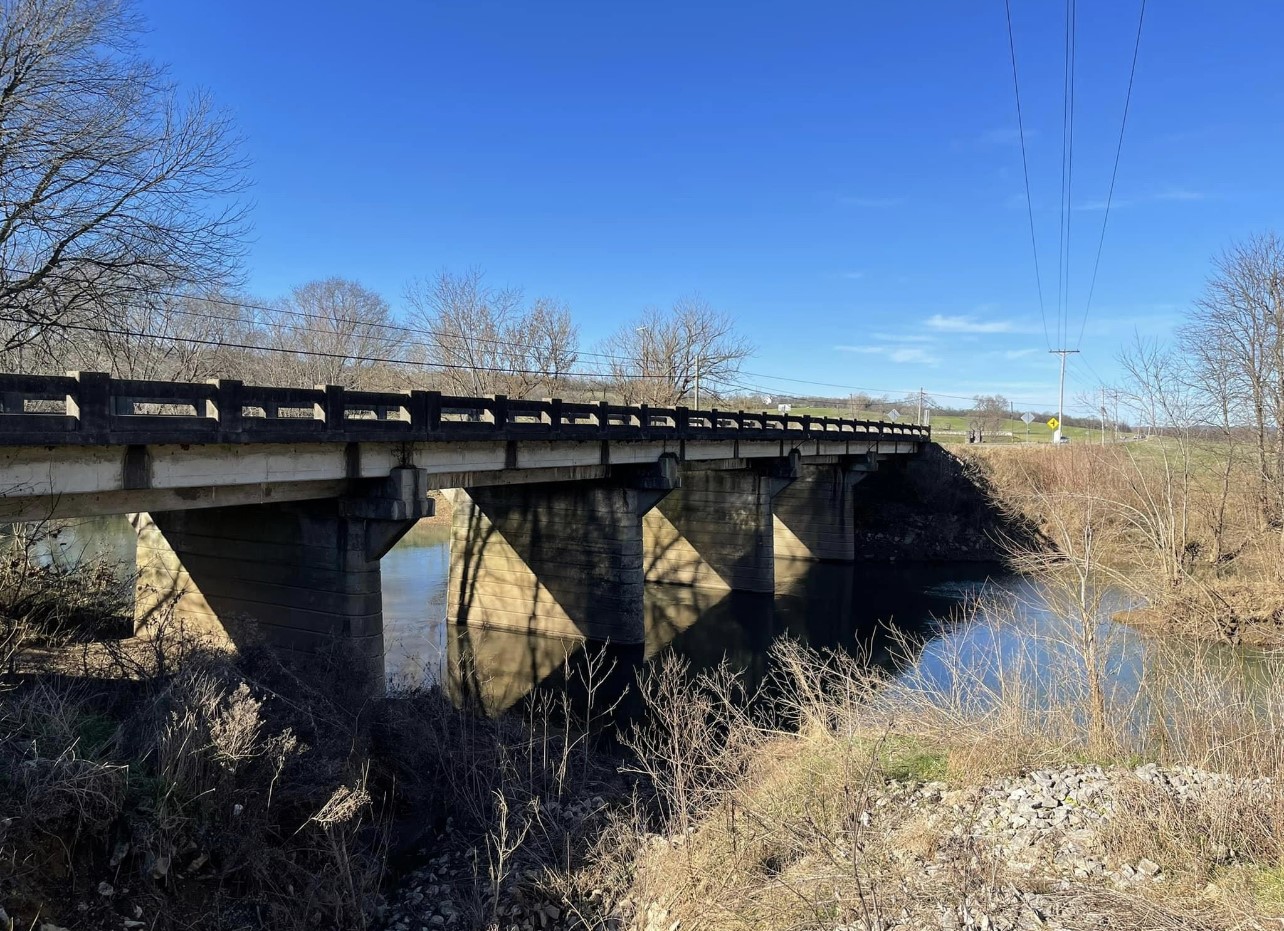
Modern bridge at Richland Creek on John Bell Hood's December 1864 retreat route.

Like this blog on Facebook | My YouTube videos

Unlike other battlefields on the Army of Tennessee's retreat route near Franklin, Tenn., little has changed on hallowed ground south of Columbia. No historical plaque, however, marks the Richland Creek battlefield, all privately owned. This wasn’t an epic battle afterall — at least by Civil War standards. 

On Dec. 24, 1864, roughly 6,000 United States soldiers fought 3,000 ragged Rebels. But it was a brutal, and often hand-to-hand, fight near the Pulaski Pike. Eager to bag Hood’s army, the U.S. cavalry pressed hard. 

Richland Creek battle map from
 Mark Zimmerman's excellent 
Mud, Blood & Cold Steel: The Retreat
from Nashville December 1864
“Those fellas,” Rebel cavalry commander Nathan Bedford Forrest said of the U.S. soldiers, “are wrathy today.” 

On a ridge near Richland Creek, not far from where I park, Confederates placed two cannons — they called ‘em “Bull Pups” — to stem the blue tide. Behind my battlefield tramping pal Jack and me stretches flat, open ground that meets another ridge about a half mile distant. The creek is roughly 15 yards wide.

Underneath the modern bridge, we find no evidence of its wartime cousin or any other evidence of 1864 nearby. On a walk across it, Jack reads aloud an account of the battle from a book while I look over his shoulder. Passersby speeding on modern Route 31 must wonder: "Why are those old dudes reading a book on a bridge in 27-degree weather?" 

At Richland Creek, an artillery shell burst cost Gen. Tyree Bell, one of Forrest’s top lieutenants, his right eye. He refused to relinquish his command until “The Wizard” ordered him to retire. Bell was one tough SOB. At Shiloh more than two years earlier, he had suffered three broken ribs and three horses killed under him.

The fight produced its share of hard-luck casualties — and unlikely heroes. Somewhere out here Harrison Collins of the 1st Tennessee Cavalry (U.S.) earned a Medal of Honor by capturing a flag, the object of his strange obsession for weeks. 

Left: Nathan Bedford Forrest called
the pursuing U.S. cavalry "wrathy."
Confederate Gen. Tyree Bell
lost his right eye at Richland Creek.
As the Union Army fell back toward Nashville in the aftermath of the Battle of Franklin, the 28-year-old corporal had spotted the enemy flag everywhere, like that helicopter in a scene with Ray Liotta’s Mafia character in Goodfellas.

“I shot at it every time I got a chance, sometimes under embarrassing circumstances,” Collins said. “It got to be so provoking that I made up my mind if we ever got a chance, I’d pay those rebels for flaunting that there flag in our faces.”

Near Richland Creek, where the Rebels made a stand, Collins spotted the flag again and saw an opportunity for glory. No matter the circumstances, capturing an enemy’s flag merited acclaim, sometimes even a Medal of Honor. 

As the Union cavalry charged, a Rebel officer ordered his men to dismount and fight on foot.

“Our party halted here, but I forgot everything but the prize, and riding through the dismounted enemy, overtook the color-bearer and demanded the flag,” Collins said. “He threw it on the ground. I dismounted and picked it up.”


Read more stories like this in my book, A Civil War Road Trip Of A Lifetime.
After a one- or two-hour fight, the U.S. Army forced Hood’s rearguard to flee toward Pulaski.

“The fire was the heaviest ever encountered,” recalled a Rebel soldier.

Now I’m usually skeptical of those “hail of fire,” “storm of lead,” “greatest cannonade of all time” recollections of Civil War soldiers from even the smallest fights. But if you were frozen, exhausted, frazzled, hungry, scared, and shoeless — like these retreating Rebels — you might think the same thing.

In the aftermath of the battle, soldiers found battered trees, plowed-up earth and a few dead and wounded across a frozen landscape. 

Now we see water-sodden fields, a few cows and speeding cars on ground where Harrison Collins became an instant hero.

Looking northeast on the battlefield. Union cavalry advanced toward camera.

Looking east from the Modern bridge over Richland Creek

 Have something to add (or correct) in this post? E-mail me here.

SOURCES

Saturday, January 22, 2022

A nerd's-eye view of obscure Richland Creek (Tenn.) battlefield


On Dec. 24, 1864 at Richland Creek, roughly eight miles north of Pulaski, Tenn., U.S. Army cavalry fought the rearguard of John Bell Hood's Army of Tennessee in the aftermath of the Battle of Nashville. Forces: 6,000 U.S. cavalry and 12 guns; 3,000 Confederate with eight guns. Visitors to battlefield besides my hypnotist pal Jack and I: 0. We were in good spirits because of stops earlier in the morning in nearby Lynnville at Soda Pop Junction for Big Johnny's burgers and then apple and cherry pies at the Lynnville Fried Pie Company. 😆